Dry Lab Notebook

28 March to 17 October 2026

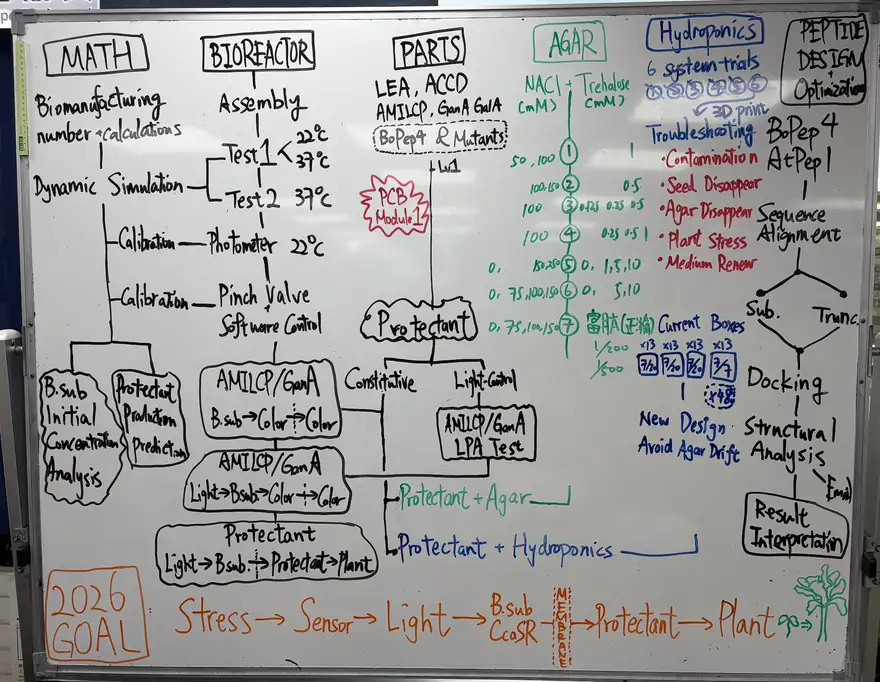
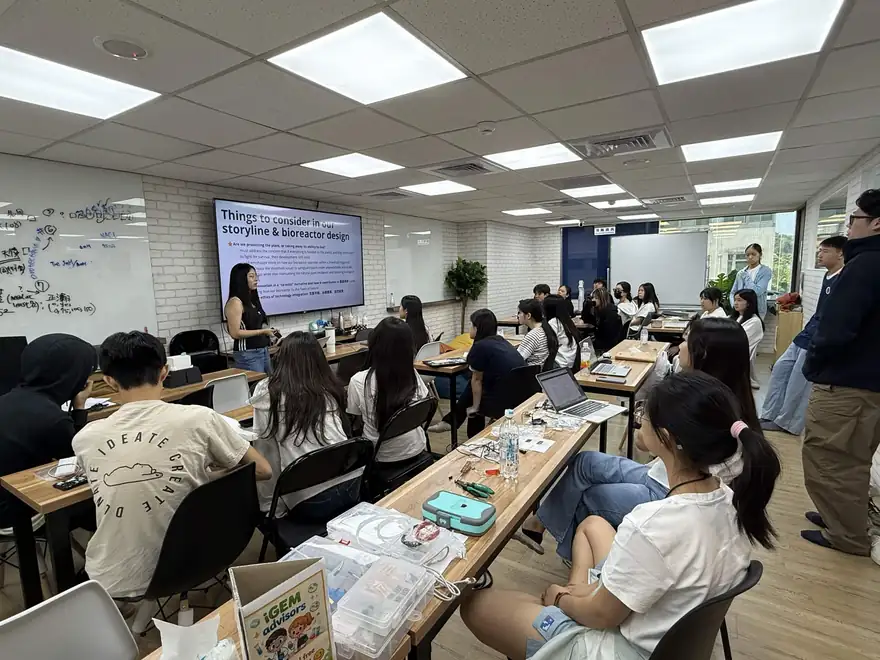
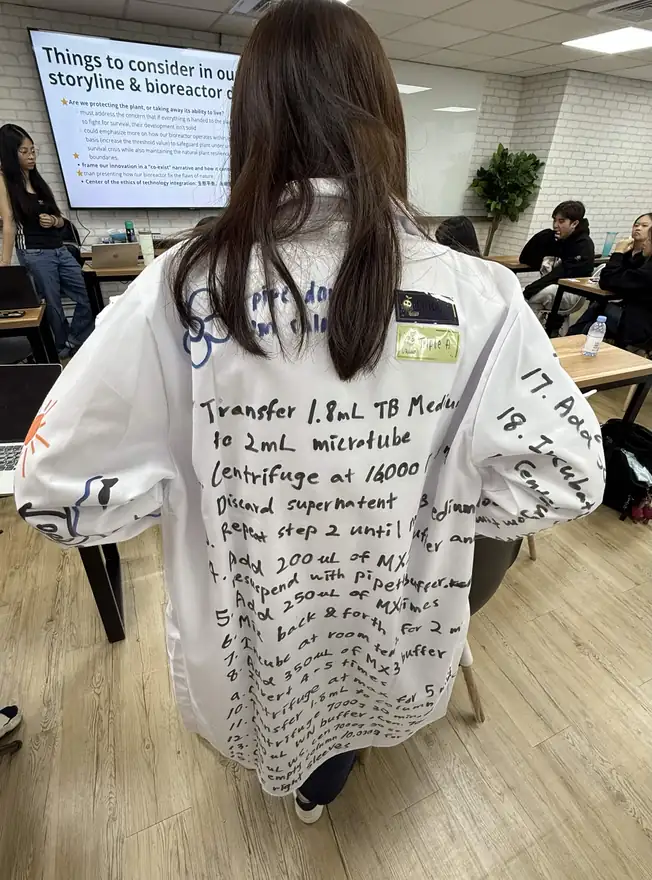
The dry lab’s notebook for the season, one entry a week from 28 March to 17 October. Each entry lists the pipelines that ran and the stage each had reached, the results, who took part, the photographs and the deliverables. The board puts every pipeline on a lane and every week in a column, with the eight handoffs to the wet lab and what came back. The photos view holds every frame by week, and what is still open stands as the plan to the wiki freeze on 21 October.

The written record

March 2026

1 entry, 0 photos28
  • Plant Growth ChamberChamber Design, Air Flow, Light System, Sourcing
  • HydroponicsPaper Analysis, Parts Scoping
  • Math ModelingScope Setting

Participants Anna, Anton, Audrey, Ethan, Eva, Joshua, Felix, Noah, Jacquelyn

Results
  • Three pipelines opened
  • Chamber design converging, airflow still open
  • Modeling brief set with eight candidate directions
  • Open question carried forward
    • Why no stable Arabidopsis growth outcomes?
Deliverables 11
Chamber Paper Analysis
  • Katagiri 2015
Chamber Design Spreadsheet
  • Airflow path
  • Light placement, intensity, duration
  • Structure and dimensions
Airflow Acceptance Test
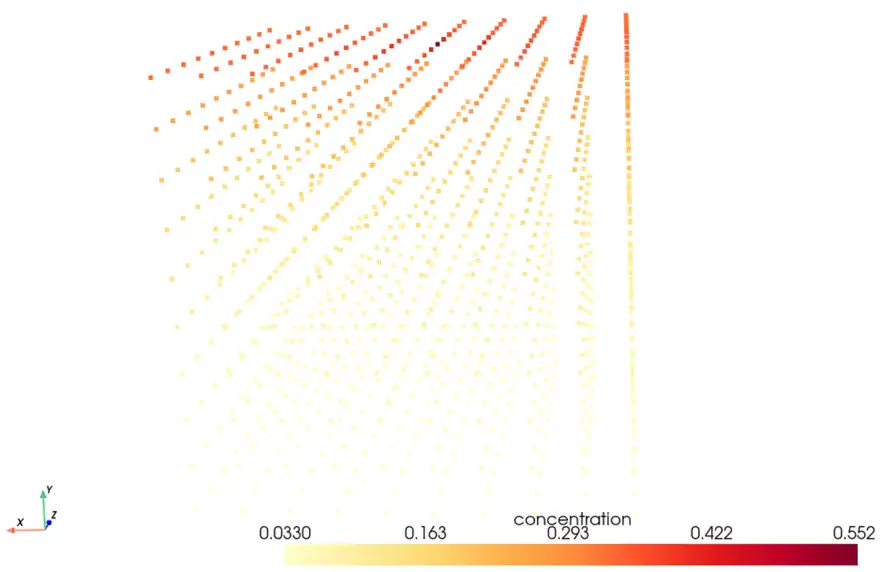
  • 3-D interior heat map
Container Measurements
  • 10×10×12.5 cm
  • r=4.5×14 cm
  • 30×15×10 cm heat bath
Sourcing by District
  • 光華: fans, controllers
  • 特力屋: racking, blackout cloth
  • 建國花市: pumps, air stones
  • IKEA: reservoirs
Online Order List
  • LED Grow Light
  • DS18B20
  • PPFD Meter
  • Mylar Reflective Film
Hydroponics Paper Analysis
  • Tocquin 2003
Hydroponics Parts Scoping
  • Aquarium air pump
  • Air stone, tubing
  • Liquid fertiliser as temporary MS substitute
Math Modeling Scope
  • Dose-response and threshold optimisation
  • Whole-process dynamics
  • Climate simulation
  • Biosafety escape risk
  • ML extensions
  • Soil classification
  • Circuit simulation (iBioSim, COPASI)
  • Protectant release in soil
Modeling Paper Analysis
  • Bambara groundnut multiscale model
Data Source
  • ISRIC / SoilGrids
Participants & Contributions 7
Anna
  • Literature review on hydroponics systems
  • Math model scope defining
Audrey
  • Literature review
  • Chamber layout
    • Dimensions, top + side view
  • Airflow design
    • Fan positions, airflow direction
  • Enclosure specs
    • Tent, materials
Ethan
  • Literature Review
  • Hydroponics prototype measurements (w/ Felix)
    • CAD for hydroponic box and measurement
Joshua
  • Hydroponics research
Felix
  • Literature review
  • Hydroponics prototype measurements (w/ Ethan L)
    • First CAD for hydroponics box
Noah
  • Humidity Box research
    • How to ensure consistency between all plants
Jacquelyn
  • Plant growth chamber planning
  • Hydroponics lit review
April 2026

4 entries, 11 photos4 · 11 · 18 · 25
  • Plant Growth ChamberMaterial Priority, Pricing
  • Genetic Circuit DesignTool Evaluation
  • Chlorophyll FluorometerMeasurement Rationale

Participants Anna, Anton, Audrey, Ethan, Joshua, Felix, Noah, Jacquelyn

Results
  • Two pipelines opened
  • Material list filtered and priced
  • Fv/Fm named as the measurement that proves the claim
  • Build-our-own fluorometer flagged as viable
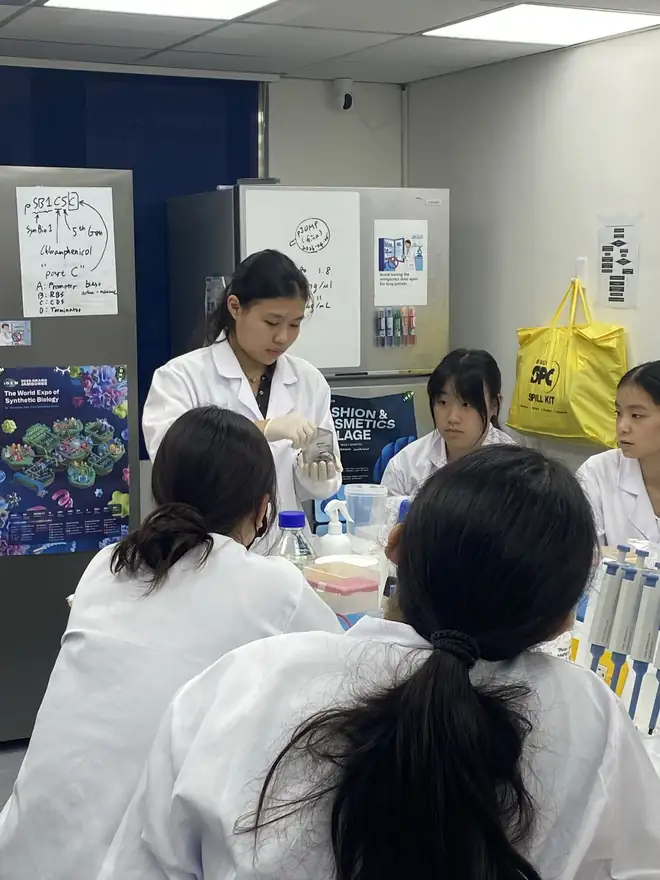
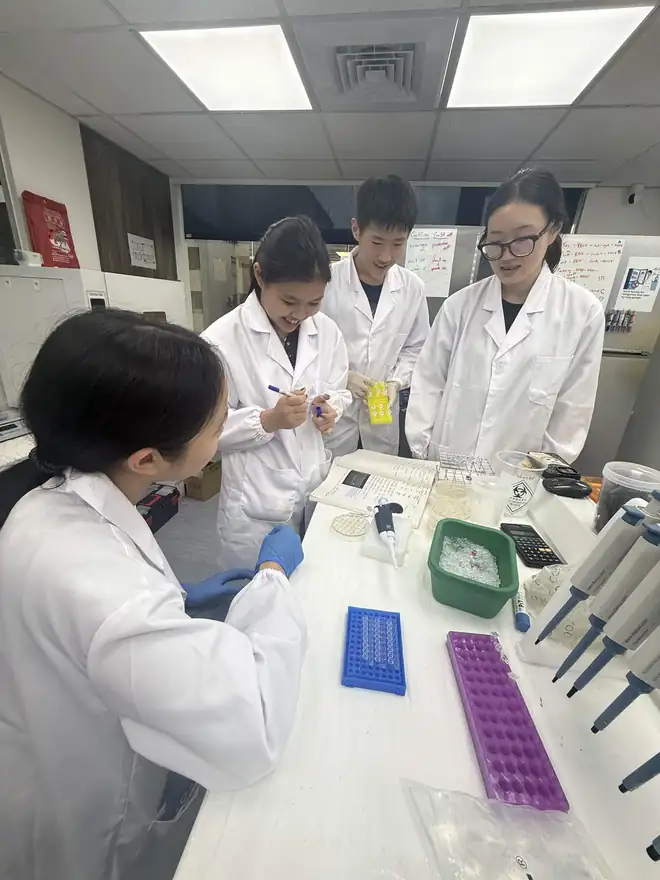
Lab training
Deliverables 9
Material Priority Filter
  • P1: buy first
  • P2: buy if design survives review
Polycarbonate Pricing
  • NT$9,900 for 4×8 ft
  • NT$4,950 for 4×4 ft
Media Supplier Cross-reference
  • PhytoTechnology via ZGeneBio
Drylab Shopping Sheet
Circuit Design Tooling
  • Cello-v2
  • cellocad.org
Circuit Background Reading
  • Principles of Genetic Circuit Design
  • Brophy Lab research
Fv/Fm Rationale
  • Non-destructive stress measurement
  • Healthy 0.78 to 0.83, stressed drops
Core Fluorometer Experiment
  • Control under stress drops
  • Bacteria-treated under stress holds
Cost Barrier
  • Meter NT$100,000+
  • Key paper NT$3,000
Participants & Contributions 7
Anna
  • Worked on shopping list for growth chamber
  • Literature review on plant growth math modeling
Audrey
  • Plant growth chamber materials list & pricing
  • Priority 1 and priority 2 materials
    • Materials purchasing timeline
Ethan
  • Worked on shopping list for growth chamber
  • Literature review on plant growth math modeling
Joshua
  • Shopping list for growth chamber
Felix
  • Genetic circuit & Cello testing
  • Protectant research & literature
Noah
  • What materials should be used to make the plant growth humidity chamber?
  • How will we ensure consistent humidity, airflow, and light for each plant?
Jacquelyn
  • Plant growth chamber design: research materials & shopping list & cost
  • Tried cellocad
  • Plant Growth ChamberLayout Freeze
  • Math ModelingAdvisor Questions
  • Genetic Circuit DesignCello Result

Participants Anna, Anton, Audrey, Ethan, Joshua, Felix, Noah, Jacquelyn

Results
  • Genetic Circuit Design closed
    • Design effort moved to Codon Optimization and Protectant
  • Chamber converging, ventilation still the open question
  • Cello limit carried to Dr. Brophy as a direct question
The 15 April project pivot
Deliverables 5
Chamber Layout Revisions
  • Shelf layout
  • Light mounting
  • Blackout enclosure
Brophy Question List
  • Circuit-level questions folded into modeling scope
Cello Run Record
  • ~500 dependencies resolved
  • Author source modified directly
Cello Blocker
  • UCF files ship for E. coli and S. cerevisiae only
  • No B. subtilis UCF
  • Writing one judged unrealistic this season
Closure Rationale
Participants & Contributions 7
Anna
  • Literature review on parameters for plant growth chamber
    • Incorporation into the prior week’s research
Audrey
  • Literature review
Ethan
  • Research on growth chamber
    • Consider different components
Joshua
  • Finalize growth chamber design
Felix
  • Presentation with Brophy
  • Result: Cello doesn’t have a B.Sub library
Noah
  • Finalize plant growth humidity chamber design
Jacquelyn
  • Chamber layout planning
  • Presentation with Brophy
  • Plant Growth ChamberClosure
  • BioreactorWorkstream Split
  • Math ModelingStress Scoring
  • BioreactorDesign Space
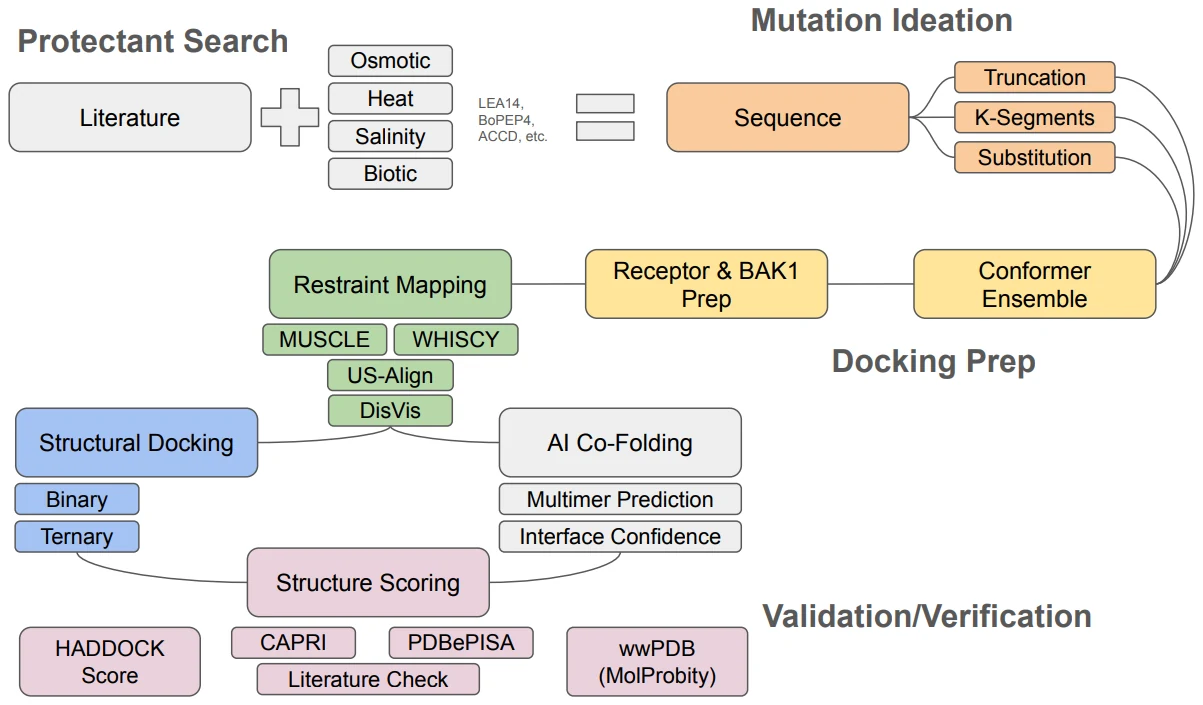
  • Protectant DesignTarget Selection

Participants Anna, Anton, Audrey, Ethan, Eva, Felix, Noah, Jacquelyn

Results
  • Plant Growth Chamber closed on purpose
  • Two pipelines opened
    • Bioreactor
    • Protectant Design
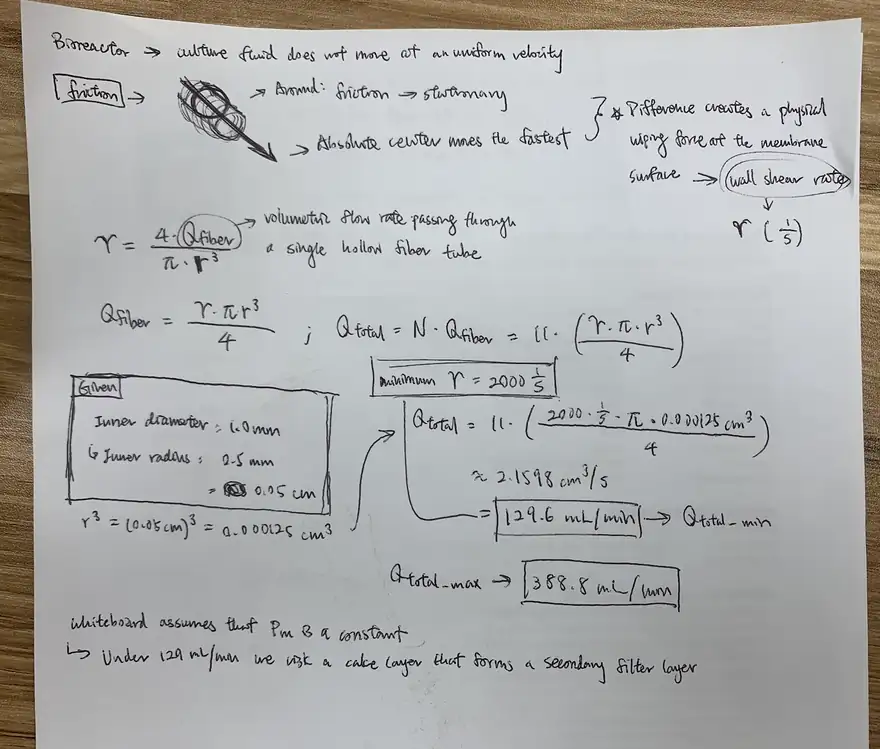
  • Hollow-fibre direction seeded from the shell-and-tube idea
  • ACCD chosen as the first protectant target
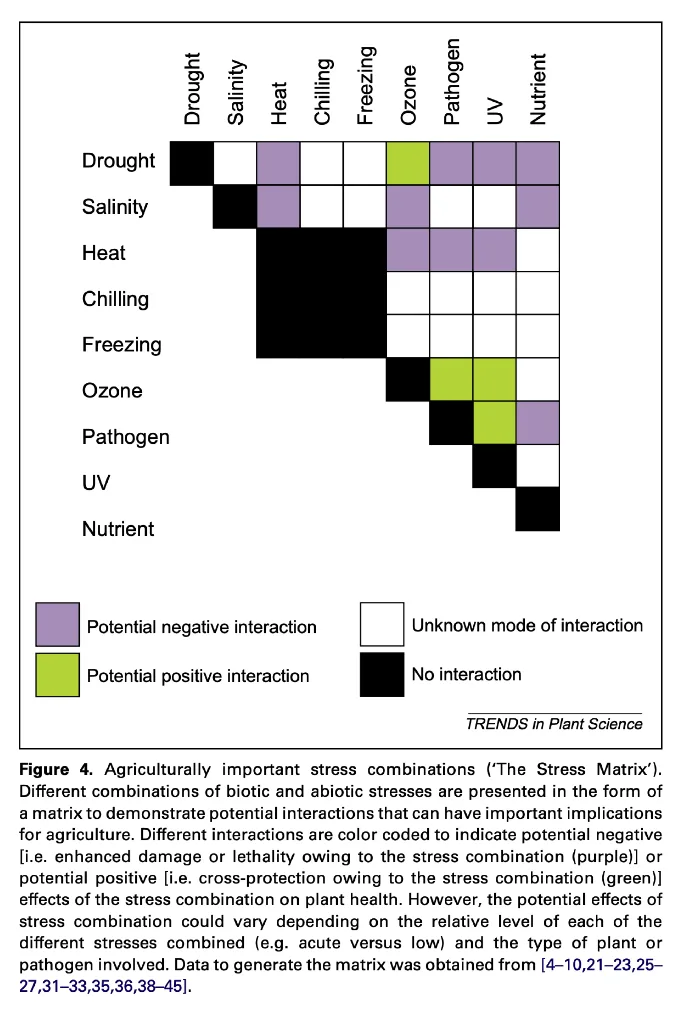
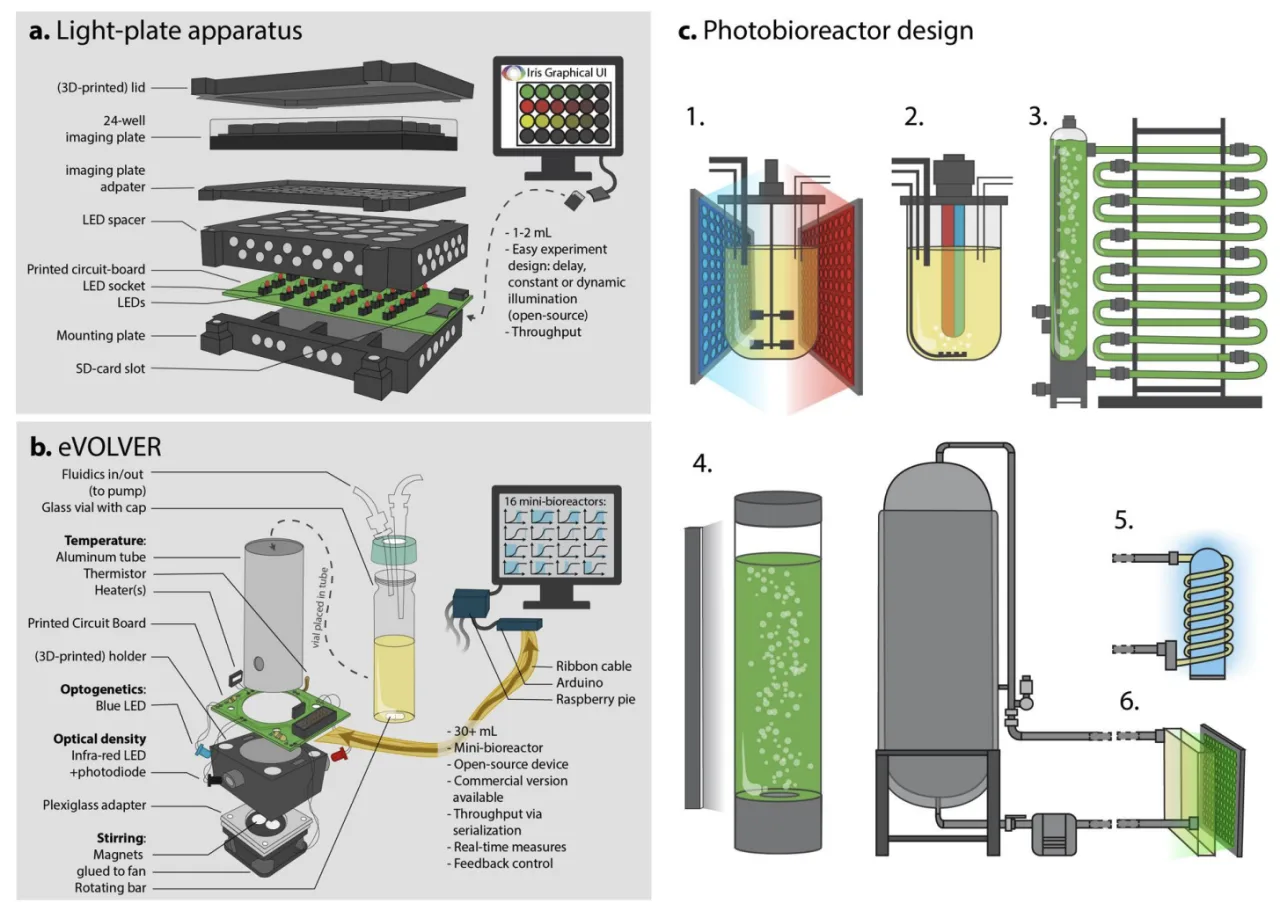
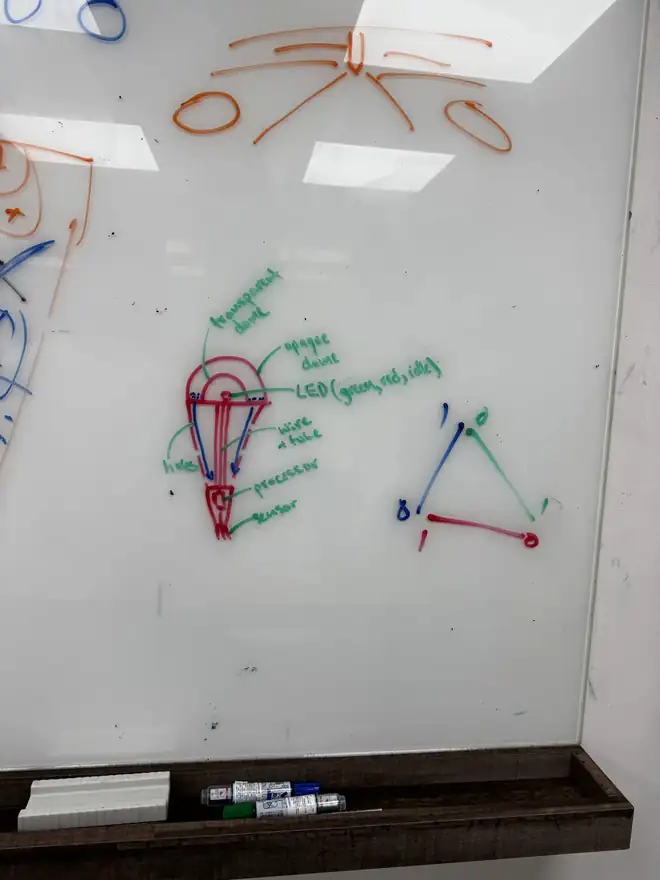
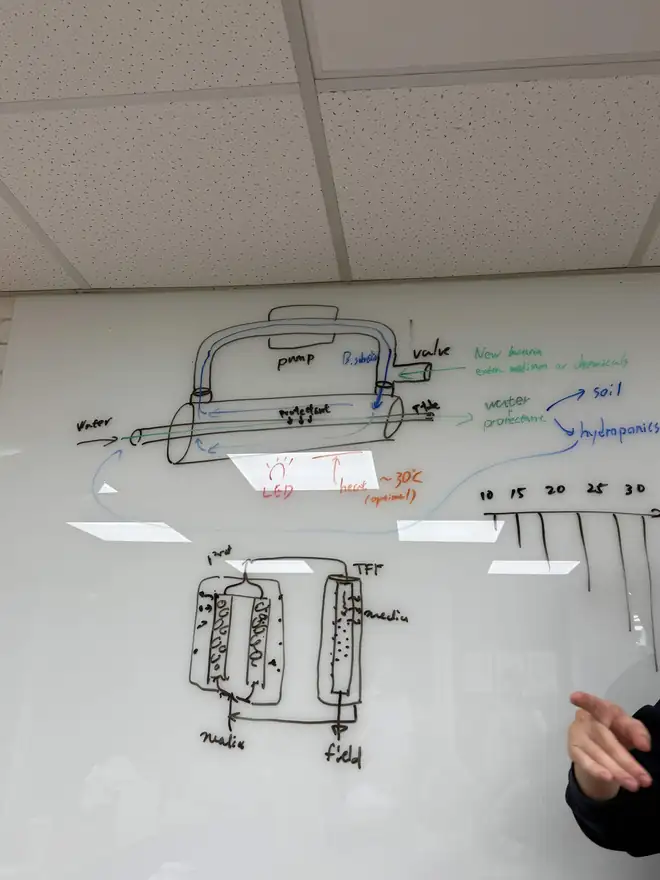
A matrix of nine plant stresses (drought, salinity, heat, chilling, freezing, ozone, pathogen, UV, nutrient) with each pair coloured as a potential negative interaction, potential positive interaction, unknown, or no interaction.Illustrated reference figure: an exploded light plate apparatus, the eVOLVER mini-bioreactor, and six photobioreactor layouts from stirred tank to tubular and flat panel.First hardware design sketch
Deliverables 8
Chamber Closure Decision
  • Airflow never solved
  • Commercial chamber ordered
  • Cost case collapsed
Carried Forward from Chamber
  • RS485 soil T/H/EC sensor
  • Airflow, lighting, enclosure learnings → LPA and bioreactor
Four-Workstream Rotation
  • Sensor spec
  • Stress-scoring logic
  • LED chamber design
  • Membrane / cartridge form factor
Stress Scoring Definition
  • Bridge from sensor input to LED output
  • Constrained to measurable variables
Reactor Design Space
  • CSTR, batch and semi-batch
  • Bubble column, air-lift
  • Fluidized-bed, packed-bed
  • PBR as likely candidate, bacteria as packing
  • Shell-and-tube configuration → hollow-fibre seed
Immobilized-Cell Literature
ACC deaminase Target
  • Cleaves ethylene precursor ACC
  • Bradyrhizobium SUTN9-2 mung bean paper
Open Delivery Question
  • How is this applied in a field?
Participants & Contributions 6
Anna
  • Modeling plant resistance
Audrey
  • Diffusion Membrane & Cartridge Physical Form Factor
    • Decided on using a combination of PES, PCTE, and stainless steel mesh to build the model
    • Dimensions of the model: ~20-25mm outer diameter, determine insertion depth based on target microbes
    • insertion strategy: conical “pilot-bit” at the tip to displace soil
Ethan
  • Literature review on different plant resistance toward stress
Felix
  • Basic Math Modeling stress determinant equations w/ Jac
  • Ideation of protectant application methods
    • Starch application
    • Microneedle delivery
    • Cyclic peptides
Noah
  • Create the plant growth Humidity Chamber and assemble, however, findings show that the humidity was not greatly increased by the chamber → abandon idea.
Jacquelyn
  • Basic Math Modeling stress determinant equations
  • HydroponicsReproducibility Goal
  • Math ModelingModel Spine
  • BioreactorHollow-Fibre Concept
  • Protectant DesignACCD Mechanism

Participants Anna, Anton, Audrey, Ethan, Joshua, Felix, Noah, Jacquelyn

Results
  • Hydroponics reframed around reproducibility, not hardware
  • Model spine locked end to end
  • Hollow-fibre concept drawn and named
  • Project vocabulary standardised
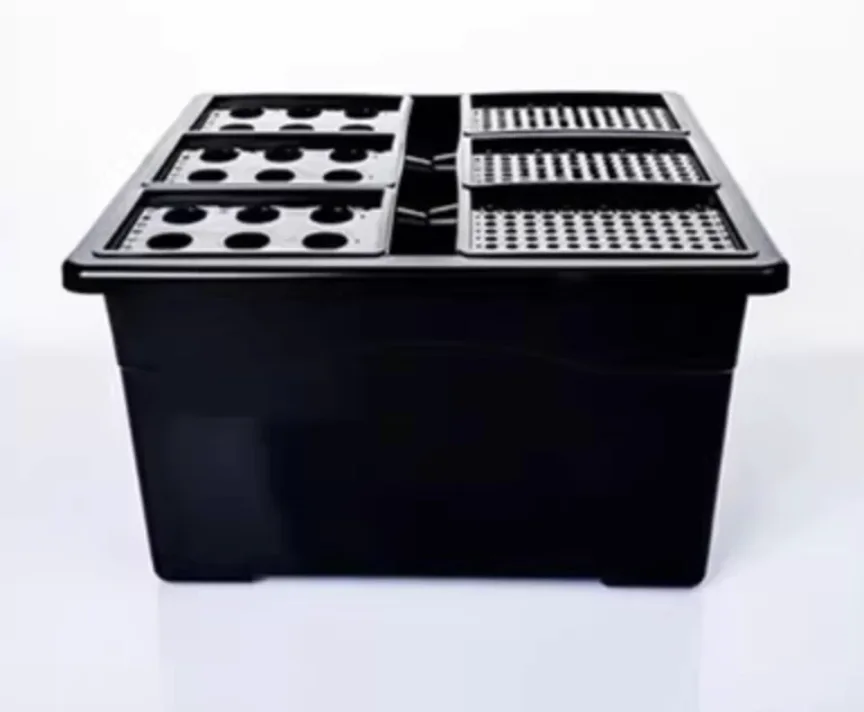
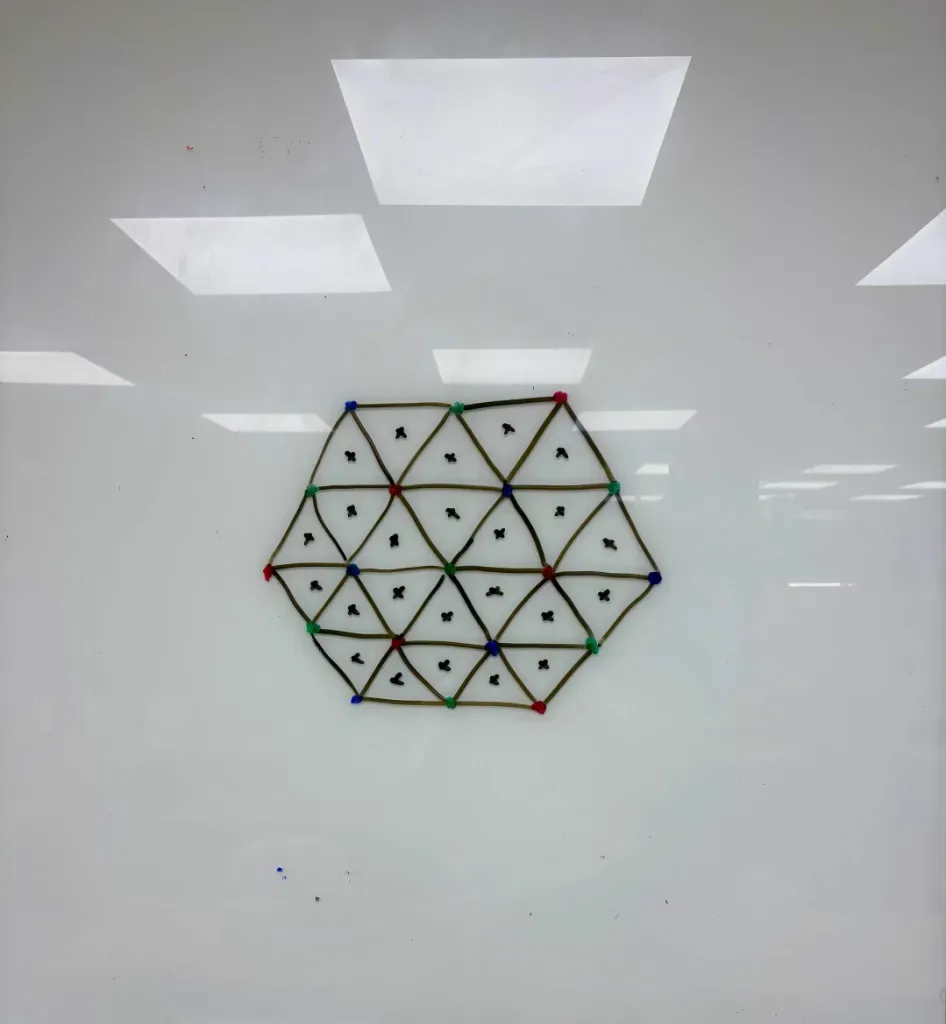
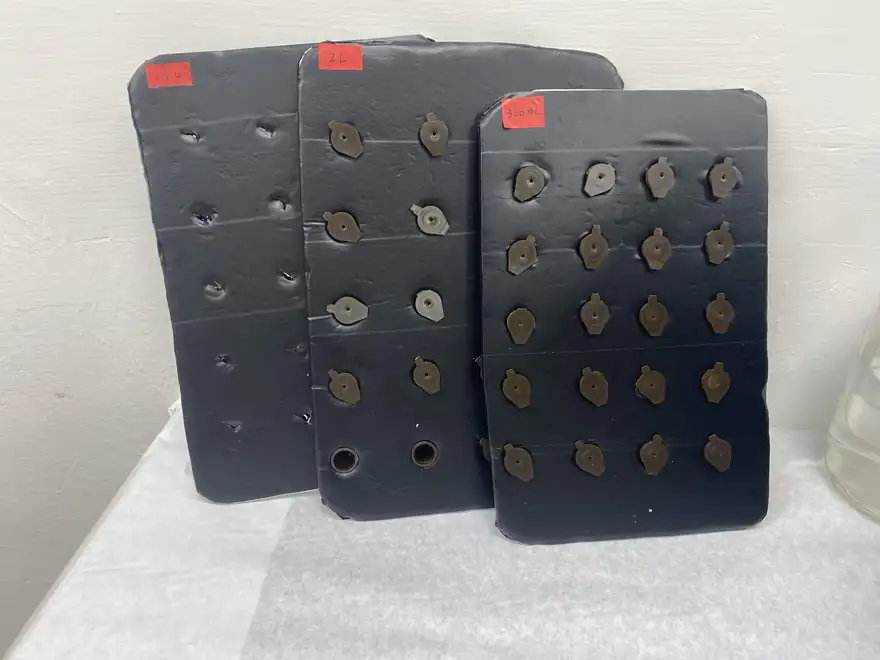
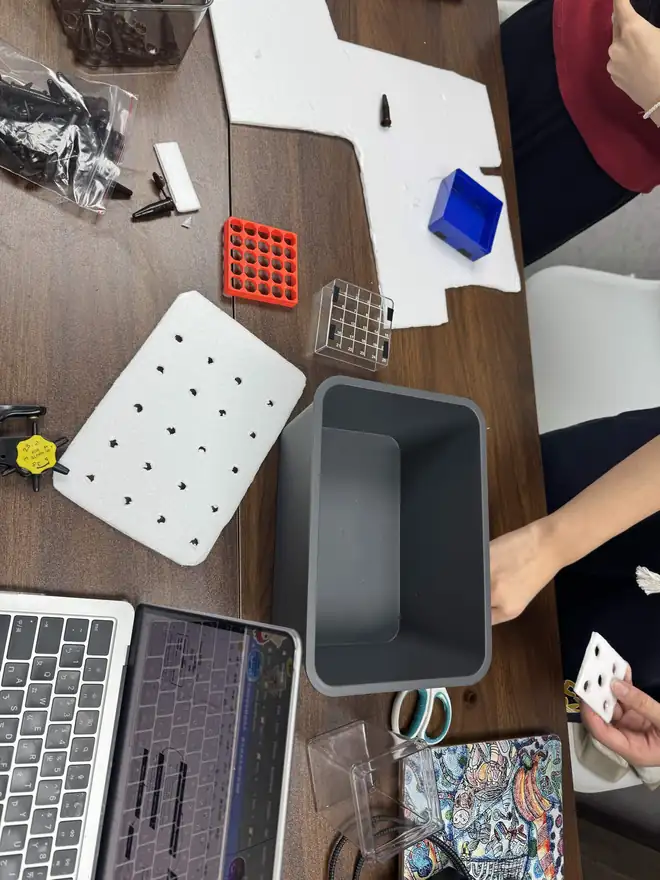
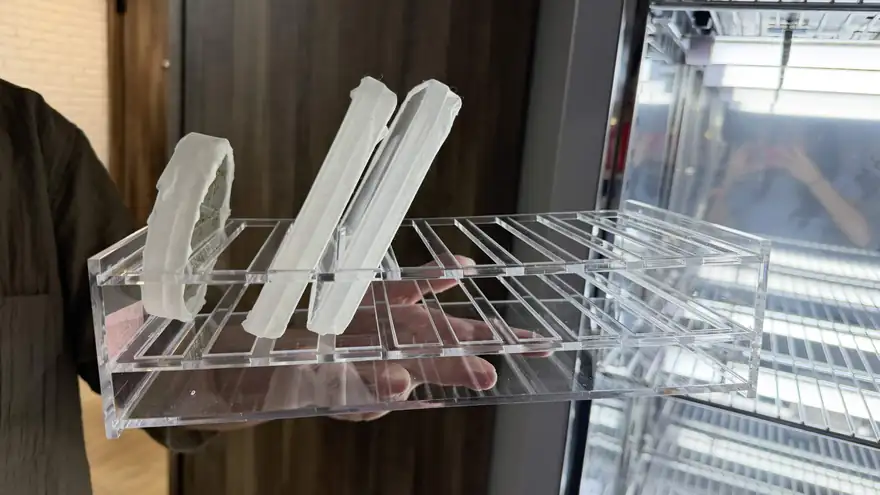
A black hydroponic tub with six removable perforated trays on top.A hexagon of triangles drawn on a whiteboard, with coloured dots at the corners and a cross marking the centre of each triangle.First bioreactor illustrationHollow-fibre membrane designAdvisor Venus on lab techniqueFirst hydroponics plate prototype
Deliverables 8
Minimal Stress Assay Protocol
  • Defined nutrient solution
  • Standard NaCl and osmotic stress protocols
  • Fixed Arabidopsis growth parameters
Feedback Plan
  • Circulate to NTU, NTHU, Academia Sinica
  • Positioned for Best Measurement
Hydroponics Paper Analysis
  • Conn et al. 2013, Plant Methods
  • Growth-system optimisation protocol paper
Model Spine
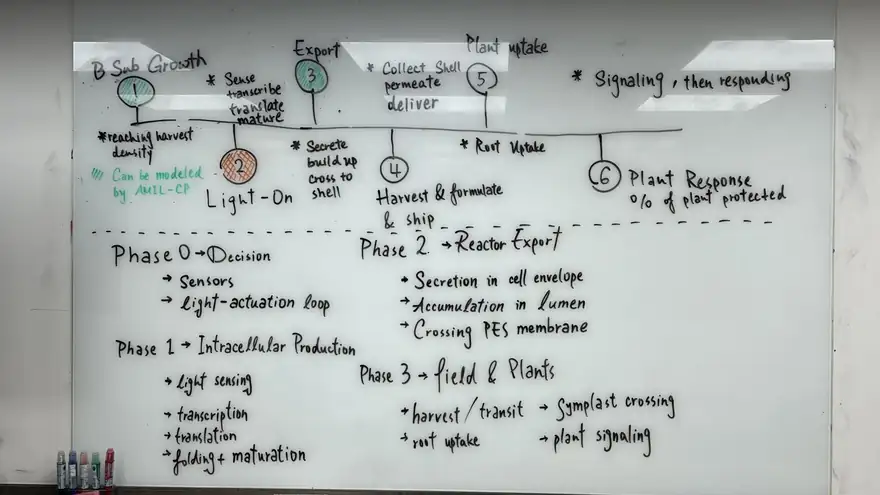
  • Growth → constitutive production → optogenetically controlled production (stress and light) → protectant kinetics
  • ODE kinetics framework
  • ACCD as first modelled protectant
Literature Gap Logged
  • No kinetic framework for protectant production in B. subtilis
First Bioreactor Illustration
Hollow-Fibre Sketch
  • Lumen side for culture
  • Shell side for product
  • Vocabulary fixed: lumen, shell, transmembrane
ACCD Mechanism Review
  • Effect sizes and dose ranges for modeling
  • Microneedle Delivery
Participants & Contributions 7
Anna
  • Established the math modeling pipeline
  • Researched on parallel B. sub protein production kinetics
  • Defined gaps in literature
  • Literature review on ACCD
Audrey
  • Hydroponics literature review
    • Reproducibility (Tocquin paper)
    • Stress assay protocols (NaCl concentration focus)
Ethan
  • Established math modeling outline
  • Researched on B.sub growth kinetics
  • Research on ACCD
Joshua
  • Research on ACCD, hollow fiber, and arabidopsis growth
  • Initial structure for bioreactor based on hollow fiber membrane
Felix
  • Microneedle delivery
    • Discontinued due to cost efficiency and economic model
  • Seed and agar cap growth modules
  • Hydroponics paper analysis
Noah
  • Shape/overall structure of the bioreactor
    • Hollow Fiber Membrane, 2 sides, one for bacteria culture and one for protectant.
  • Shape/overall mechanism for protectant usage
    • Release directly into the soil in a triangular repeating pattern for equal protectant density across large land.
Jacquelyn
  • Research stress assay protocols with diff concentrations of salinity & diff temperatures for optimal testing
  • Hydroponics lit review
May 2026

5 entries, 23 photos2 · 9 · 16 · 23 · 30
  • HydroponicsGermination Workflow
  • Math ModelingModel 1
  • BioreactorMembrane Sourcing, Fluidics

Participants Anna, Anton, Audrey, Ethan, Joshua, Felix, Noah, Jacquelyn

Results
  • First math model actually runs
  • Germination workflow written down and repeatable
  • Hollow-fibre availability confirmed as real, not catalogue-only
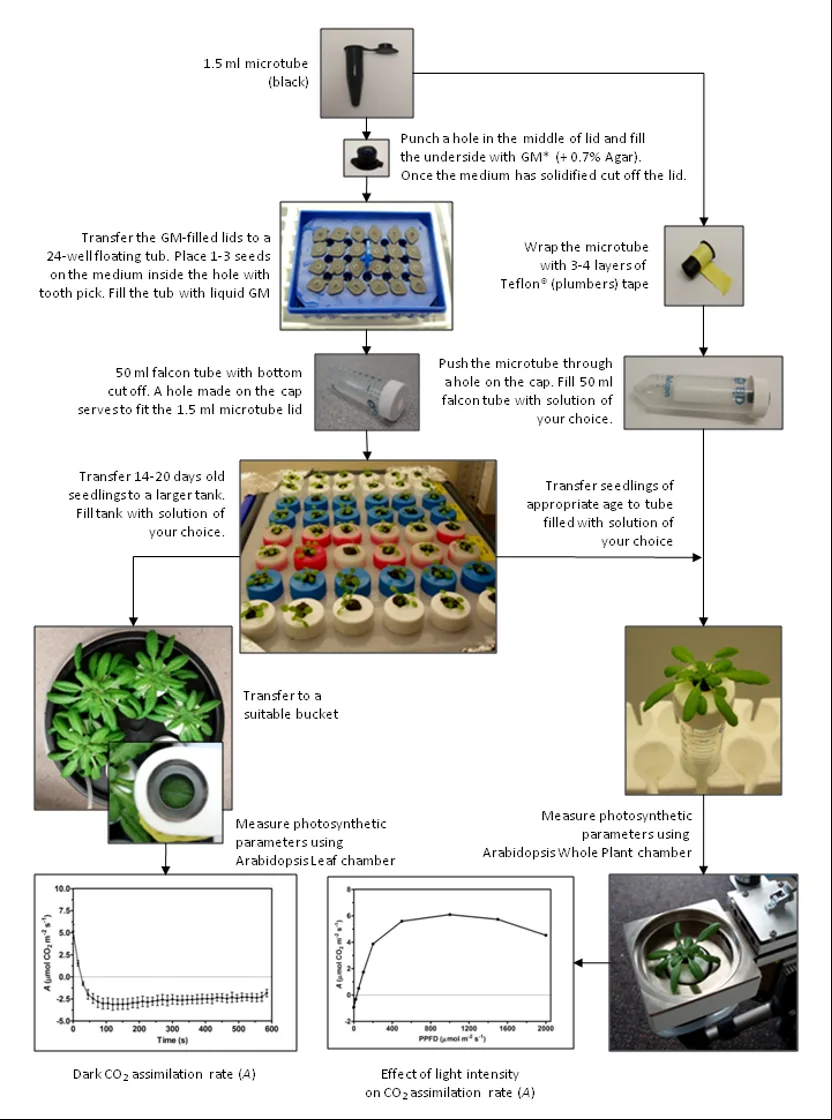
Flow chart: a black 1.5 ml microtube lid filled with agar medium, seeds placed in a floating tub, seedlings moved to larger tanks, then photosynthesis measurements.
Deliverables 6
Germination Workflow
  • Punch hole in black microcentrifuge tube lid
  • Fill lid with agar
  • Transfer set lids into the box
  • 1 to 3 seeds per lid
  • Black tubes keep light off the root zone
Model 1
  • Steady-state Hill function
  • c = desired / target output level
  • Parameter table convention established
Hollow-Fibre Sourcing
  • FiberCell systems
  • Local supplier 岑祥
Fluidics Reference
  • Open-source peristaltic pump, iGEM Aachen 2017
Bioreactor Material List
Expert Outreach
  • Agricultural expert on the economic case
Participants & Contributions 6
Anna
  • Math Model
  • Stress index → Light intensity → gene expression → protectant production
  • Organized and defined elements of parameters for modeling
Audrey
  • Hydroponics system measurements
  • Hydroponics system germination workflow
Ethan
  • Math Model
  • Stress index → Light intensity → gene expression → protectant production
  • Ran math model of the B. sub growth curve
Joshua
  • Bioreactor materials list
  • Hydroponics germination research
Felix
  • Hydroponics system measurements
  • Bioreactor Material list generation
  • Find literature for Cell Penetrating Peptides and protectant delivery
Noah
  • Bioreactor Material list generation
  • Continue refining what’s required and what’s excessive for bioreactor
  • More research on how to release protectant
    • Protectant doesn’t travel far through soil, needs a liquid carrier.
  • Math ModelingFigures, Fit Quality
  • BioreactorOptics, Enclosure
  • Chlorophyll FluorometerBuild-or-Drop
  • Protectant DesignReporter Choice

Participants Anna, Anton, Audrey, Ethan, Joshua, Felix, Noah, Jacquelyn

Results
  • Model checked against variability, not just a mean
  • Fluorometer build put to an explicit go/no-go
  • Visible reporter chosen
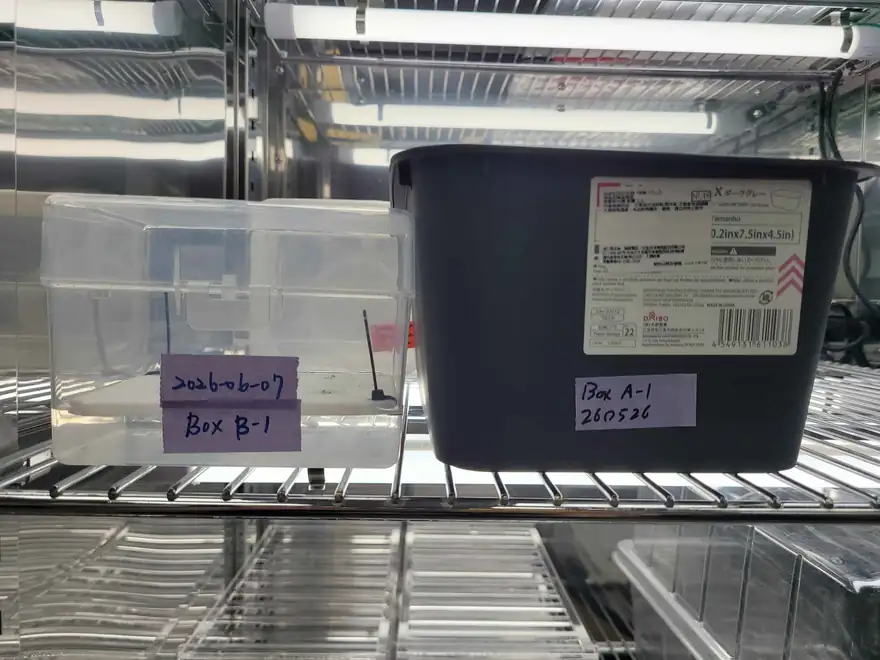
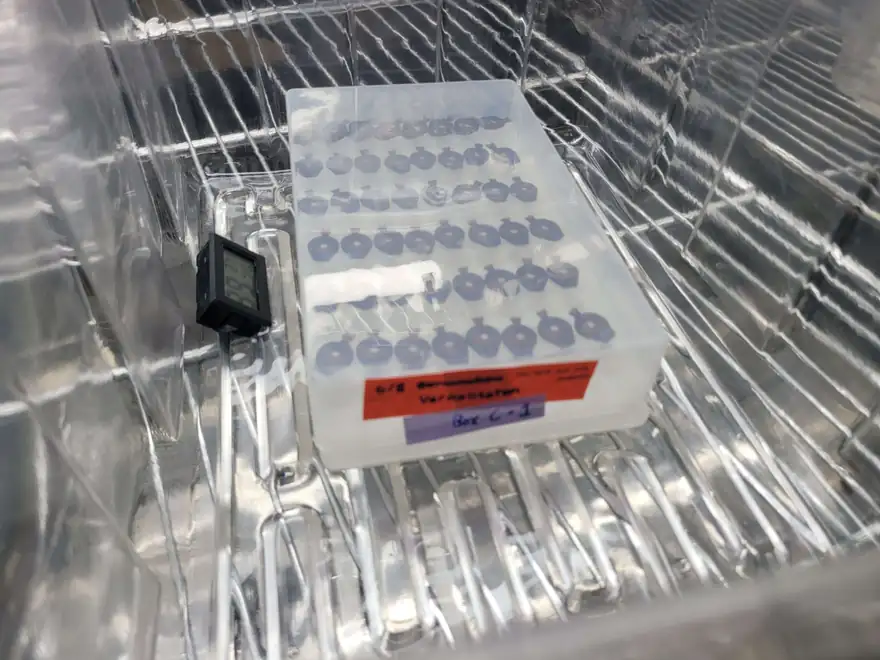
Hydroponics prototype set up
Deliverables 8
Eleven Model Figures
  • Normalised target output
  • Sensitivity gain
  • Stress index vs output
  • Time-to-activation and deactivation thresholds
  • Response speed
  • Replicate reliability
  • Observed vs predicted Hill fit
  • Residual error
Compiled Data Workbook
Bioreactor Optics
  • 6000 K white LED strips
  • 660 to 670 nm high-power red strips
Rack Envelope
  • 680 × 580 × 1400 mm, four tiers
Open-JIP Evaluation
  • Repository and guide paper reviewed
  • Decision framed openly on team intent
Reporter Selection
  • amilCP chromoprotein
  • Slowly-maturing tetramer, Acropora millepora
ACCD Reference Page
TARI Feedback
  • 農業試驗所 on field application
Participants & Contributions 3
Ethan
  • Researched on ACCD and Amil CP
Joshua
  • Researched on ACCD and hydroponics
Felix
  • Researched on ACCD and Amil CP
  • Math ModelingPopulation Comparison
  • BioreactorBranch Point, Driver Assignment
  • Light Plate ApparatusScope Cut
  • Chlorophyll FluorometerShelving
  • Protectant DesignCandidate Set

Participants Anna, Anton, Audrey, Ethan, Joshua, Felix, Noah, Jacquelyn

Results
  • Bioreactor branches into two instruments
    • Light Plate Apparatus opened
    • OD600 Photometer opened
  • Chlorophyll Fluorometer shelved, not abandoned
  • Responsibility split while the work stayed shared
Deliverables 9
Population Comparison Figures
  • Comparative molecular population plot
  • Intracellular concentration across conditions
  • Wuhan 2021 CcaS/CcaR precedent
Driver Assignment
  • Anton: LPA
  • Noah: Bioreactor
FiberCell Analysis Brief
  • Flow rate
  • Oxygen level
  • Volume
Filter Sourcing
  • 0.2 µm hydrophilic PES capsule
LPA Prototype 1 Scope
  • One intensity
  • Homogeneous across all wells
  • Bright enough
  • No per-well control
  • Tunable intensity deferred to milestone 2
LPA Sourcing
  • P1 shopping list
  • 光華 run, 21 May
First Use Date
  • 6/13
Fluorometer Shelving
  • Open-JIP guide archived for reopening
  • Fv/Fm retained on borrowed equipment
Protectant Candidates
  • Nad1
  • MtDef4
  • Criteria: known mechanism, tractable size, plausible secretion
Participants & Contributions 2
Joshua
  • Bioreactor research
  • Hydroponic arabidopsis research
  • Inline spectrophotometer research.
Felix
  • Protectant candidate discussion and selection
  • Experimenting with a variety of docking software
  • Data PhysicalizationConcept
  • HydroponicsDimensions
  • Math ModelingSecretion Kinetics, Disease Model
  • OD600 PhotometerFirst Signal
  • Light Plate ApparatusAssembly

Participants Anna, Anton, Audrey, Ethan, Joshua, Felix, Noah, Jacquelyn

Results
  • Data Physicalization opened
  • OD600 Photometer opened, first signal same week
  • LPA assembly underway with a written handover
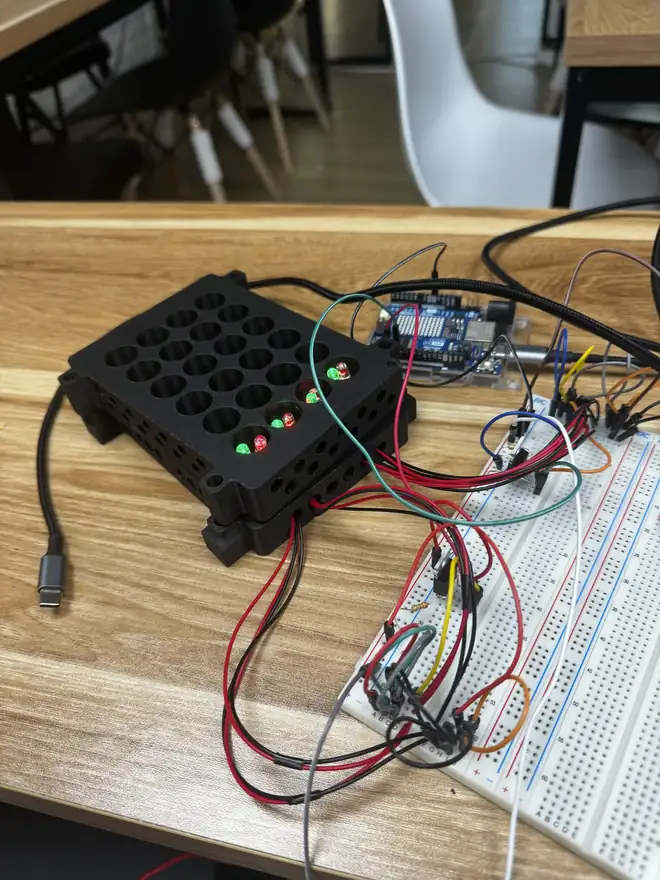
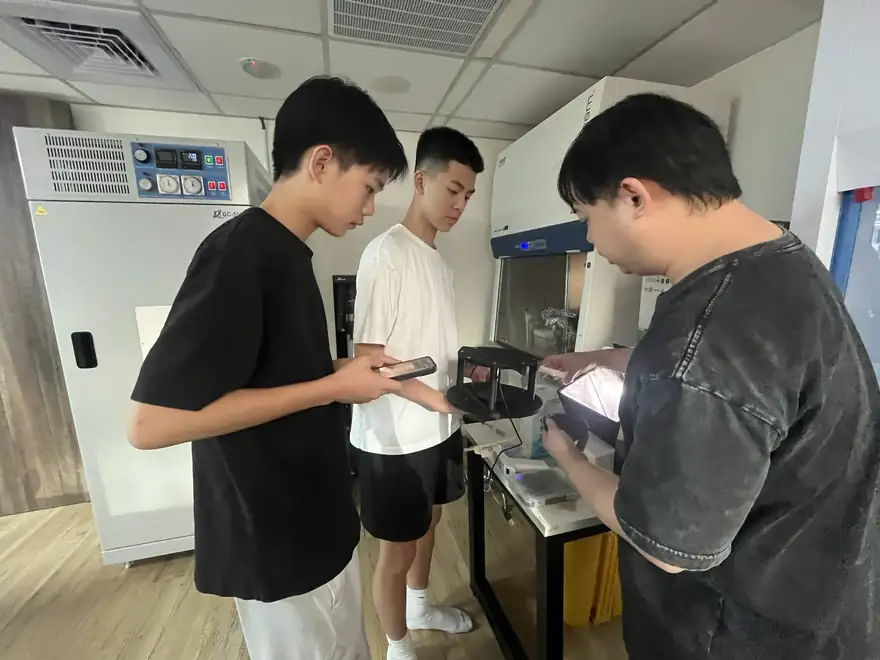
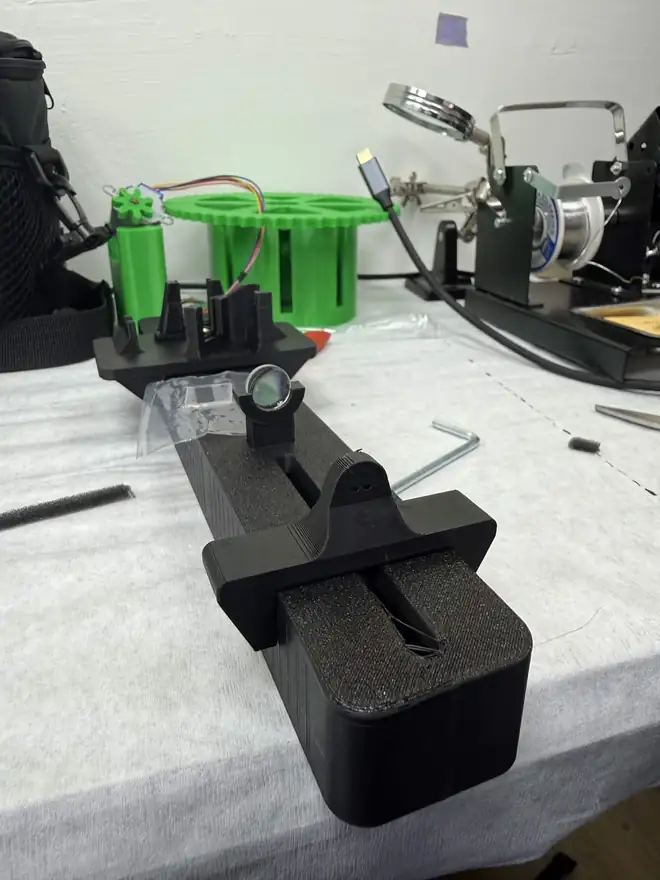
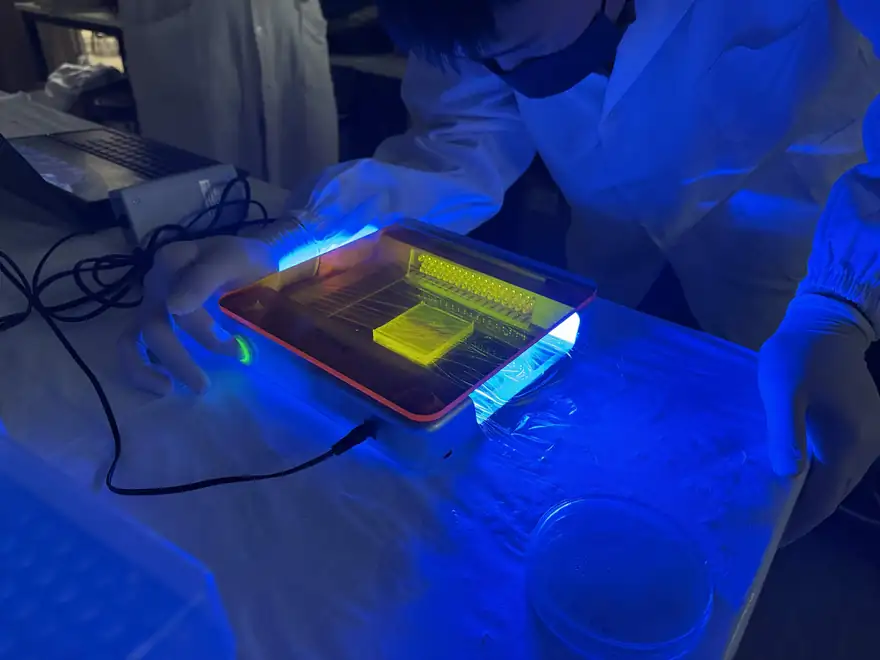
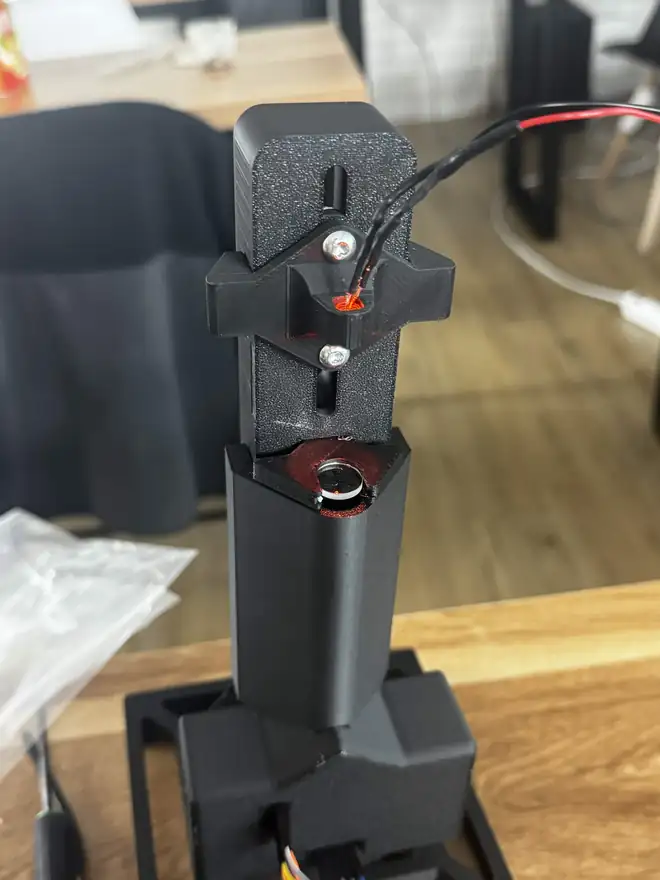
LPA design prototypeLPA design prototypePhotometer design on the whiteboardTroubleshooting the LPA assemblyFirst light on the photometerFirst light on the photometer
Deliverables 6
Data Physicalization Deck
  • Installation work reviewed as reference
  • Scoped for education, outreach, Jamboree
Hydroponics Dimensions
  • Reservoir and tray reconciled to chamber internal volume
  • Full literature set collected
ACCD Secretion Kinetics
  • First attempt at a rate, not a level
Botrytis Weather Model v1
  • 灰黴菌 risk from weather metrics
First Working Photometer Signal
  • Signal processing code unblocked
  • Component and light path notes
LPA Assembly Guide v2
  • Numbered procedure
  • Build reached step 15
  • Handover note for step 16
  • Build photographs archived
Participants & Contributions 2
Joshua
  • Photometer sensor reading and lens aligning
  • Research for bioreactor
Felix
  • Software testing and tuning
  • Data PhysicalizationFive Workstreams
  • HydroponicsPhenotyping Rig
  • Math ModelingPromoter Strength
  • BioreactorFit Problems
  • Light Plate ApparatusAssembly
  • Protectant DesignMutation Strategy

Participants Anna, Anton, Audrey, Ethan, Joshua, Felix, Noah, Jacquelyn

Results
  • Five physicalization objects assigned with owners and a deadline
  • Phenotyping made repeatable in-house
  • First tolerance issue logged, recurs later in the pinch valve
Deliverables 8
Five Physicalization Workstreams
  • Stress ball, non-Newtonian with thermochromic paint (Audrey, Mia)
  • Self-watering pot, siphon-fed (Olivia, Sophia)
  • Taiwan elevation map sculpture (Jacquelyn, Olivia, Katherine)
  • Plant ultrasound visualised with sand (Timmy, Felix, Neo)
  • Plant stress simulator game (Renée, Eva)
Thermochromic Paint Spec
  • Green → red at 33 °C, mimicking the optogenetic trigger
Physicalization Schedule
  • Materials by mid-June
  • Completion late July
Phenotyping Camera Stand
  • Repeatable height and angle
  • Root and rosette comparable across dates
Promoter Strength Scoping
  • Shared model and experiment parameter
  • Measured-or-literature labelling convention
First Fit Problem
  • Hollow-fibre lid would not seat
  • Resolved by sanding, tolerance fix deferred
LPA Engineering Sessions
  • 30 May and 1 June
  • Advisor Neo on the bench
  • Guide updated in place as steps proved wrong
Point Mutation Strategy
  • Informed by 2025 mutagenesis work
  • B. subtilis expression constraints reviewed
Participants & Contributions 3
Anna
  • Math Model
Joshua
  • Photometer codework
  • Turbidity meter handling
Felix
  • Point mutation and BoPEP4 literature review
    • Protectant strategy
  • Analysis of past wiki results

June 2026

5 entries, 39 photos6 · 13 · 14 · 20 · 27
  • Data PhysicalizationFirst Prototype
  • HydroponicsPhenotyping, Design Pass 2
  • Math ModelingThree-Layer Architecture
  • GIS & Stress ForecastOpening Brief
  • BioreactorLumen Growth Test
  • Protectant DesignAbiotic / Biotic Split
  • Wet Lab HandoffThe Bare Vessel

Participants Anna, Anton, Audrey, Ethan, Joshua, Felix, Noah, Jacquelyn

Results
  • Growth inside the lumen does not work, and the data says so
    • Oxygen not limiting at flask scale
    • Bioreactor back to the drawing board for oxygenation
  • GIS splits off from Math Modeling
    • ODE answers how much and how fast
    • GIS answers where and for whom
  • Protectant split into abiotic and biotic routes
  • Three-layer model architecture locked
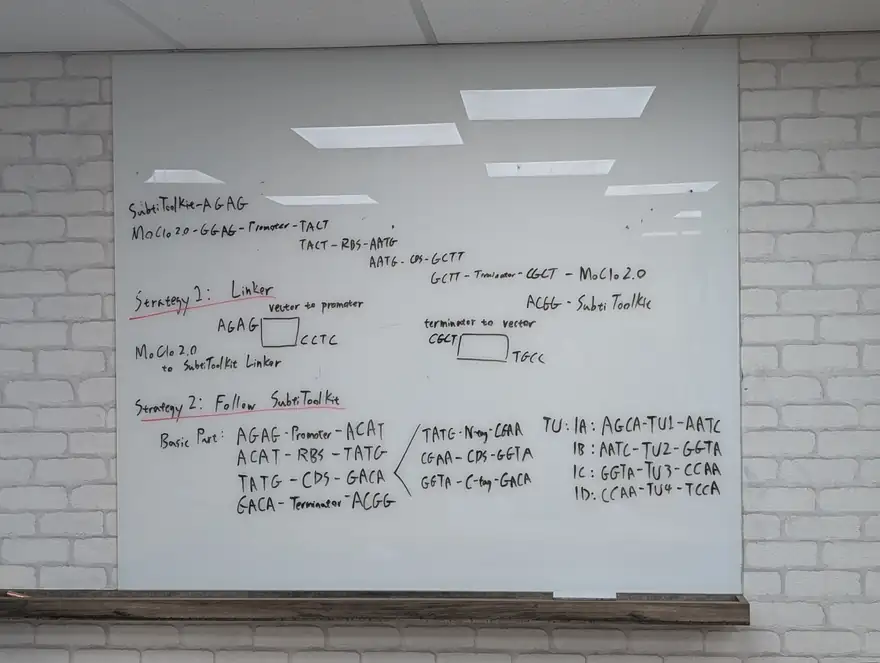
First B. subtilis growth testMoving the plants into the boxSeed stratificationB. subtilis natural growth curveGel after electroporationSubtiToolKit on the board
Deliverables 11
Oobleck Stress Ball
  • Non-Newtonian response as the metaphor
  • Behaves differently under sudden vs gradual stress
Phenotype Scoring Framework
  • Growth-stage-based analysis of Arabidopsis
  • Reference images collected for the wiki
Hydroponics Design Comparison
  • 2 to 3 alternative designs researched
Three-Layer Model Spec
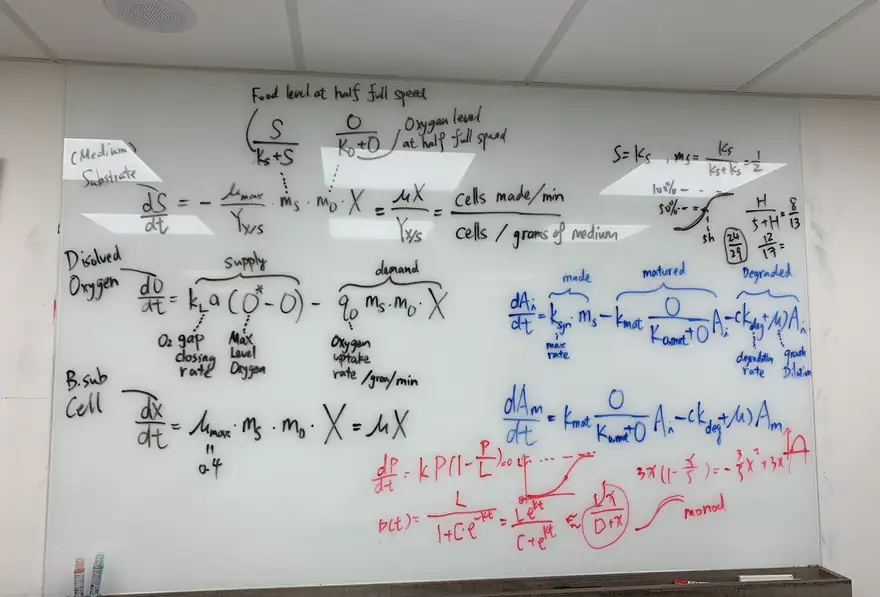
  • Layer 1, growth: X cells, S substrate, O oxygen
  • Layer 2, CcaSR expression: Hill input plus three-state ODE cascade
  • Layer 3, secretion: SacB signal peptide plus TFF delivery
GIS Brief
  • Three intersections: synthetic biology, agriculture, biomanufacturing
  • Spatial optimisation and suitability mapping
Lumen Growth Dataset
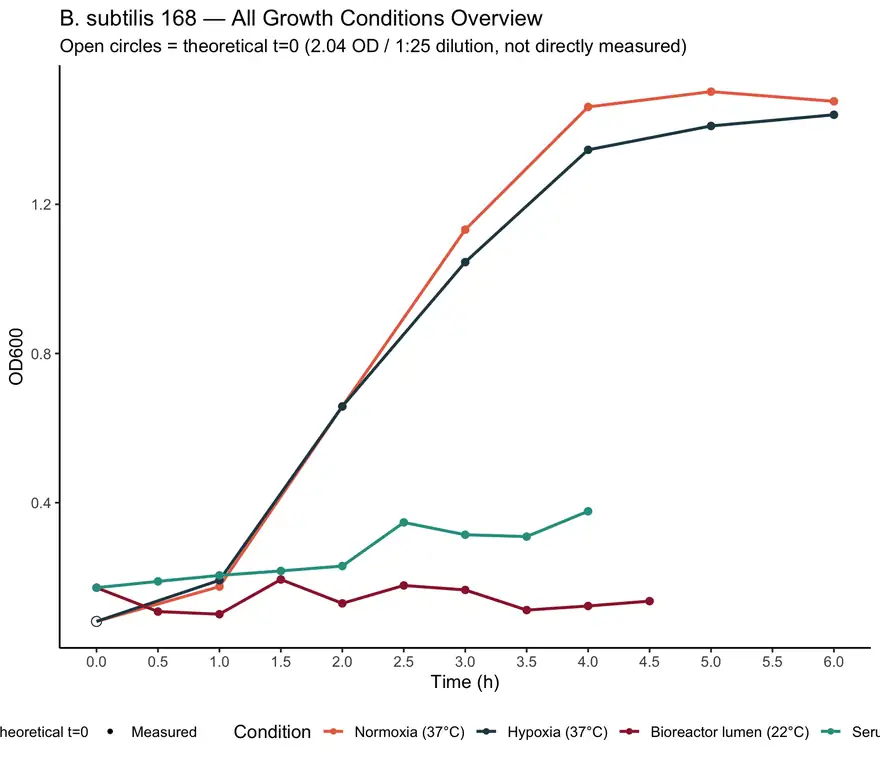
  • Normoxia 0.175 → 1.50, hypoxia 0.192 → 1.44 at flask scale
  • Inside TFF lumen 0.172 → 0.136 over ten 30-minute samples
  • Free control 0.172 → 0.377
Obstacle Analysis
  • Sec/Tat saturation, folding stress
  • Wall teichoic acid interference at high OD
  • O₂ and nutrient gradients
  • Protease degradation
  • Foaming from surface-active protein
  • Fed-batch vs continuous trade-off
Chang Lab Literature Review
  • Carrier-assisted surfactin production
  • Solid carriers, iron supplementation
  • Immobilized vs suspended cells
Professor Meetings Scheduled
  • 張嘉修, 18 June
  • 陳文亮, 20 June
Protectant Strategy Doc
  • Abiotic: LEA, ACC deaminase
  • Biotic: BoPEP4, plant elicitor peptides, NHP
  • Both routes share one secretion chassis
Wet Lab Handoff: The Bare Vessel
  • Sent: assembled hollow-fibre vessel, no instrumentation
  • Sterile sampling procedure worked out and photographed
  • Paired cultures, lumen vs serum bottle, every 30 minutes
Participants & Contributions 2
Joshua
  • Bioreactor HFM testing
  • Photometer code
  • Bioreactor research
  • Arabidopsis research
Felix
  • Oobleck stress ball discussion
  • Refining protectant strategy
  • Data PhysicalizationSimulator v2
  • HydroponicsHandoff
  • BioreactorPrototype 2
  • OD600 PhotometerIteration 1
  • Light Plate ApparatusUnits Problem
  • Protectant DesignBranch Point
  • Codon OptimizationOpening
  • Wet Lab HandoffThe Hydroponics System

Participants Anna, Anton, Audrey, Ethan, Joshua, Felix, Noah, Jacquelyn

Results
  • Codon Optimization opened as its own pipeline
    • Protectant keeps peptide design
    • Codon takes expression and folding
  • Hydroponics handed to WetLab Plant
    • Dry lab retains the protocol deliverable
  • Photometer iteration 1 fails honestly and names the reason
  • Reference light doses corrected from lux to PPFD
Deliverables 9
Plant Stress Simulator v2
  • Adjustable stress sliders
  • Protectant effect made visible alongside damage
Sap Flow Literature
  • Measurable link between water status and stress
Prototype 2: Oxygenation
  • Oxygenation added to the design
  • Expert interview prep: foaming, scaling, O₂ dissolution, pH
  • Sampling procedure for reactor and flask
3D Printer Selection
  • Bambu P2S over H2S
Photometer Iteration 1
  • Adjustable 3D-printed mount, independently alignable
  • Horizontal light path
  • Failed on bubbling and loose print tolerances
  • Conclusion: rigid sealed path beats independent alignment
PPFD Conversion Method
  • Castillo specifies PPFD, not lux
  • Phone check first, then a cheap lux meter
  • Conversion is wavelength-dependent, done per channel
Folding Tool Evaluation
  • ChimeraX
  • NUPACK
Codon Optimization Manual
  • English and Chinese
  • Castillo 2019 optogenetics precedent
  • First design pass 16 June
Wet Lab Handoff: The Hydroponics System
  • Sent: system design, germination workflow, stress-assay protocol
  • Plate prototype built and rebuilt through April and May
  • Full plate set made together 30 May
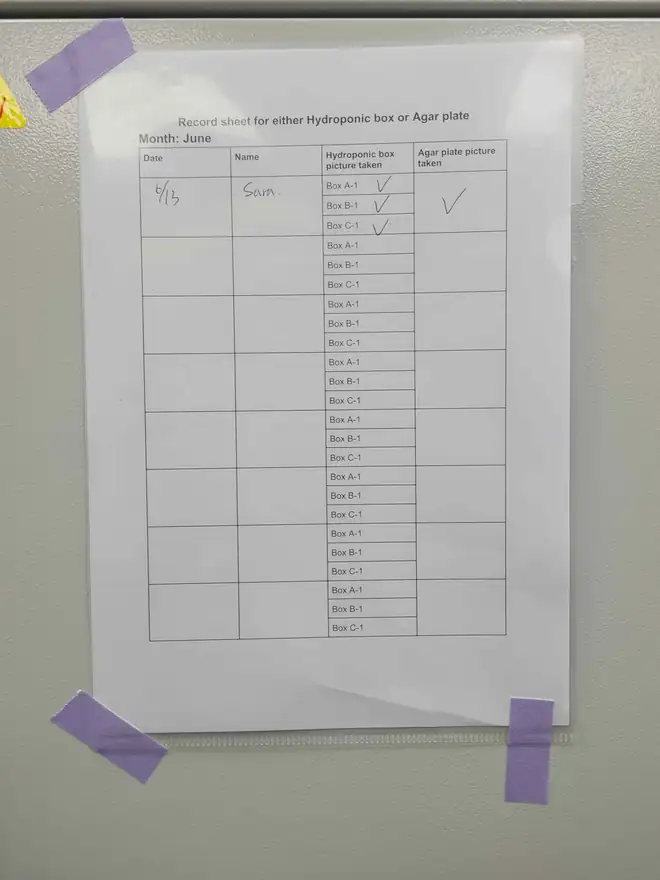
  • Plant record sheet opened 13 June
  • Vertical agar plates run in parallel
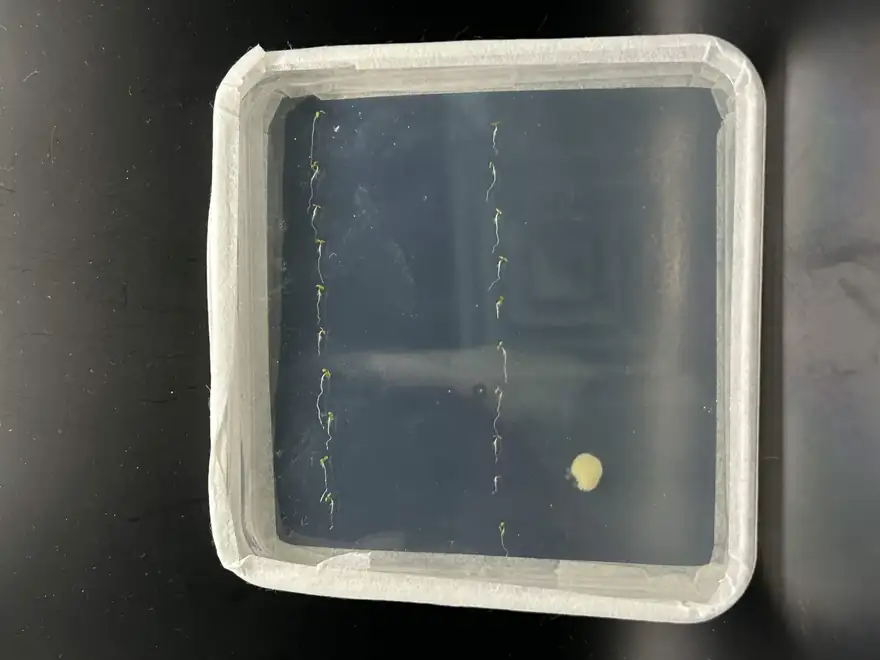
  • Salinity trials scoring root length and chlorophyll
Participants & Contributions 2
Joshua
  • Photometer testing, design change, and coding
  • Bioreactor research
Felix
  • Folding tools evaluation
  • BioreactorGuide to extracting samples

Participants Abby K, Abigail, Phoebe, Joshua

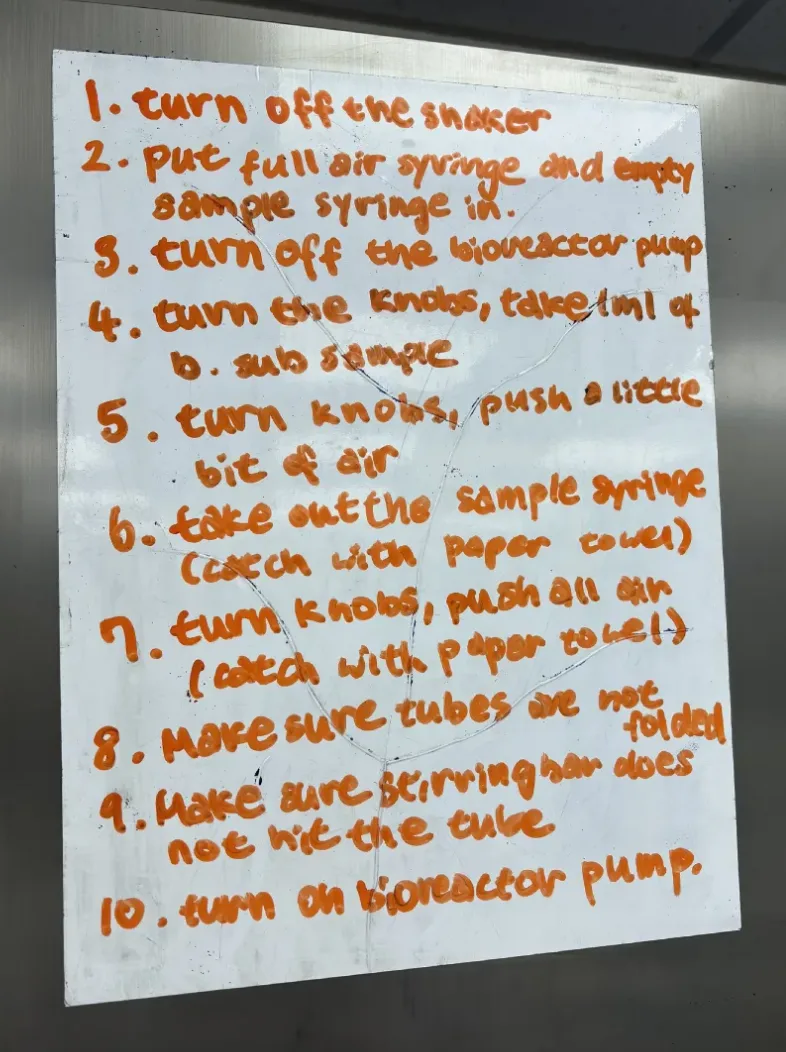
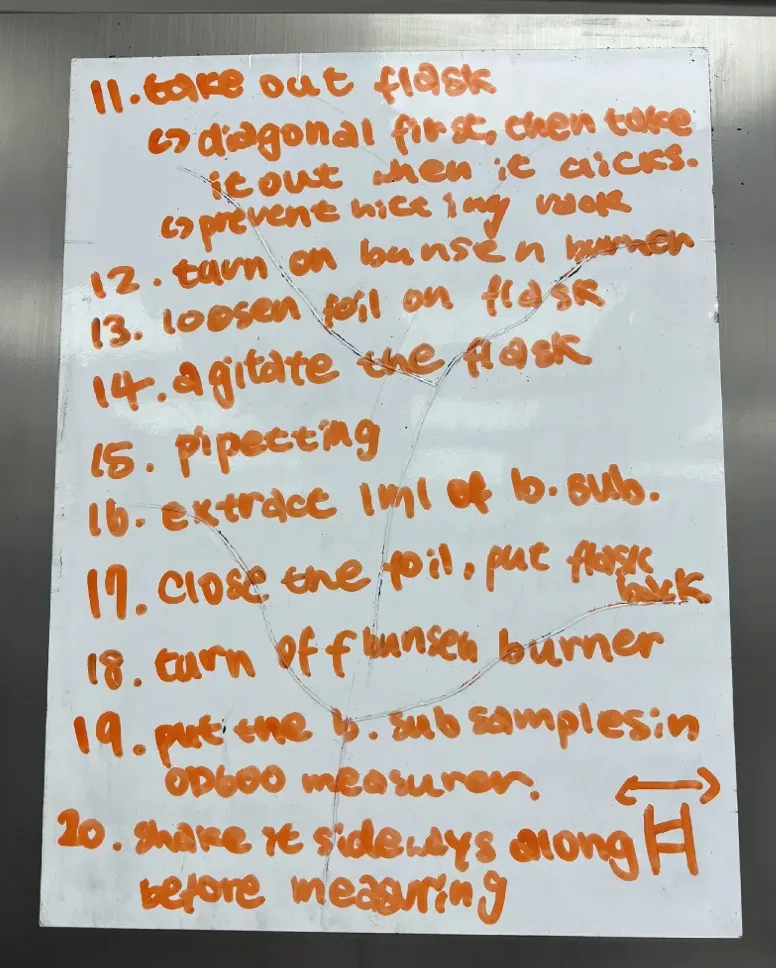
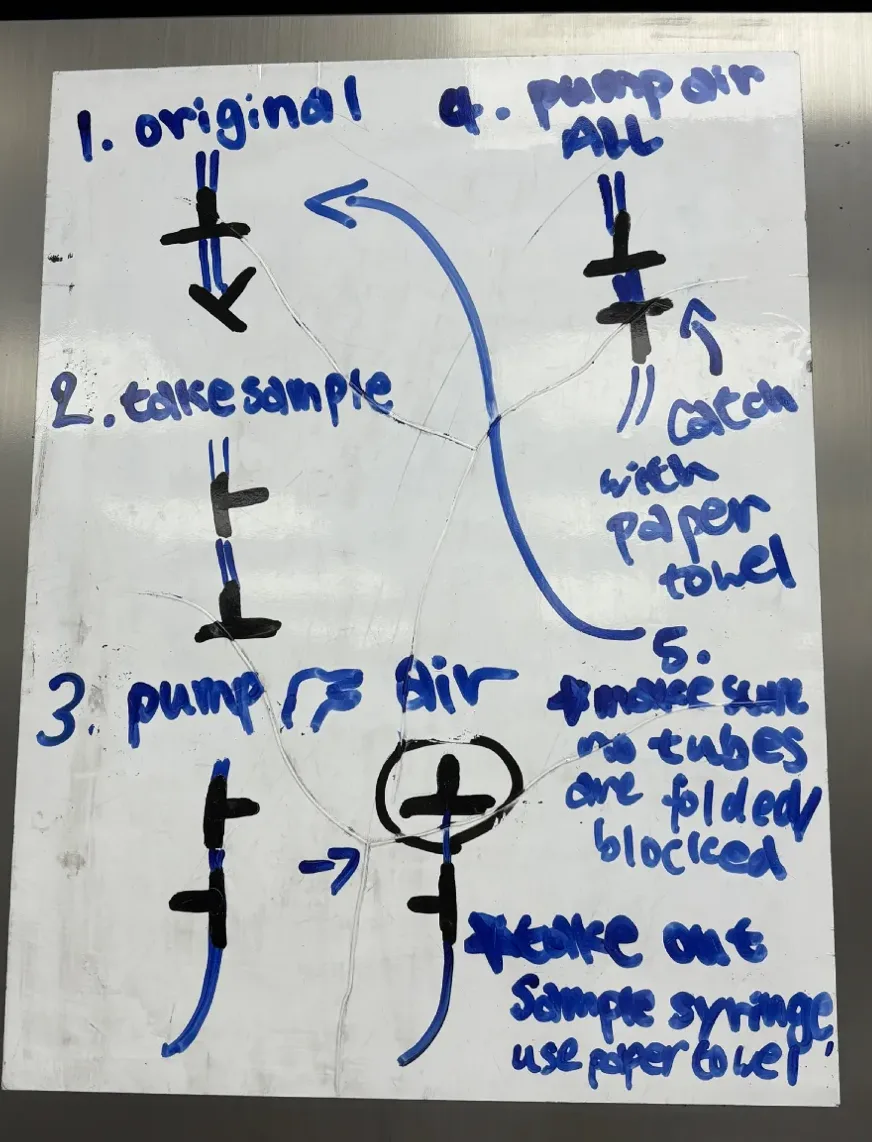
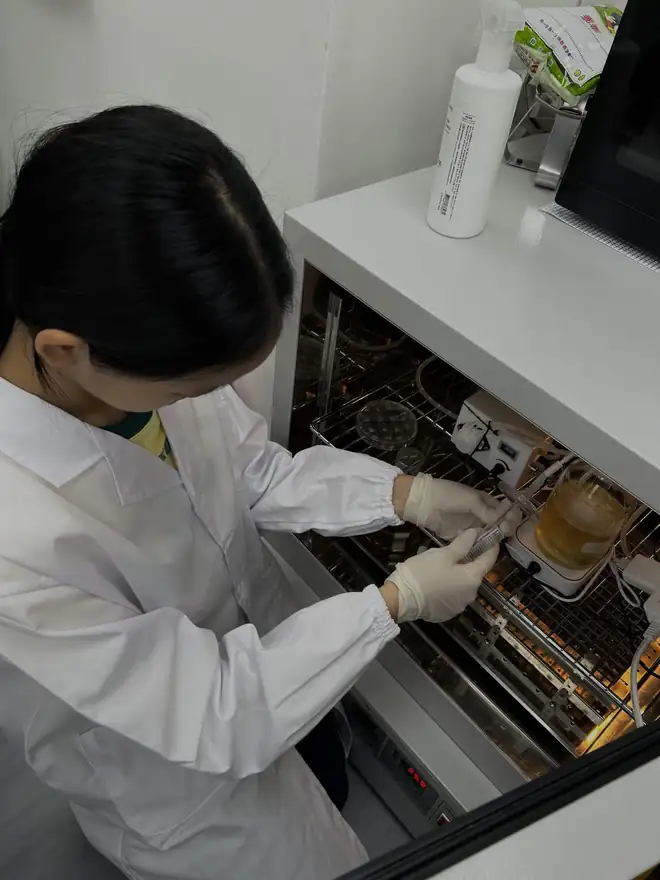
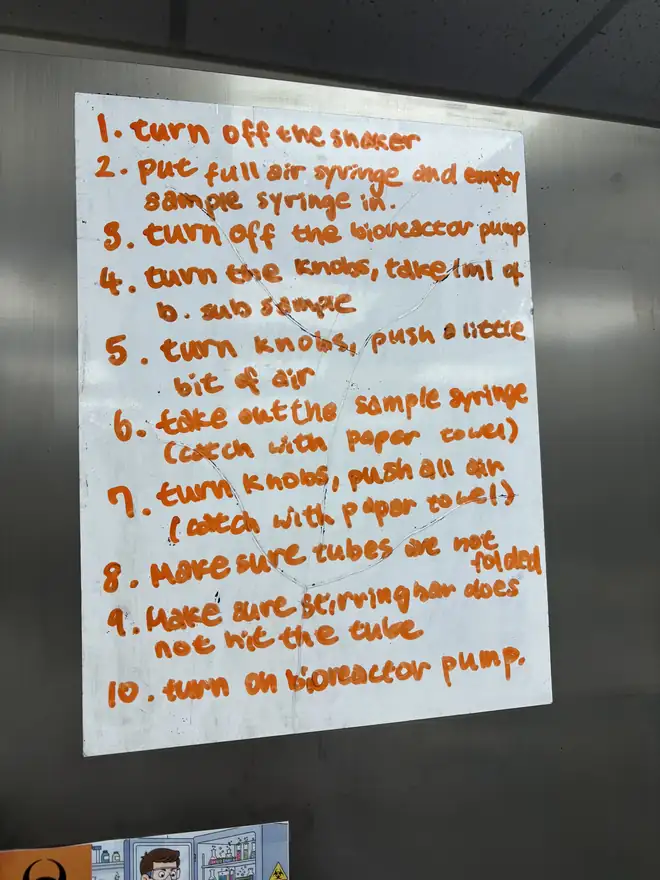
Whiteboard in orange marker listing steps 1 to 10 for taking a 1 ml B. subtilis sample from the bioreactor with syringes and knobs.Whiteboard in orange marker listing steps 11 to 20 for sampling the flask next to a Bunsen burner and measuring OD600.Whiteboard sketch in blue marker of the valve positions: original, take sample, pump air, pump all air out, and check no tubes are folded.Bioreactor DBTL cycleSampling reactor and flask side by sideWorking out the sampling route
Deliverables 1
Documented how to extract B. subtilis samples from the first bioreactor and the flask and extracted them for 2.5 hours every 15 minutes
  • Math ModelingMembrane Transport
  • OD600 PhotometerIteration 2

Participants Anna, Anton, Audrey, Ethan, Joshua, Felix, Noah, Jacquelyn

Results
  • Transport modelled across both membranes
  • Photometer geometry reworked against the iteration 1 failure
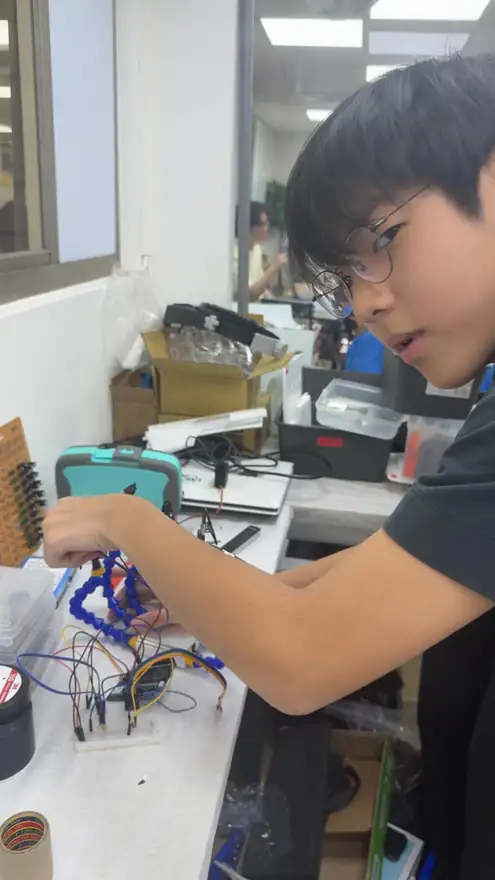
Photometer engineering, with advisor NeoAdvisor Venus teaching
Deliverables 4
Two-Compartment Transport Equations
  • Cell interior → lumen
  • Lumen → shell
AmilCP Prediction Thread
  • Visible reporter proxy for expression
ACCD Timeline Figure
Photometer Iteration 2
  • Light path and cuvette mounting reworked
  • Bubble artefacts suppressed
  • Design photographed and circulated for review
Participants & Contributions 1
Joshua
  • Photometer testing, code, and redesign
  • Arabidopsis research
  • Bioreactor pressure research
  • Data PhysicalizationLocalisation, Handoff
  • Wiki & NotebookPractice Wiki
  • Math ModelingFlow Rate Coupling, Delay Budget
  • BioreactorPinch Valve, Tolerances
  • OD600 PhotometerOptics Bench
  • Light Plate ApparatusCalibration
  • Protectant DesignSecretion Prediction
  • Codon OptimizationAlgorithm Survey

Participants Anna, Anton, Audrey, Ethan, Joshua, Felix, Noah, Jacquelyn

Results
  • Wiki & Notebook opened
  • Data Physicalization handed to Education
    • Dry lab retains the modelling data feeding the simulator
  • Delay budget located in maturation, which redirects the modelling
  • LPA output made uniform by measurement, not assumption
Deliverables 10
Chinese Simulator Build
  • Delivered to the education team
  • Map physicalization moved into Human Practices
Practice Wiki Repo
  • gitlab.igem.org
  • Build and deploy pipeline tested before content
Flow Rate Figures
  • At low flow the curve is a transport bottleneck, not a physiological crisis
  • Shear-induced lysis flat at zero across the tested range
Delay Analysis
  • Most lag sits in maturation, not secretion or transport
Pinch Valve v1
  • Stepper motor driven
Revised CAD
  • Parts reprinted for better tolerances
  • Parts register consolidated
Optics Bench Session
  • Prototype photographed with lens and beam line visible
  • Instructor trial run with students observing
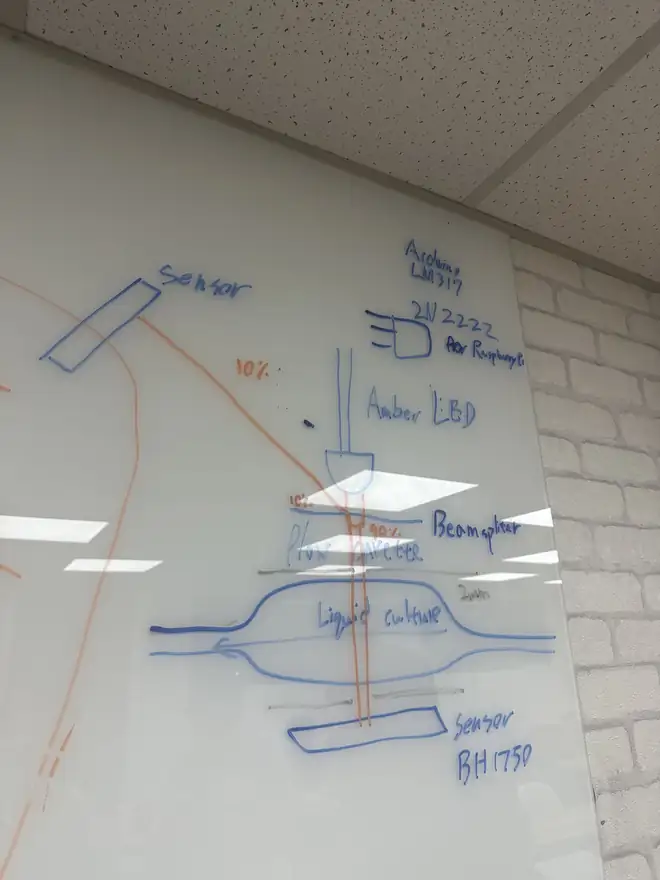
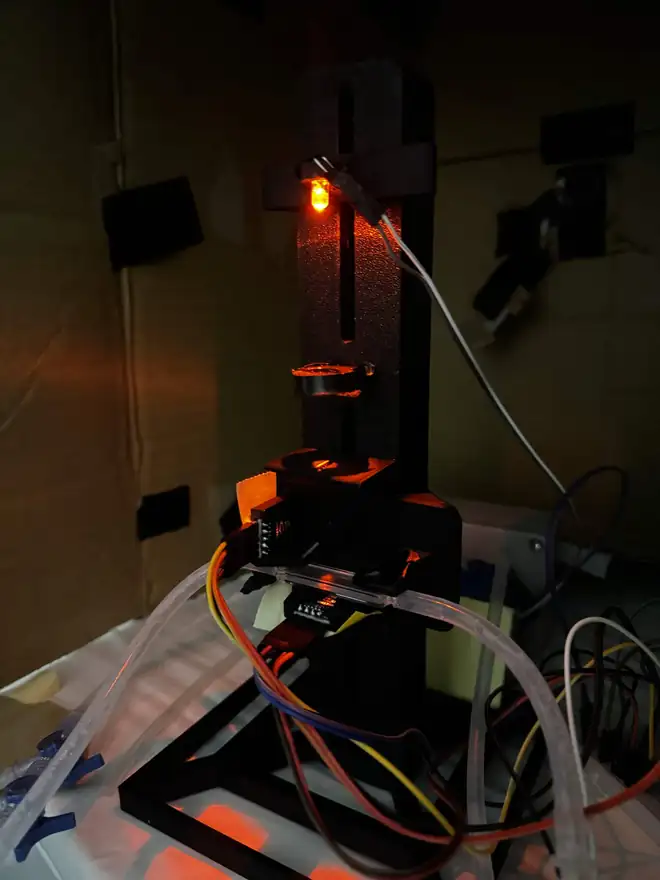
  • Amber light inside enclosure confirmed a closed path
LED Calibration Figure
  • Outputs before and after image-analysis calibration
  • Well-to-well variation corrected
Secretion Efficiency Predictions
  • ProtGPT-family models evaluated
  • SecEff-Pred adopted
  • Multiple sequence alignment started
Folding Algorithm Survey
  • ViennaRNA vs NUPACK head to head
  • mRNA folding vs general RNA folding
  • RNA-RNA binding thermodynamics
  • Secondary structure vs translation efficiency as the criterion
Participants & Contributions 1
Joshua
  • Photometer test
  • Pinch valve motor research + initial coding

July 2026

4 entries, 36 photos4 · 11 · 18 · 25
  • Math ModelingThree Phases
  • GIS & Stress ForecastStorylines
  • BioreactorPressure Transducer
  • OD600 PhotometerFirmware
  • Light Plate ApparatusPer-Bulb Measurement
  • Protectant DesignBoPEP4 Strategy
  • Codon OptimizationTool Decision, Handoff
  • Wet Lab HandoffThe Optimised Sequences

Participants Anna, Anton, Audrey, Ethan, Joshua, Felix, Noah, Jacquelyn

Results
  • ViennaRNA chosen for a stated, specific reason
  • Optimised sequences handed to WetLab for construct design
  • LPA homogeneity proven by measuring every bulb
Deliverables 9
Three-Phase Spec
  • Phase 1: detect salt, back-calculate light dose (回推 lux)
  • Phase 2: light intensity varies with time
  • Phase 3: real conditions, sudden solute change plus heat
Iso-Stress Map
  • Temperature × salinity against Arabidopsis root length
GIS Storyline Drafts
  • Written line of argument per storyline
  • Required map combinations
  • Candidate field trip
  • Validating data
  • Linked to physicalization so a map can become an object
Pressure Transducer Rig
  • Adapter delivered, test and coding session scheduled
Firmware v1.4
  • Confirmed working, v2 flagged broken and pulled
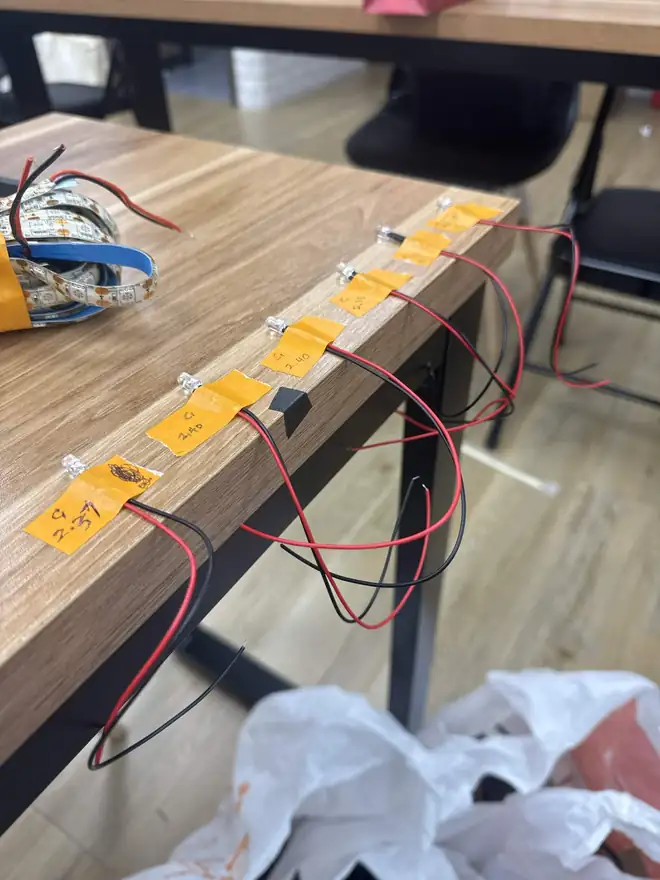
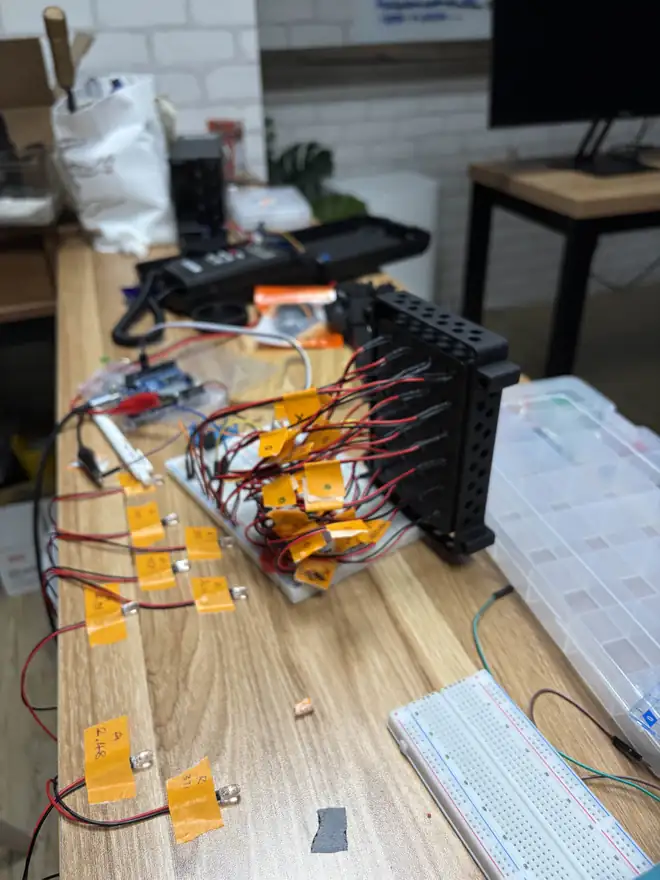
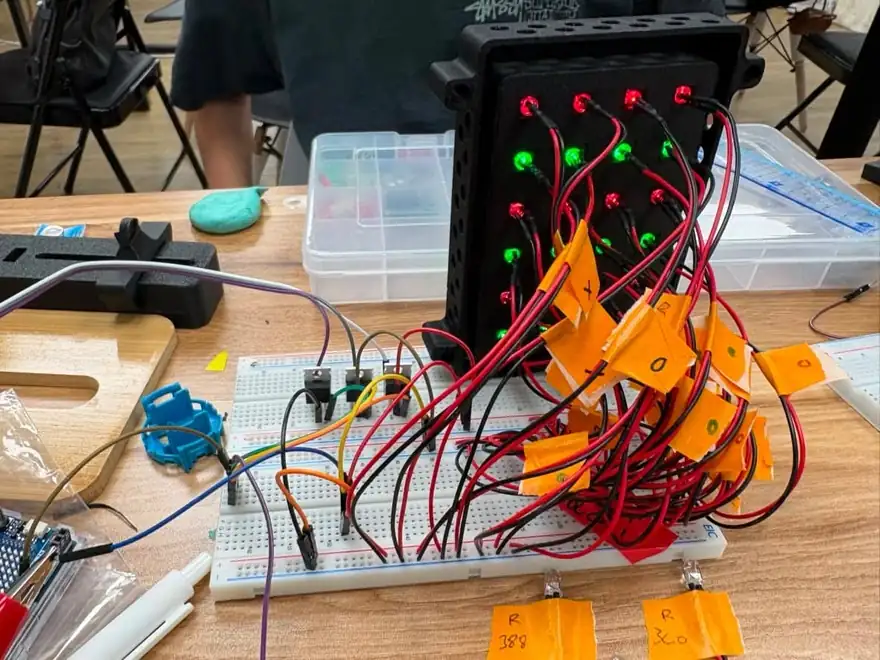
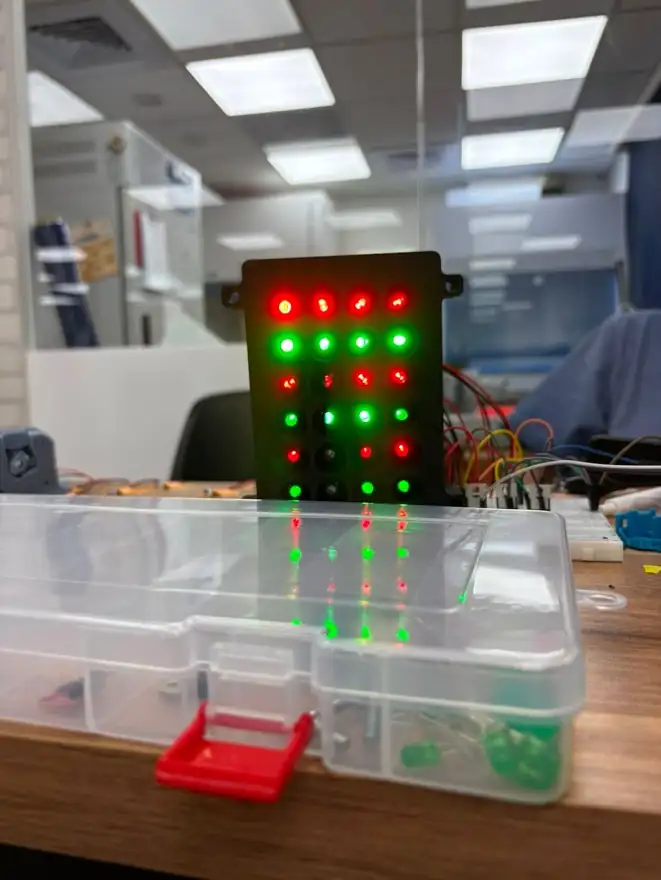
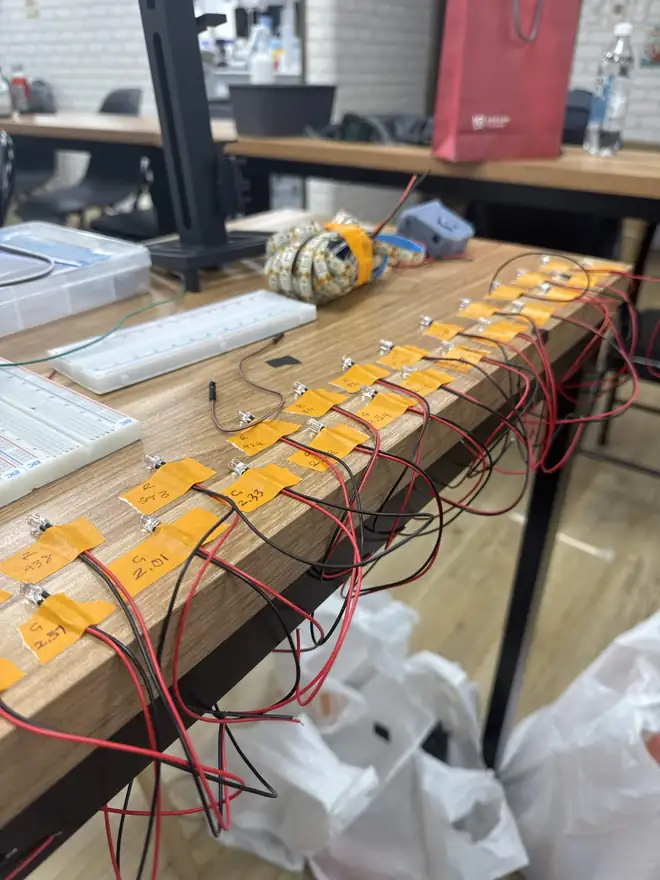
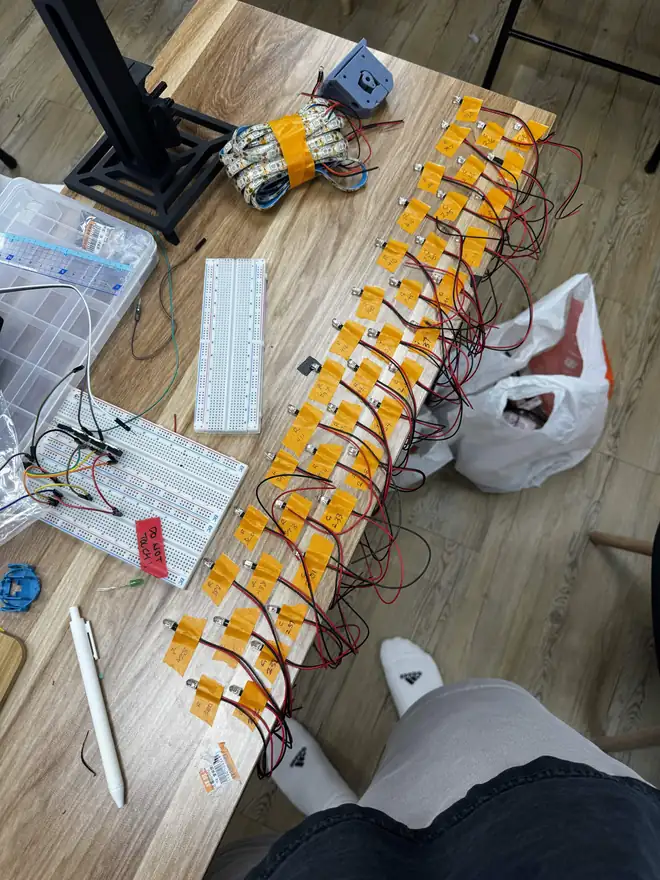
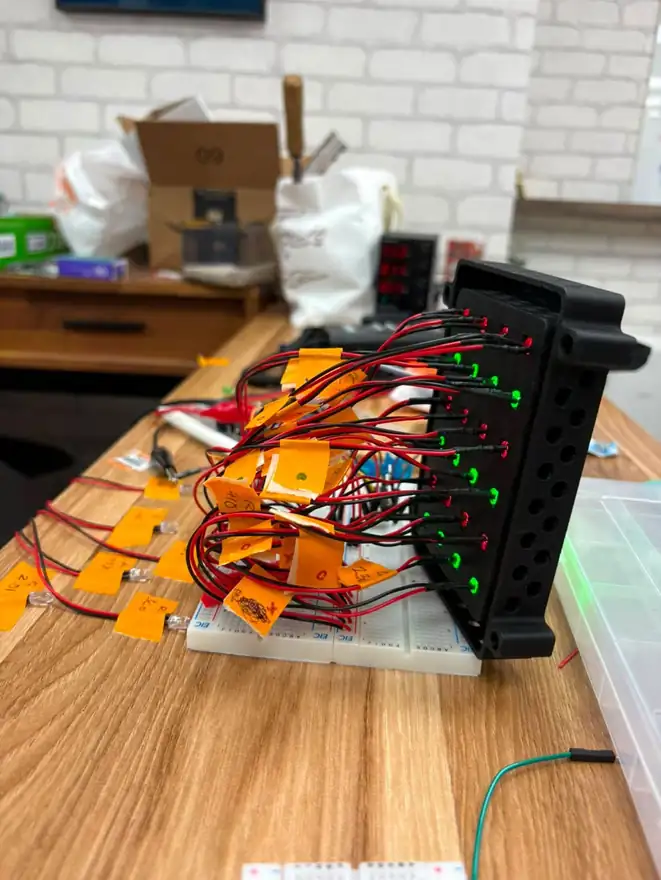
Per-Bulb Intensity Map
  • Every LED measured individually
  • Laid out in intensity order, taped and labelled
  • Lux measured then converted to PPFD
  • Makes Prototype 1's homogeneity requirement actually true
BoPEP4 Design Strategy
  • AtPEP3 Design A and Design B as comparison scaffolds
  • Secretion strategy written up
  • ACCD kept as the parallel abiotic track
Tool Decision Memo
  • LinearFold uses beam pruning to stay fast on long sequences
  • Our sequences are short, so speed buys nothing while accuracy costs
  • ViennaRNA selected
Wet Lab Handoff: The Optimised Sequences
  • Sent: ViennaRNA-optimised coding sequences
  • Electroporation learned as a team beforehand
  • SubtiToolKit worked through on the whiteboard
  • Gels run to check what went in
  • Miniprep protocol written out in full
Participants & Contributions 1
Joshua
  • Pinch valve
  • Photometer hardware finalizing before first solder onto pcb boards
  • Bioreactor circuit research
  • Pressure transducer initial code without user interface
  • Math ModelingDesign Dossier, Scale-Up
  • BioreactorPressure Monitoring
  • Light Plate ApparatusMilestone 2
  • Protectant DesignHADDOCK Docking

Participants Anna, Anton, Audrey, Ethan, Joshua, Felix, Noah, Jacquelyn

Results
  • Transmembrane pressure monitoring works
    • Only the pinch valve remains before AmilCP or β-galactosidase production
  • LPA milestone 2 reached: intensity is tunable
  • Docking begins with a validated method
  • Scale-up trade-offs made explicit, not assumed
Deliverables 8
Perfusion Hollow-Fibre Design Dossier
  • Pressure-explicit model
  • Kinetics
  • Secretion cascade simulator
  • Membrane specs
Dosing Models
  • NaCl → protectant → light
  • Temperature-dependent trehalose dosing curve
  • Root length under salinity and temperature, published interactive
Bioreactor Invariant Explorer
  • Ten parameters, competing indices
  • Trade-off made visible, not argued
Scale-Up Constraint
  • You cannot satisfy every dimensionless group at once
  • Scaling on Reynolds drops tube velocity, lowers wall shear, worsens fouling
Pressure_sensor v0.26
  • Transmembrane pressure monitored live
  • Trace pulses identified as the peristaltic pump
TFF Scaling Notes
  • Linear-scale ultrafiltration papers
  • Bioprocess membrane technology
  • EPFL 2024 hardware page as wiki reference
LPA Firmware: 3-Channel PWM
  • Roughly 31%, 63%, 100% duty
  • Green and red tunable independently for CcaS/CcaR
HADDOCK Docking
  • HADDOCK 2.5 adopted
  • AtPEP1-PEPR1 as the validation run, answer known
  • BoPEP4-PEPR1 report published as an interactive structural view
  • PEPR1 vs PEPR2 selectivity
  • GILIG motif as a conserved recognition element
  • PEP family MSA completed
  • BoPEP4 hydroponic dosing calculated
Participants & Contributions 1
Joshua
  • Pinch valve motor
  • Pressure test
  • Bioreactor research
  • Wiki & NotebookWiki Sequence
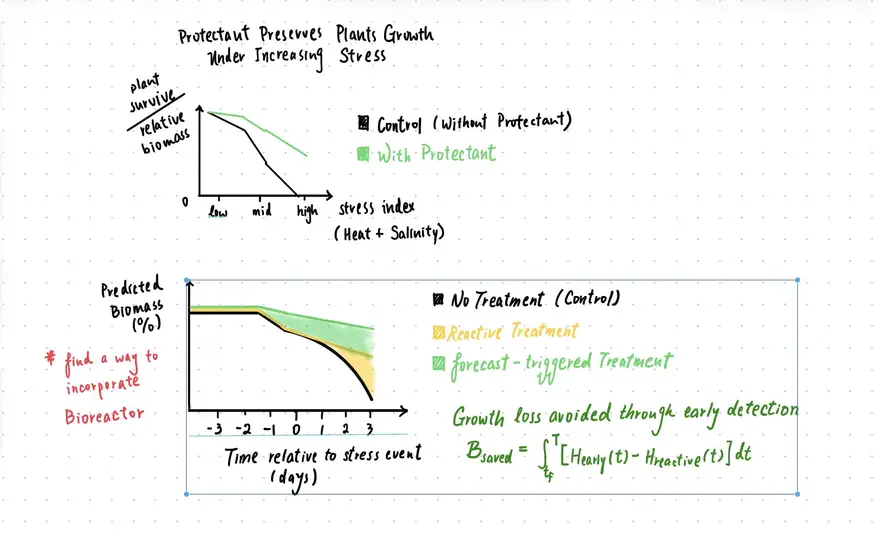
  • Math ModelingDigital Twin, Stress Forecast
  • GIS & Stress ForecastTerrain Model
  • BioreactorHandoff
  • OD600 PhotometerValidation
  • Protectant DesignMutation Scanning
  • Wet Lab HandoffThe Instrumented Reactor

Participants Anna, Anton, Audrey, Ethan, Joshua, Felix, Noah, Jacquelyn

Results
  • Photometer reads correctly and can be proven against a BioDrop
  • Instrumented reactor handed to WetLab
    • Continuous traces replace hourly hand samples
  • Terrain-aware stress forecast built for Taiwan
  • Wiki planned as a sequence, not a sitemap
Deliverables 10
Wiki Planning Doc
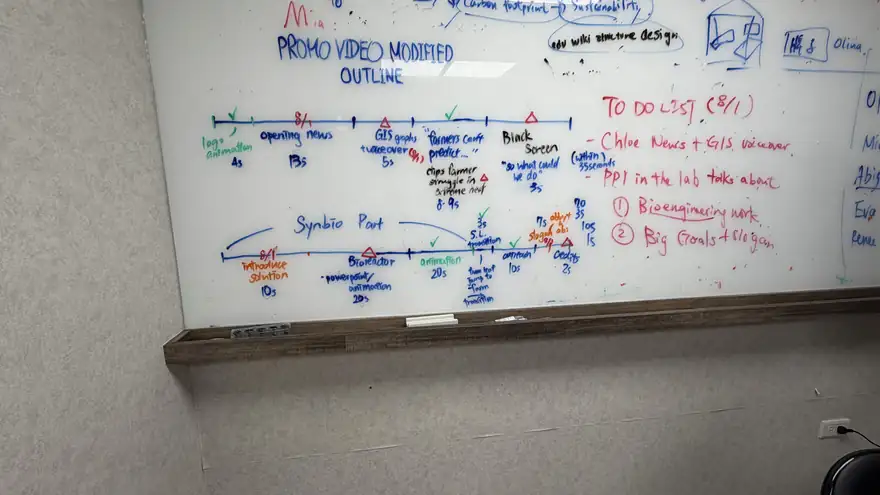
  • Opening: black screen, green light, ReLEAF logo and team
  • Caption: "An on-site, on-demand protectant factory"
  • Five-second bioreactor release animation with the mascot
  • Green of the logo carries the transition
  • Aachen 2024 hardware page as the quality bar
Bioreactor Digital Twin v2
  • Built to accept measured data and check conformance
Taiwan Stress Forecast v1
  • CWA forecast temperature and rainfall as base layer
  • Adjusted by elevation, coastal distance, water balance
  • Cross-checked against CWA agricultural monitoring
  • Limitation logged: functional but visually poor
od600_monitor v6
  • First reasonable readings 19 July
  • Root cause found by debugging, sensor resolves TiO₂ in suspension
  • Developer Mode holds the LED on and streams readings
  • First comparison overestimated ~4×, traced to an uncleaned blank
  • Manual blank entry implemented same evening
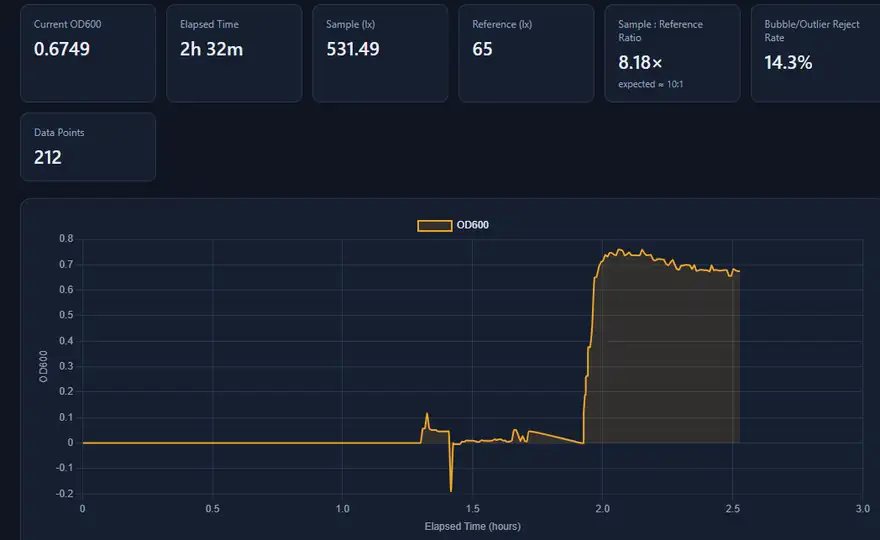
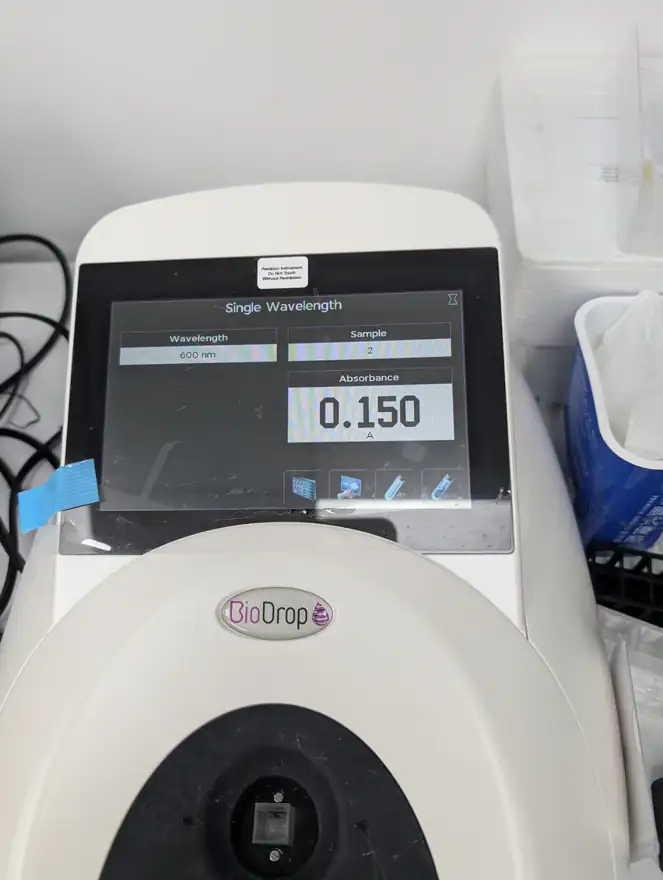
  • Read 0.100 against BioDrop 0.149
  • Continuous logging exported as CSV
Alanine Scan
  • Substitution across the binding interface
Tandem Repeat Analysis
  • Tests whether multivalency improves engagement
Docking Structural Atlas
  • Pearce 2008 AtPEP1 as ground truth
  • Compiled in English for the wiki
Order List v1
  • Drawn up 27 July
Vendor & Expert Leads
  • Sartorius and membrane suppliers at the exhibition
  • Automation expo 19 to 22 Aug for field-hardened sensors
Wet Lab Handoff: The Instrumented Reactor
  • Sent: instrumented reactor, OD600, pressure, pH and DO probes
  • Live cultures run with the reactor reporting its own state
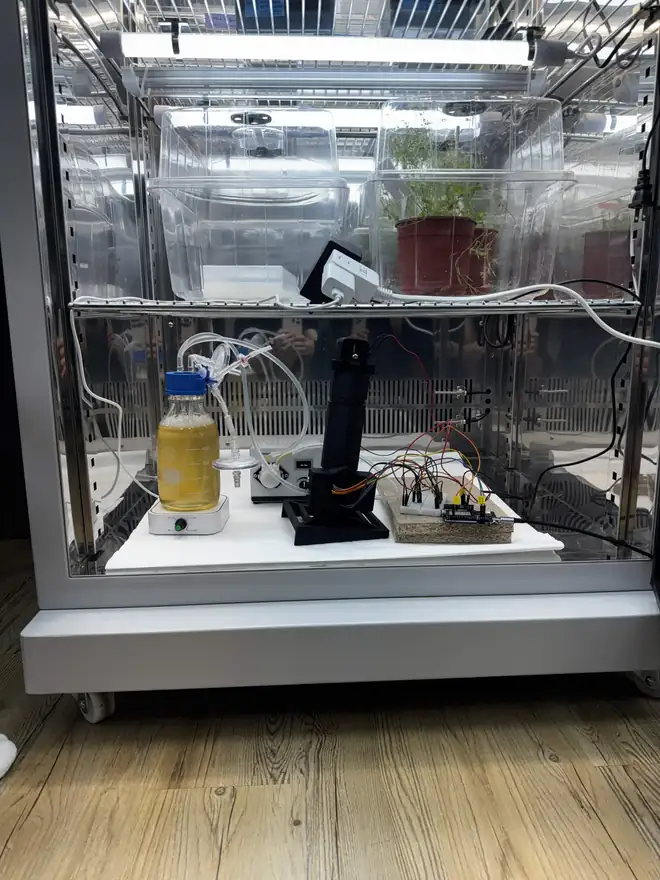
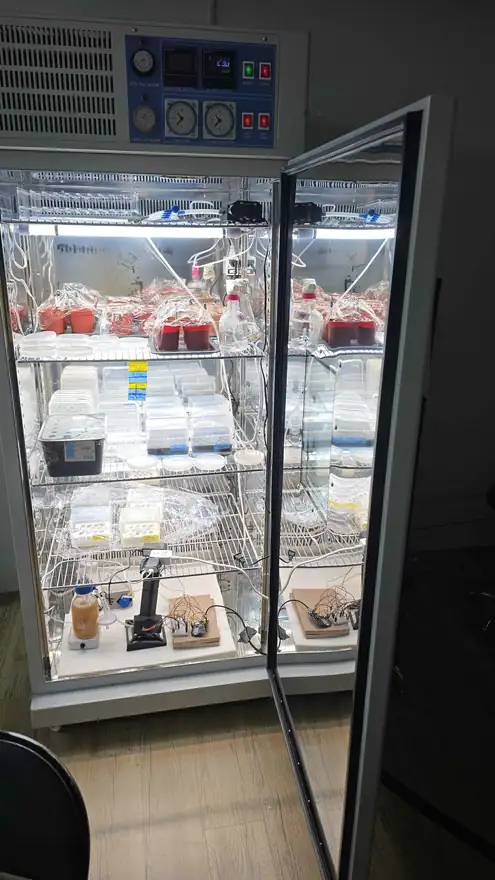
  • Long-run tests with reactor, photometer and plants in one incubator
Participants & Contributions 1
Joshua
  • New photometer code with user interface, first od relationship test with biodrop
  • Pinch valve motor switch research
  • Bioreactor circuit design for first test with b. Sub
  • Wiki & NotebookContent Inventory, Regulation Timeline
  • Math ModelingIrrigation Model
  • GIS & Stress ForecastCrop Stress Map
  • BioreactorRoadmap, Daily Notebook
  • OD600 PhotometerBenchmarking
  • Protectant DesignMethodology Validation

Participants Anna, Anton, Audrey, Ethan, Eva, Felix, Noah, Jacquelyn

Results
  • Crop-specific stress map goes interactive
  • Docking methodology validated against the literature, then specialised
  • Photometer benchmarked against 22 prior open-source builds
  • Regulation work opened in parallel with the science
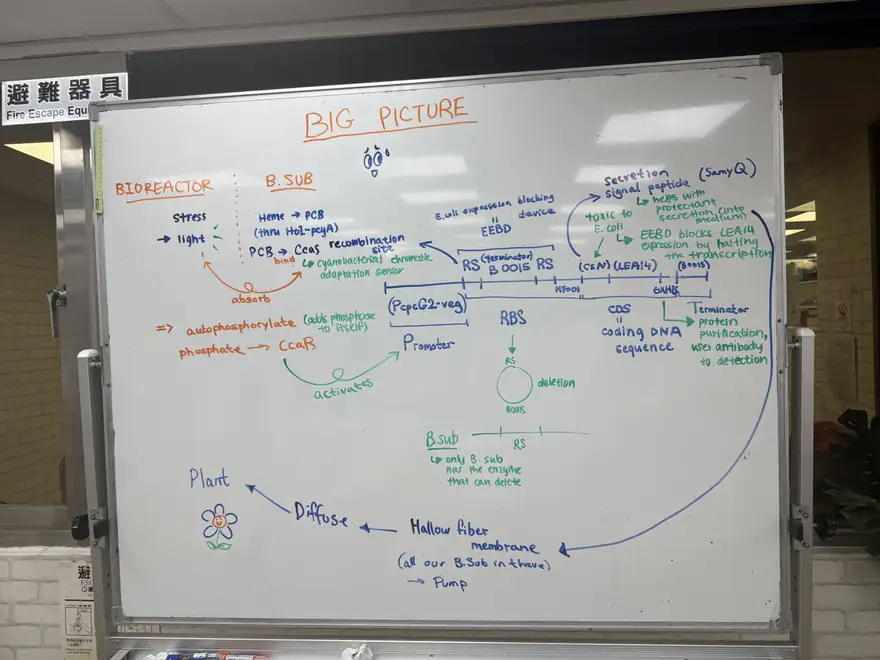
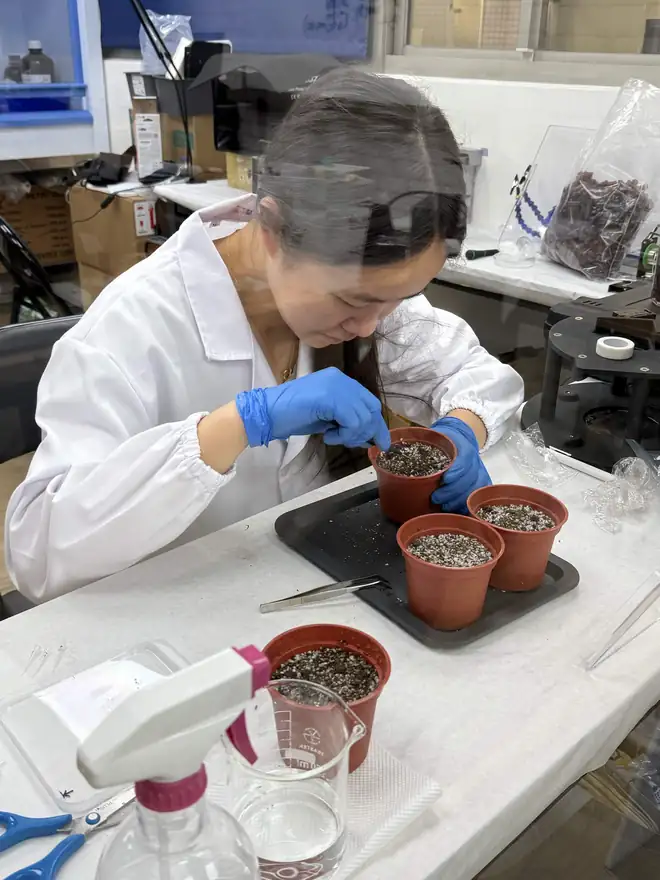
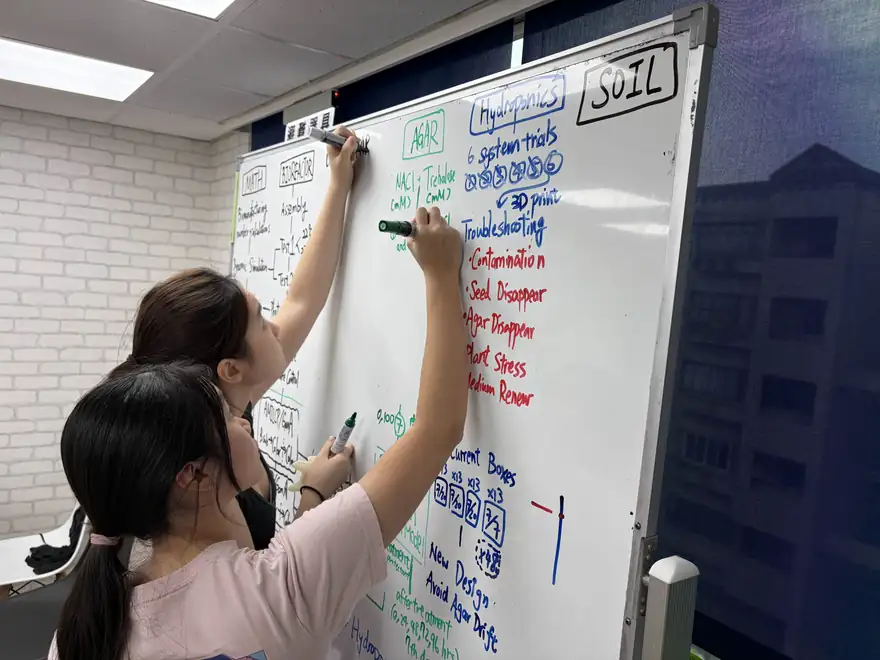
Planting Arabidopsis, laser focusedThe big picture, on the boardPromo video outline
Deliverables 14
Wiki Content Drive
  • Folders, docs, figures
  • Photometer section written from the iteration record
  • Good-figures-for-wiki channel opened
Regulation Timeline
  • GMO country positioning
  • Product registration
  • Bioreactor regulations
  • Consumer protection
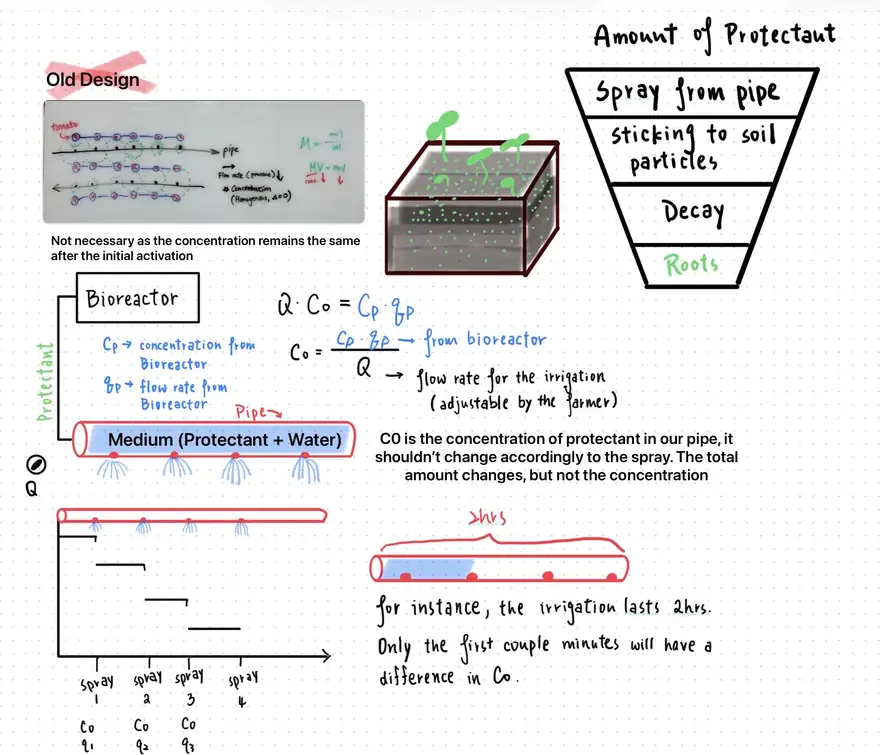
Protectant Delivery Model
Tomato Irrigation Model
  • Land area, plant density, soil parameters
  • To water flow, runtime, root-zone concentration
  • Determinate tomato as the reference crop
Variable Selection Memo
  • Protectant undecided, so stress level carries too much uncertainty
  • Crop type and weather prioritised first
Taiwan Crop Stress Map
  • Rice, tea, banana, others with crop-specific thresholds
  • Three-day forecast, elevation-aware
  • Farm location search
Fungal Disease Forecast
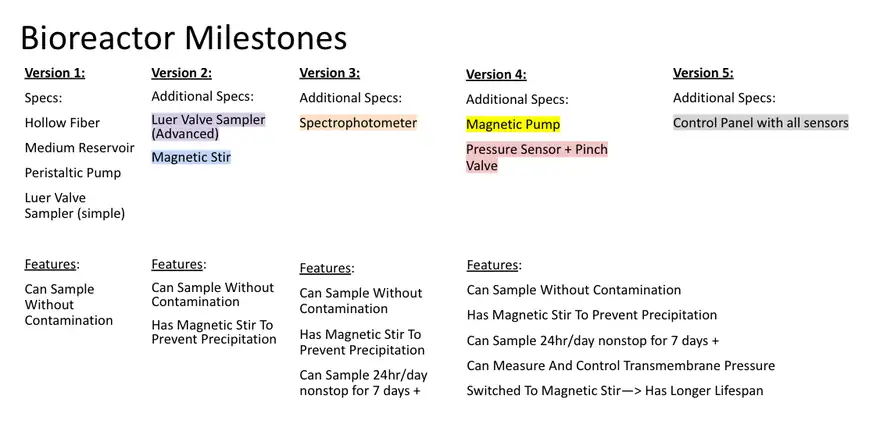
Bioreactor Roadmap
Hardware Notebook
  • One tab per day of concrete progress
Second Safety Net
  • Containment design
22-Photometer Comparison
  • Comparative review of published open-source instruments
  • Full DBTL cycle written up
Docking Methodology & Validation
  • 5GR8 PEPR1-AtPEP1 crystal structure as reference
  • Bonvin 2013 conformational-selection approach
  • Bonvin 2015 restraint combination
  • Bonvin 2022 cyclic peptide protocol
  • STRIDE, NACCESS, PyMOL as the toolchain
  • QuickVina-W and CB-Dock reviewed for global search
  • US-align for the BAK1 co-receptor site on PEPR1
  • Sections colour-coded with one owner each
Co-IP Assay Design
Collaboration Emails
  • NYCU (交大)
  • NTHU (清華)

August 2026

5 entries, 63 photos1 · 8 · 15 · 22 · 29
  • Data PhysicalizationCircuit
  • Wiki & NotebookCadence Decision, Freeze Plan
  • Math ModelingProtectant Set
  • GIS & Stress ForecastWiki Integration
  • BioreactorServo Pinch Valve, Reassembly
  • OD600 PhotometerHandoff
  • Light Plate ApparatusRepair
  • Protectant DesignReceptor Cross-Check, MD Limit
  • Wet Lab HandoffThe Photometer, For Judgement

Participants Anna, Anton, Audrey, Ethan, Joshua, Felix, Noah, Jacquelyn

Results
  • Protectant set fixed, closing the modelling uncertainty
  • Physicalization circuit finally works
  • Weekly cadence chosen, the structure the notebook now uses
  • Molecular dynamics dropped for the season with a stated reason
  • Photometer given an honest error bar
    • Less accurate than a benchtop instrument, and the notebook says so
    • Reads continuously and in-line, which the BioDrop cannot
Deliverables 13
Working Physicalization Circuit
  • Closes the electronics gap blocking the LED elevation map
  • Dry lab supplies the circuit, HP owns the installation
Weekly Notebook Decision
  • Daily tabs proposed, then reality-checked, roughly 100 tabs
  • Weekly cadence adopted instead
Homepage Brief
  • Integrate progress
  • Name what is missing and what is misleading
  • Highlight biomanufacturing
  • Judges assess only the wiki URL, so external links do not count
Wiki Freeze Plan
  • Mini-freeze deadlines set against the judging handbook
Protectant Decision
  • ACC deaminase
  • BoPEP4
  • LEA14
Math Sim Schematic
  • Dr. Pak's handwritten calculations visualised
  • Leiden 2020 model page as structural reference
GIS Wiki Plan
  • Marburg 2024 GIS page as reference implementation
  • Regulation infographics started
Servo Pinch Valve
  • Switched from stepper to servo, stays sealed if power is cut
  • Off-the-shelf sized for 16 mm silicone, ours needs 4 mm in / 6 mm out
  • Back through CAD with tolerance added
Reactor Reassembly
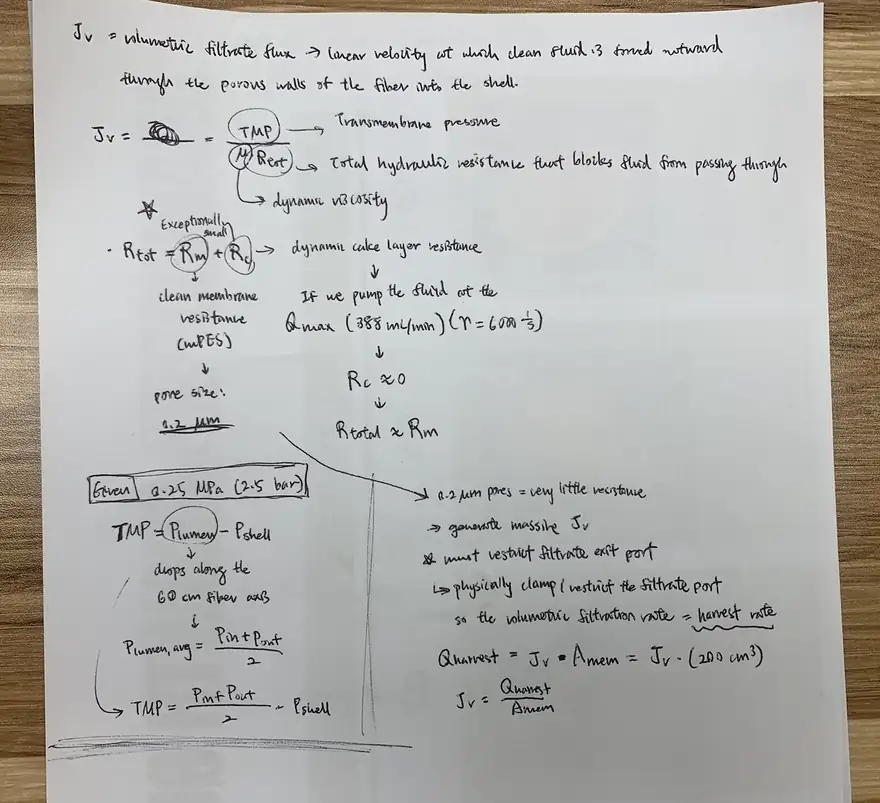
  • New hollow-fibre membrane
  • New sensors, new CAD cap
  • OD and pH sensor test code, DO sensor tested
  • Annotated diagrams for the wiki
LPA Repair Log
  • Dead and dim channels traced through the wiring
  • Fix verified against the per-bulb intensity map
WHISCY Cross-Check
  • Receptor structures against interface predictions
  • ePLANT PEPR1 expression results
  • DRS-DREAMS and DRDOCK evaluated
MD Feasibility Note
  • CPU run estimated at 16 days
  • GROMACS is GPU-optimised because interatomic calculations vectorise
  • MD dropped for this season
Wet Lab Handoff → The Photometer, For Judgement
  • Sent: in-line photometer, calibration procedure, continuous logs
  • BioDrop used as the reference instrument
  • First comparison read roughly 4× high
  • Traced to an uncleaned blank, not the optics
  • Re-ran after manual blank entry: 0.100 vs 0.149
Participants & Contributions 1
Joshua
  • Photometer solder
  • Pinch valve CAD+ code
  • Bioreactor ph and flow speed research
  • Wiki & NotebookNotebook Opens, Review Cycle
  • Math ModelingModel Page Structure
  • BioreactorHardware Page, Expert Interviews
  • Light Plate ApparatusDocumentation
  • Protectant DesignOrdering Strategy, Handoff
  • Wet Lab HandoffThe Peptide Designs

Participants Anna, Anton, Audrey, Ethan, Joshua, Felix, Noah, Jacquelyn

Results
  • Dry lab notebook opened for retroactive documentation
  • Hardware wiki page live covering all three instruments
  • Protectant designs handed to WetLab for synthesis and cloning
    • Dry lab retains docking validation and design rationale
  • Still open after the freeze
    • Synthesis and the co-IP assay
Deliverables 11
Dry Lab Notebook
  • Opened 9 August, starting from 28 March
  • Individual contributions recorded per date
Reconstruction Method
  • Discord date filter
  • Past slides and documents
  • Asking instructors and team members
Review Cycle
  • Every 2 to 3 days per week of content
  • Everyone corrects inaccuracies directly
Hardware Wiki Page
  • In-line photometer
  • Dual-wavelength LED array
  • Bioreactor
Regulation Infographics
Model Page Outline
  • Peptide design
  • Math simulation
  • Bioreactor calculations
  • Milestones and remaining gaps written down before freeze
  • Parameter tables audited for measured-vs-literature labels
Expert Interview Section
  • Prof. 張嘉修
  • Exhibition vendor inquiries
  • Dr. Pak
  • Leiden 2020 hardware page as the model
Membrane Pre-Wetting Checks
LED Array Documentation
  • Calibration and PPFD conversion included so doses are reproducible
Ordering Strategy, 13 Aug
  • Rationale attached to each construct
  • CAP peptides added as a late candidate family
Wet Lab Handoff: The Peptide Designs
  • Sent: ordering strategy with docking rationale per construct
  • Arabidopsis planted into soil and onto agar through late July and August
  • Seeds picked onto agar plates into the evening, 9 August
  • Co-IP designed as the functional assay for BoPEP4 binding
Participants & Contributions 1
Joshua
  • Pinch valve +Photometer completion
  • Bioreactor research on ph meter and flow meter
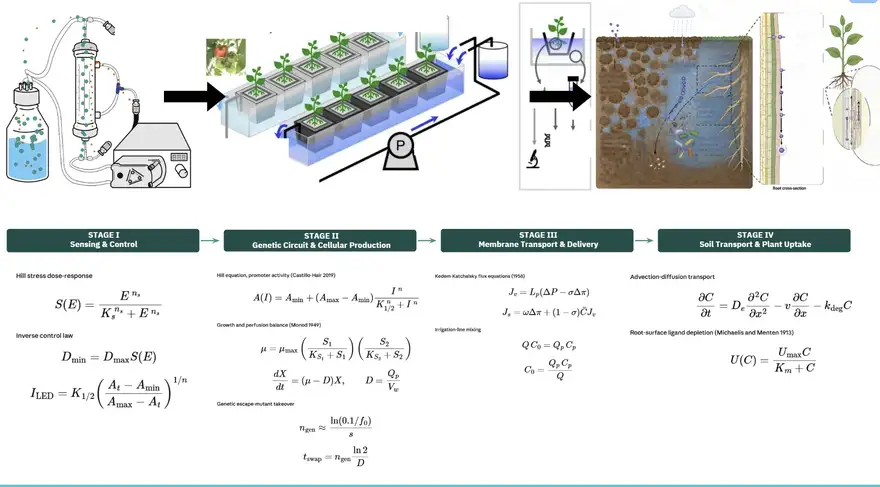
  • Math ModelingFour-Stage Sheet
  • GIS & Stress ForecastSite Page Closed
  • BioreactorModule Queued
  • OD600 PhotometerSoldered Board
  • Data PhysicalizationTaiwan Cut And Stacked

Participants Anna, Anton, Ethan, Joshua, Felix, Noah, Timmy

Results
  • Whole simulation drawn on one sheet, four coupled stages, illustration over equation
  • Potential-site write-up finished and taken off the board
  • New hollow fibre module queued for flow and pressure
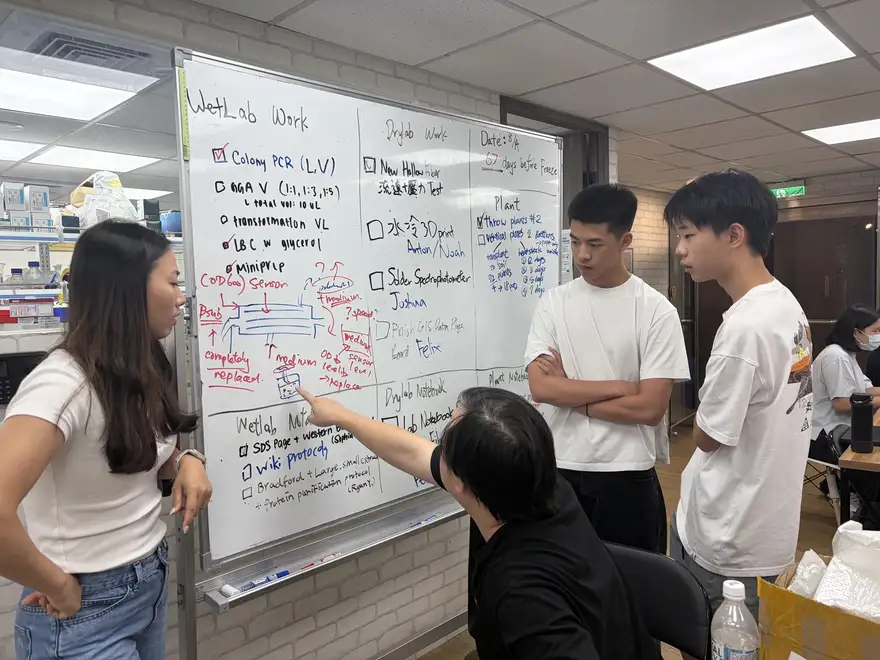
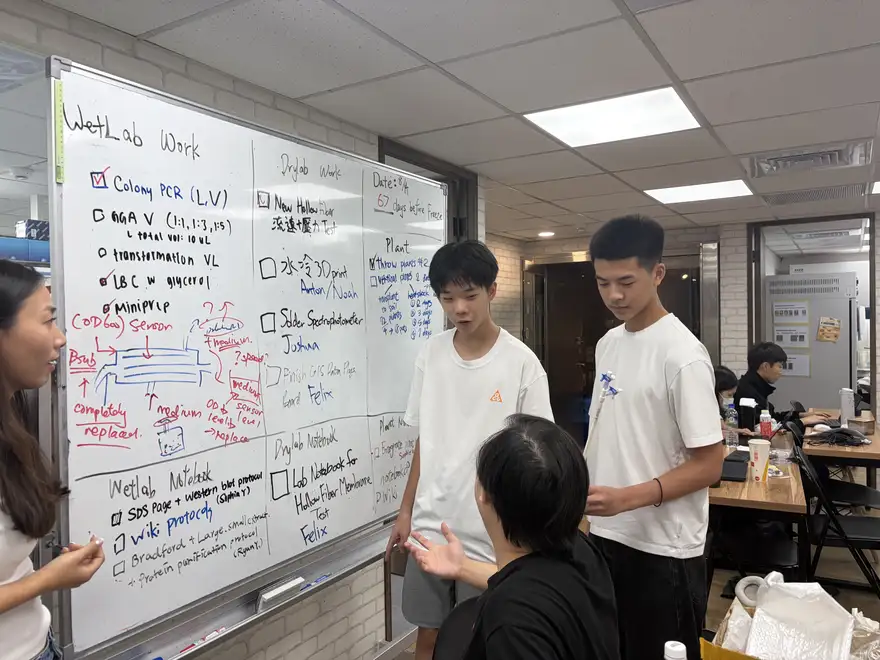
  • Every hardware job given a name on the whiteboard
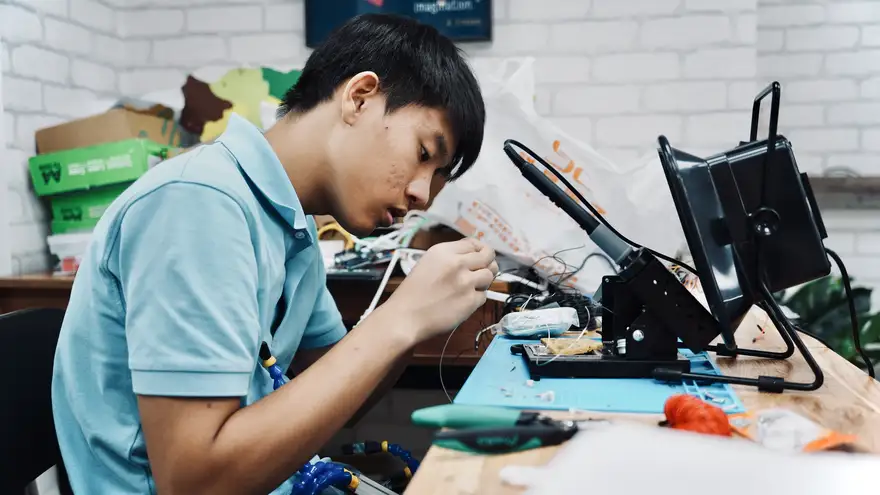
  • Spectrophotometer soldered onto its own board, off the breadboard, so it stops changing between runs
  • Taiwan cut into panels by region and stacked, an LED at each site, portable to a booth
Deliverables 6
Four-Stage Simulation Sheet
  • Four coupled stages, left to right
  • Illustration above each stage, governing equation directly below it
  • Drawn on one sheet so that somebody could disagree with it
Potential-Site Write-Up, closed
  • Open since the interactive map went live, now finished and off the board
New Hollow-Fibre Module
  • Queued for flow and pressure testing
Hardware Job Board
  • Every hardware job given a name on the whiteboard
Soldered Photometer Board
  • So the instrument stops changing between runs
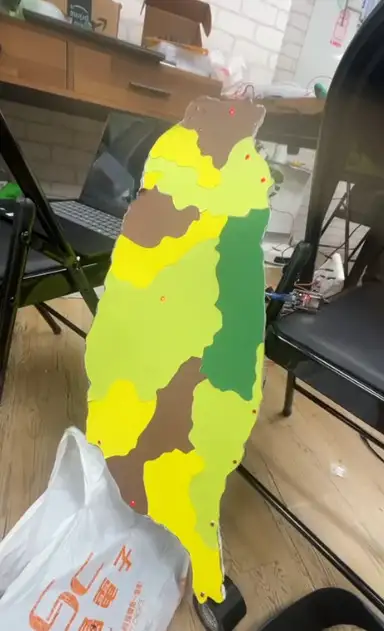
Taiwan Elevation Map, Cut And Stacked
  • Panels cut by region and stacked
  • An LED at each site
  • Portable to a booth
  • BioreactorComputer Case
  • OD600 PhotometerScattering Standard

Participants Anton, Joshua, Noah

Results
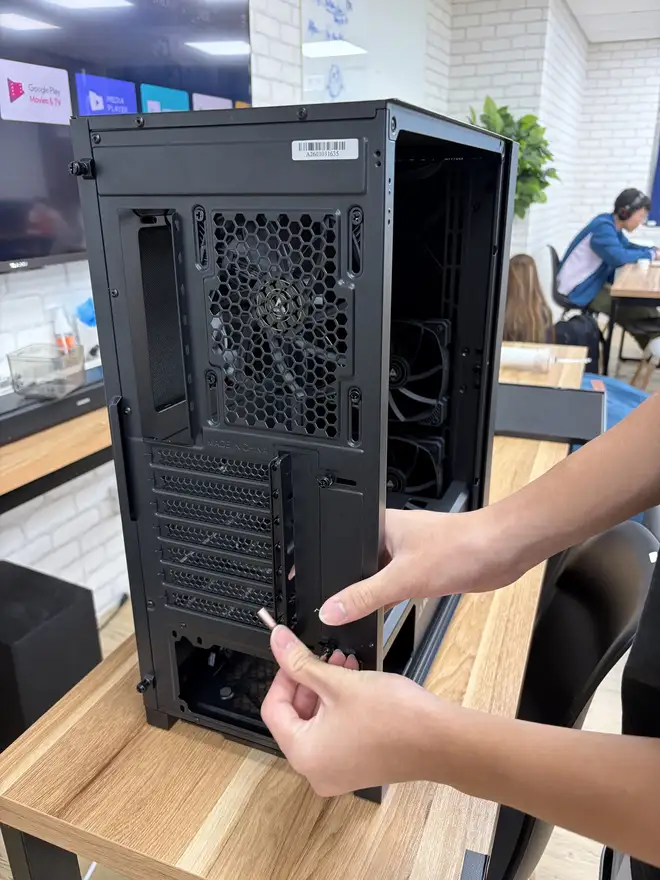
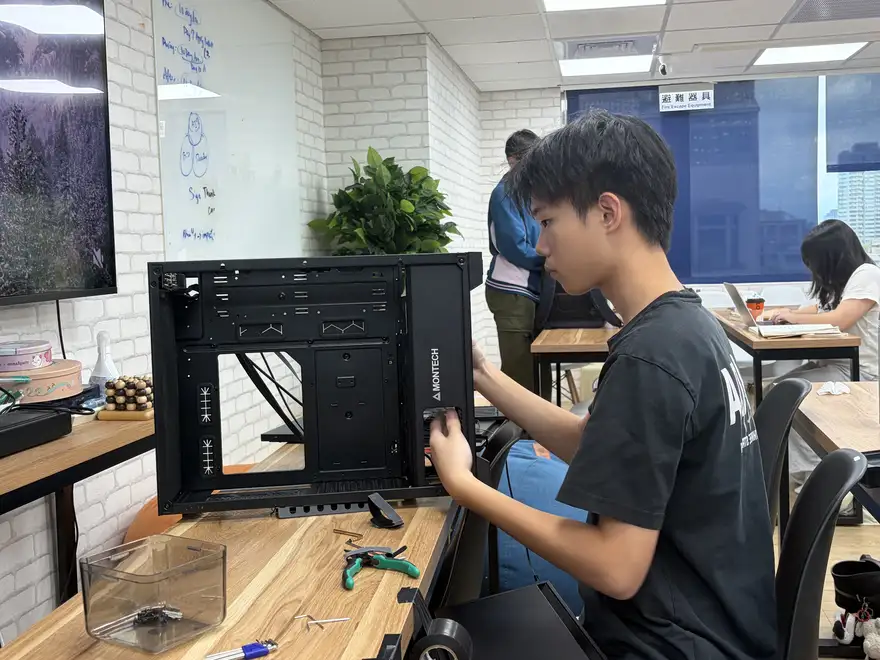
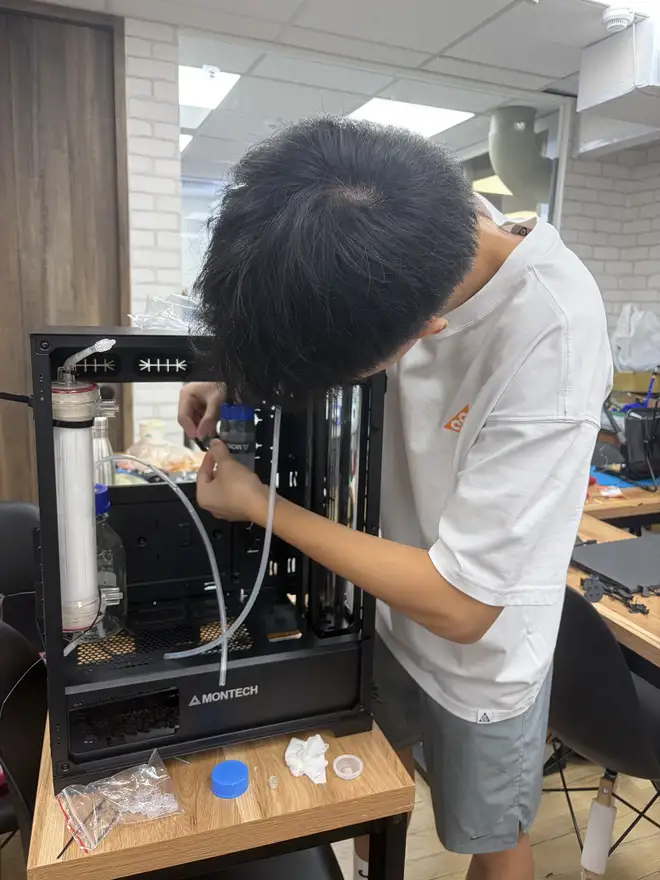
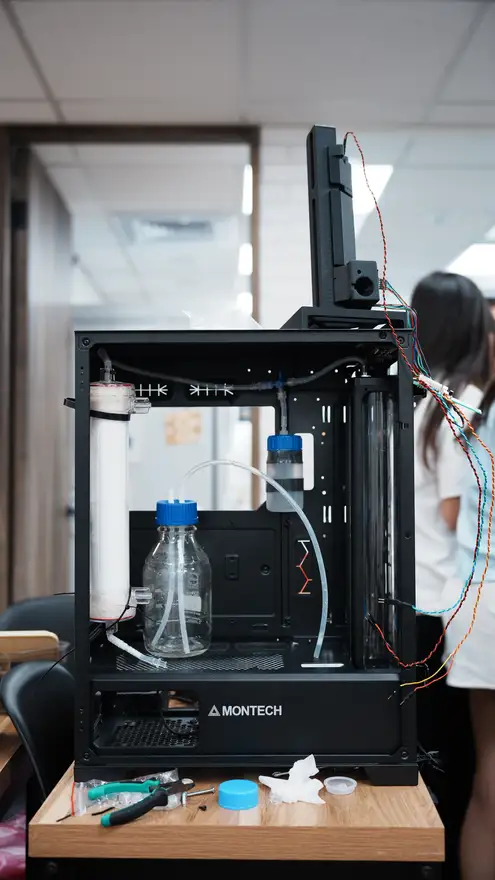
  • Reactor rebuilt into a stripped tower case: rigid, ventilated, closable, carryable
  • First version built for somewhere other than the bench it grew on
  • Photometer run against the BioDrop on a titanium dioxide standard, which scatters as a bacterial suspension does where a dye would absorb
  • The four-fold error of 19 July chased to an uncleaned blank
Deliverables 3
Prototype VII Chassis
Titanium Dioxide Scattering Standard
  • Run against the BioDrop on the same samples
Blank Error Resolution
  • The four-fold error of 19 July chased to an uncleaned blank
  • BioreactorIn The Case, Whole-Rig Run
  • Protectant DesignMD, Third Batch
  • Digital TwinFirmware v0.3
  • Wiki & NotebookBooth, Run-Throughs
  • Wet Lab HandoffThe whole rig, with cells in it

Participants Jessie

Results
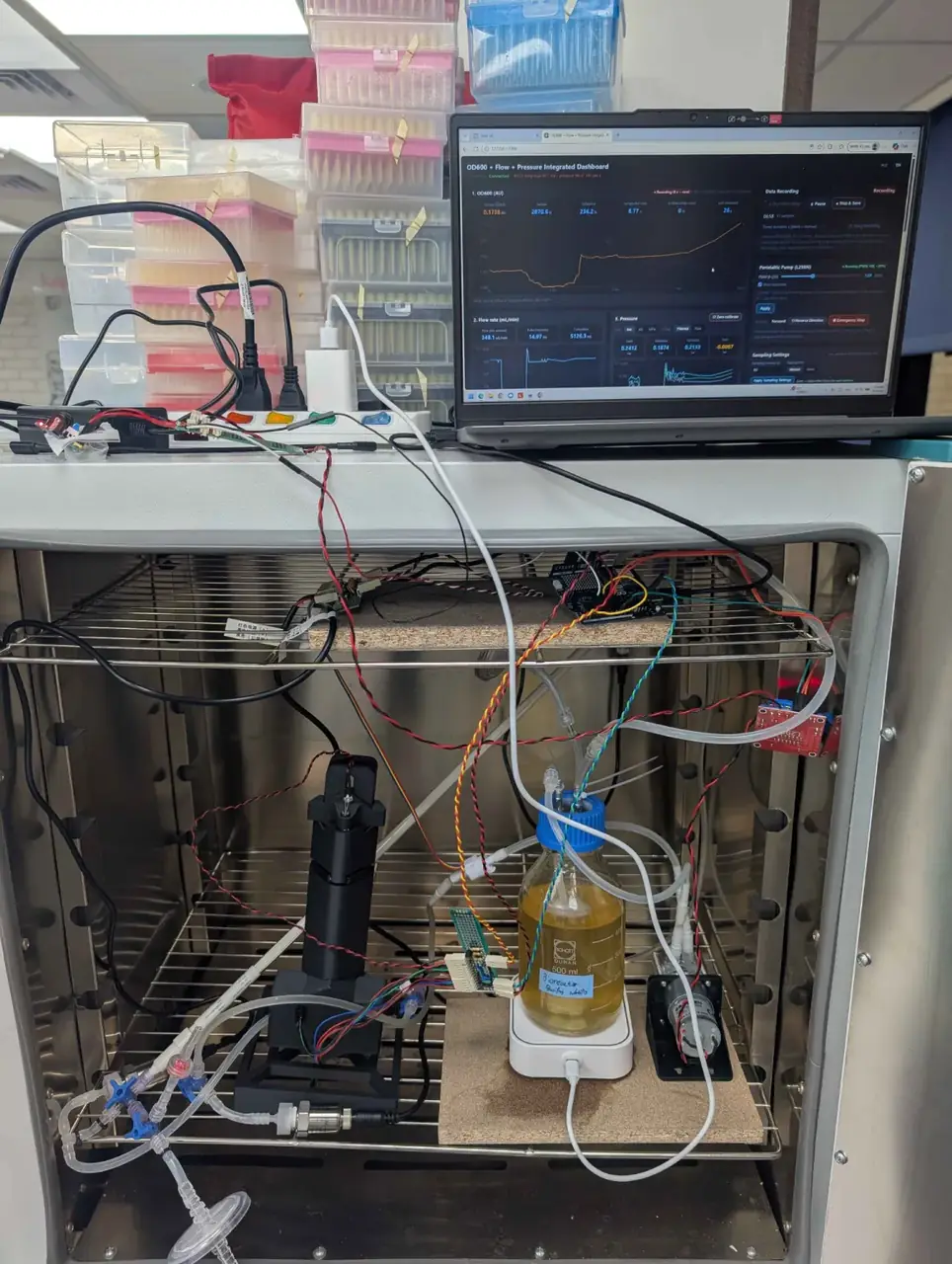
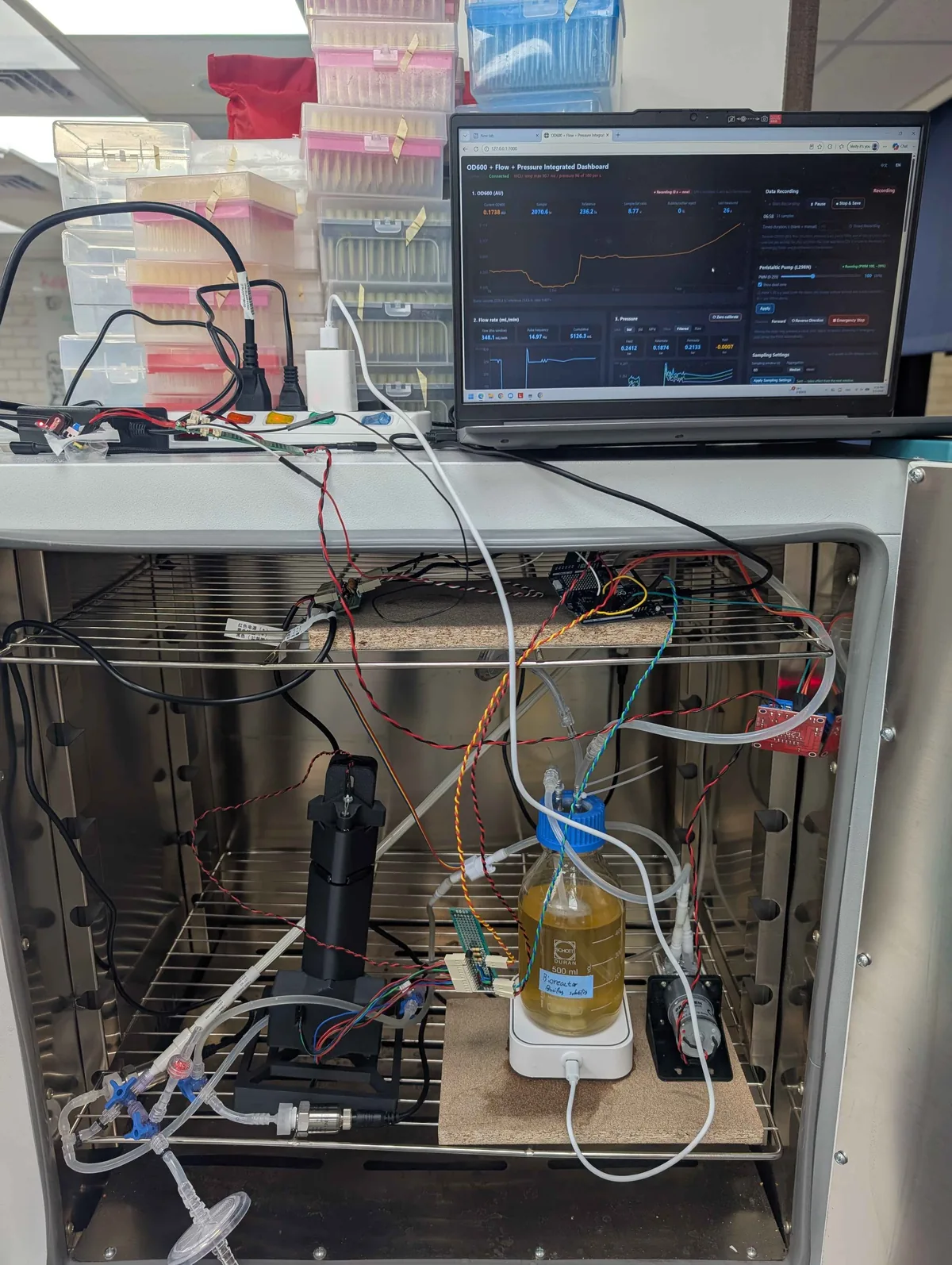
  • Membrane column, reservoir, tubing and sensor board into the chassis, 29 August: the reactor plumbed inside its own enclosure for the first time
  • Every subsystem run at once on engineered cells, 2 to 4 September
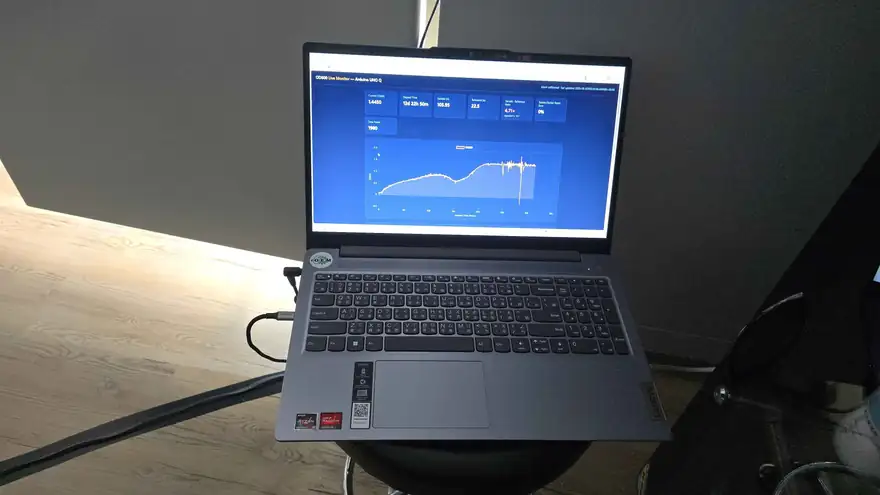
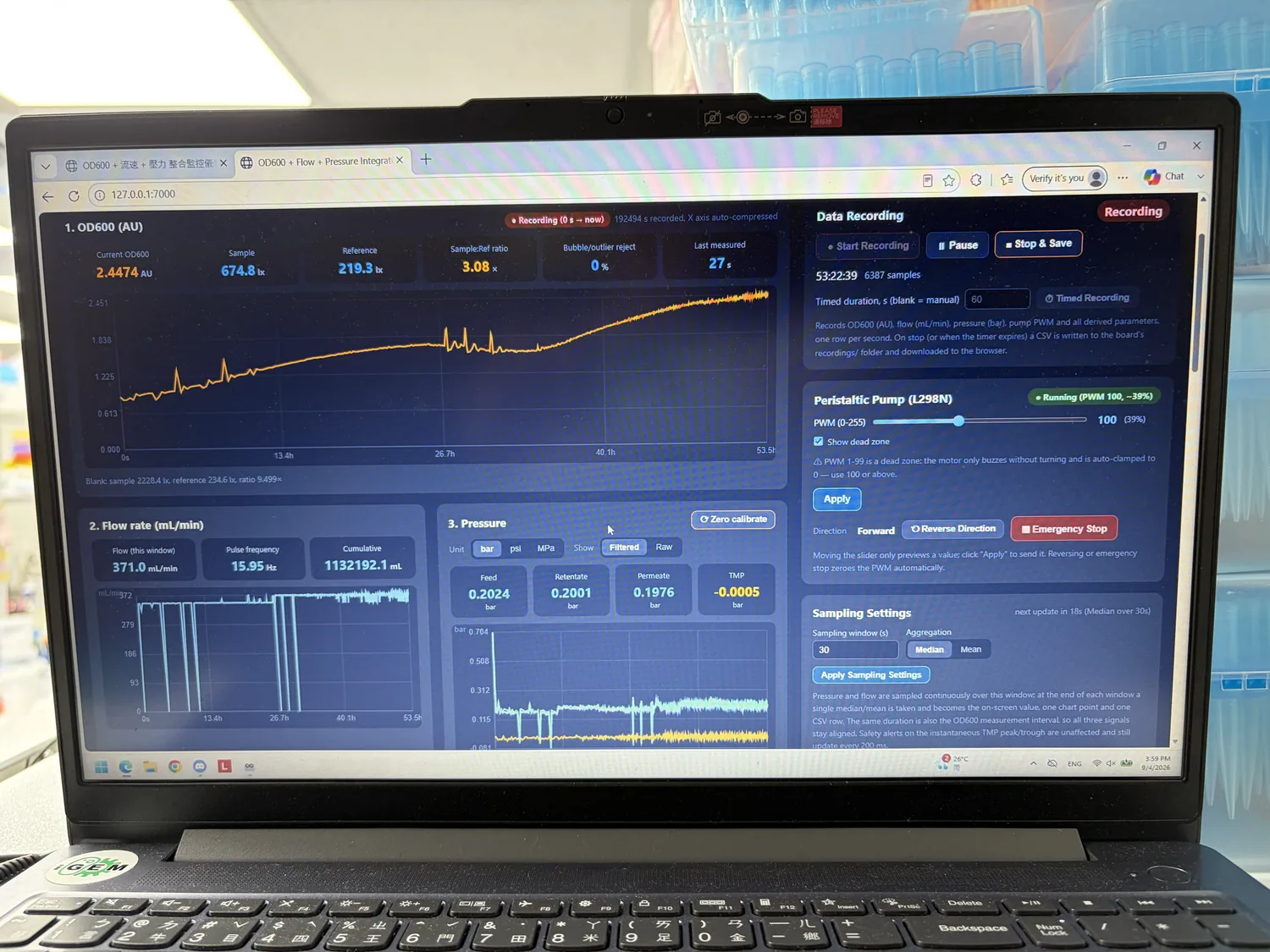
  • OD600 0.83 to 2.45 over the first 53 hours, transmembrane pressure flat
  • Second review, 4 September, asked for three things
    • Repeat the 22 °C growth test
    • Check plasmid stability
    • Find a way to measure protectant release
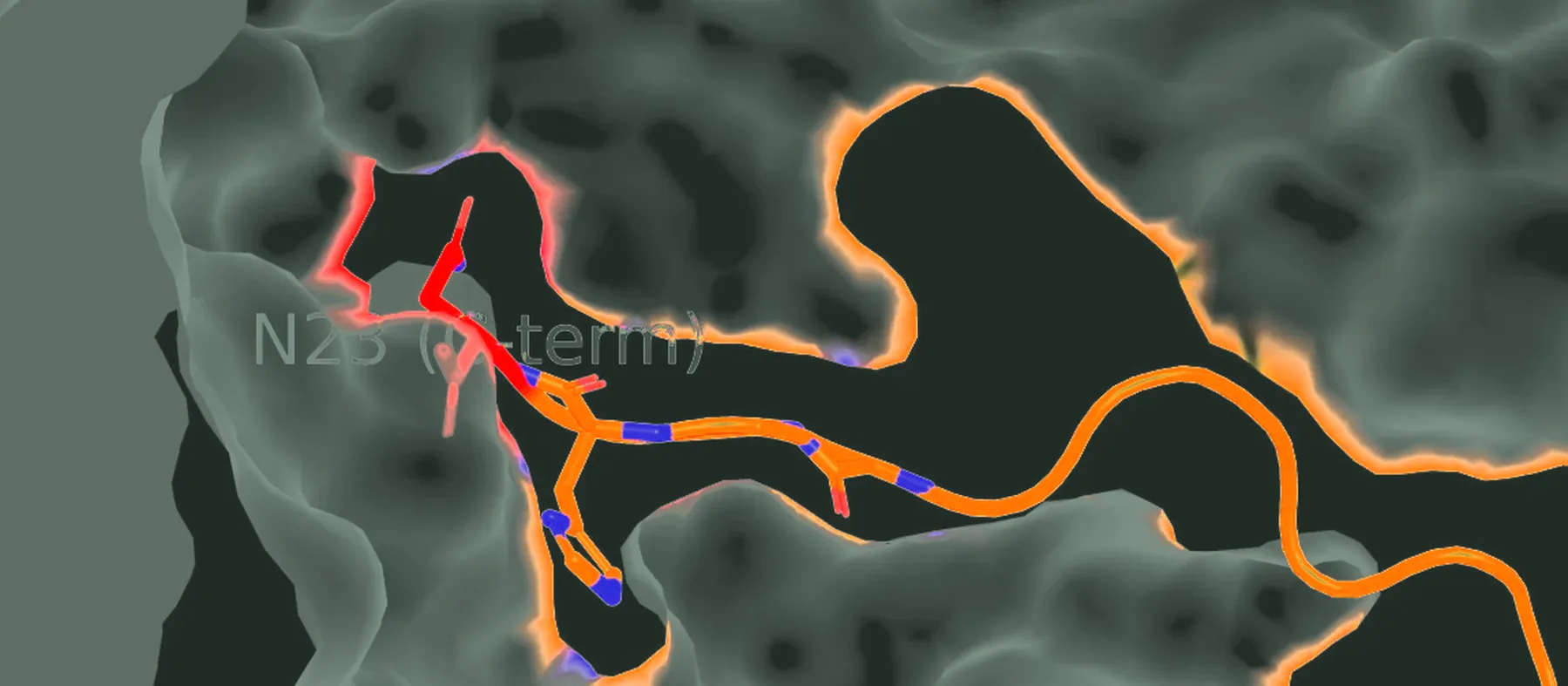
  • MD batch 3 completes the set: receptor alone, BoPEP4 7-23, and 9-23 at pH 5.5, 30 ns each
  • Receptor-only control puts a floor under every receptor-side number
  • Truncation with protonation loses the Arg487 anchor
  • Firmware v0.3 reads one sensor value per pass, so an OD600 reading no longer holds the loop for 2.7 s and starves the 100 Hz pressure window
  • Booth material and the first presentation run-throughs begun, nine weeks out from the Jamboree
  • Instrumented reactor handed to WetLab with the constitutive Csn:ACCD strain, nine sampling points to 44 h
Deliverables 5
Whole-Rig Run, 2 to 4 September
  • OD600 0.83 to 2.45 AU over 53 h 22 min
  • 6,387 logged samples
  • Transmembrane pressure flat at -0.0005 bar after 1,132 L
Second Review
  • 4 September
  • Repeat the 22 °C growth test, check plasmid stability
  • Find a way to measure protectant release
  • A modular unit with a replaceable culture capsule
MD Batch 3
  • Receptor alone
  • BoPEP4 7-23
  • BoPEP4 9-23 at pH 5.5
Rig Firmware v0.3
  • OD600 read as a state machine
  • Sensor timeout 200 to 3 ms
Wet Lab Handoff: The whole rig, with cells in it
  • Sent: The instrumented reactor with the constitutive Csn:ACCD strain in the loop
  • Ran it from 2 to 4 September in the 37 °C incubator
  • Sampled lumen lysate, lumen medium and shell medium at nine time points to 44 h
  • Ran a Western blot on the samples
  • Came back: OD600 rose from 0.83 to 2.45 over 53 h 22 min and 6,387 logged samples, with transmembrane pressure flat at -0.0005 bar after 1,132 L. The team’s own documents read the 44 h blot three ways (not detectable, low but present, a faint band near 42 kDa), so the run counts as proof that the rig works with cells in it until the blot is read once, properly.

September 2026

5 entries, 37 photos5 · 11 · 12 · 19 · 26
  • Data PhysicalizationField Dialogue Booth
  • BioreactorPublic Demo, Long Run
  • Digital TwinOperator Interface 0906
  • Wiki & NotebookNew Poster
  • OD600 PhotometerChecked Against A Bought One
Results
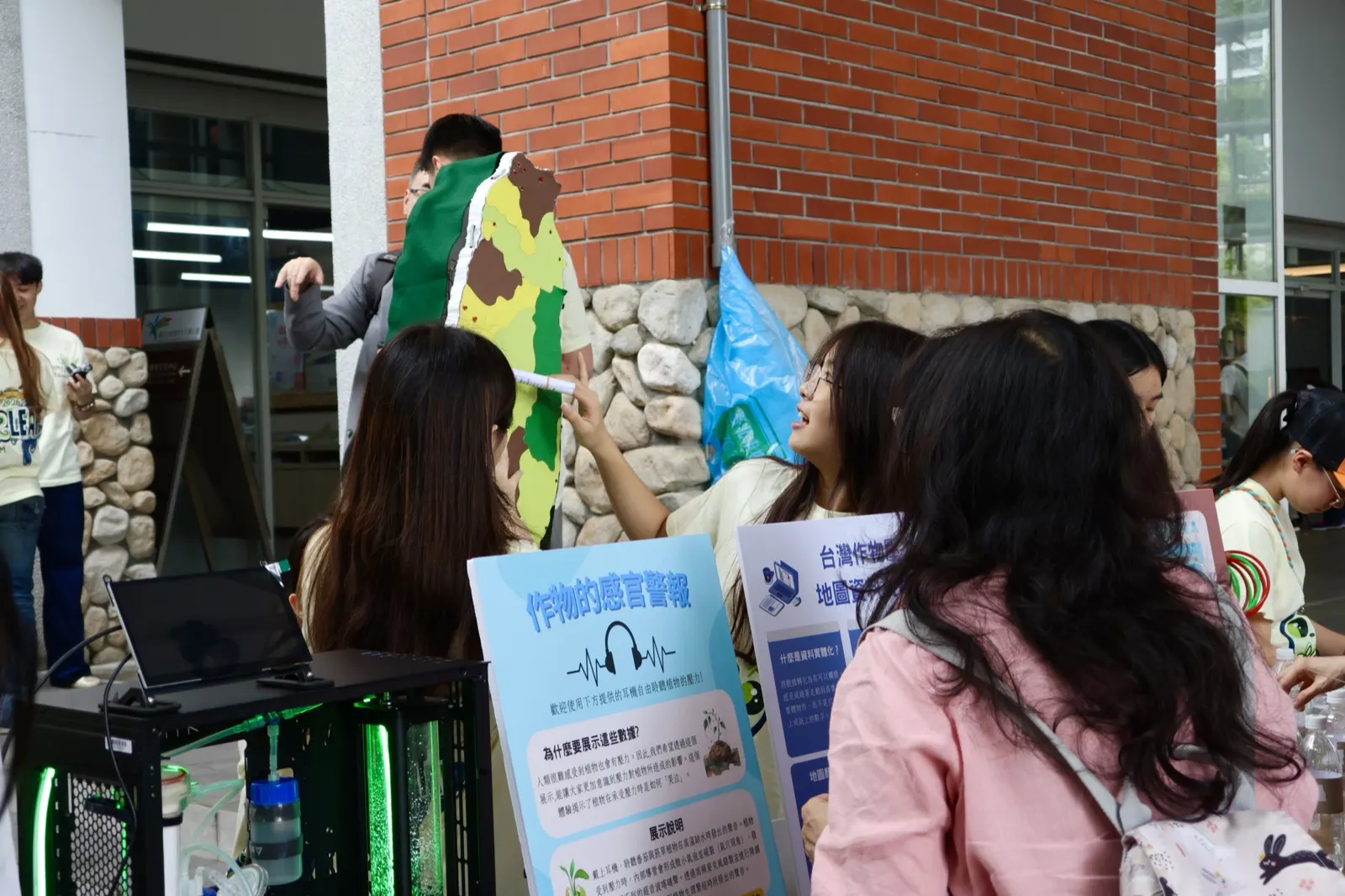
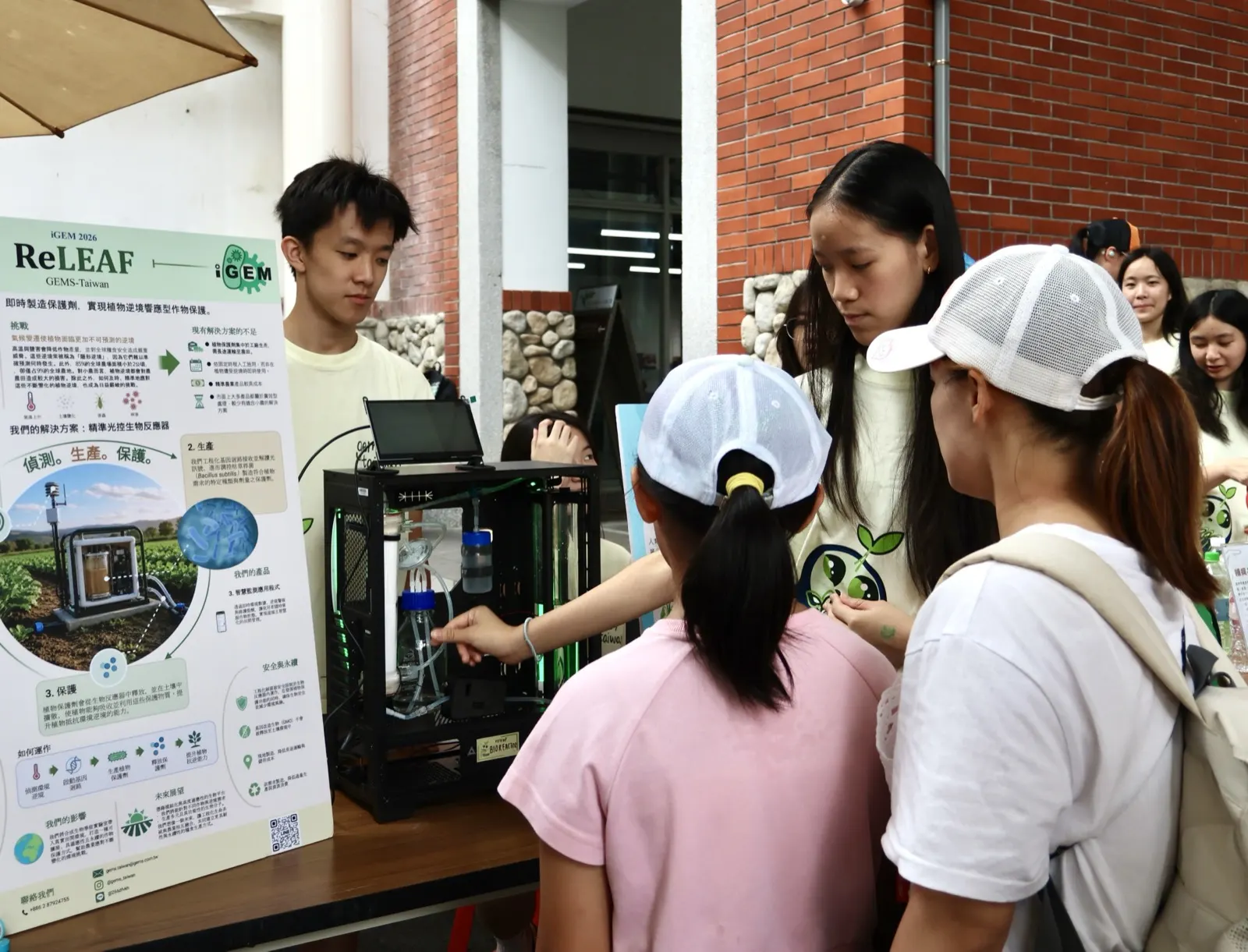
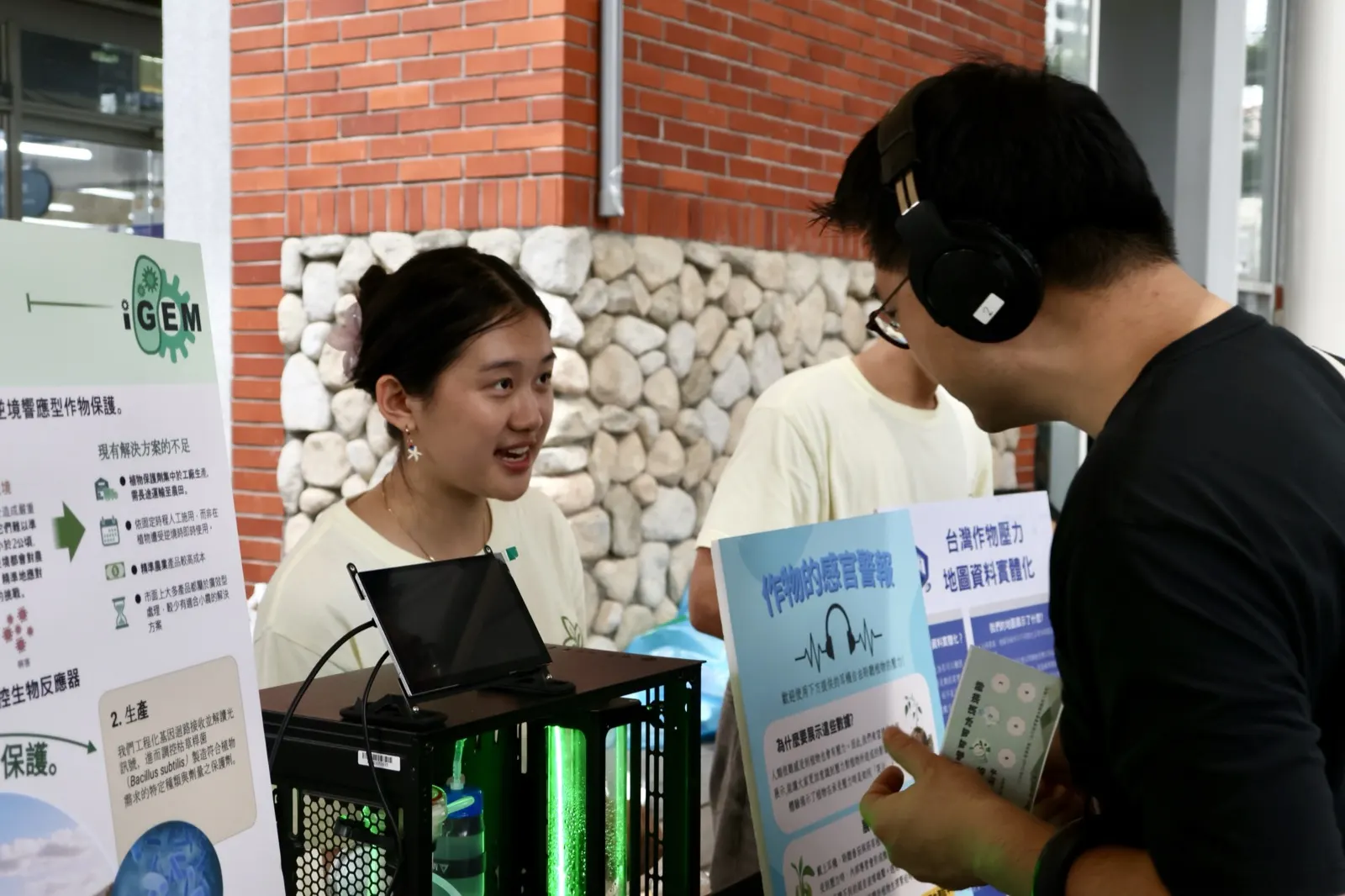
  • LED stress map and plant sound station at the Field Dialogue forum, 5 September
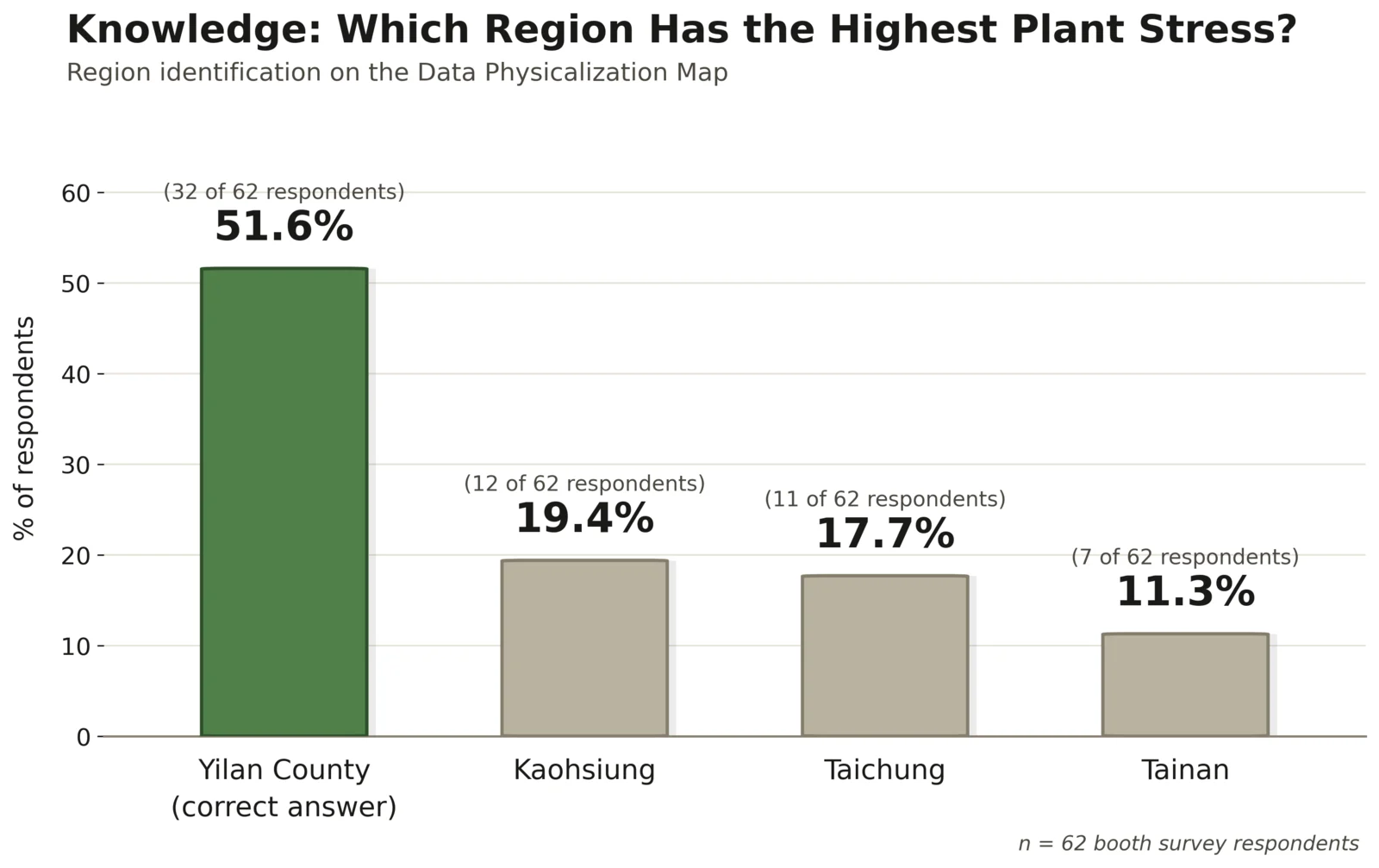
  • 116 visitors, 62 survey responses
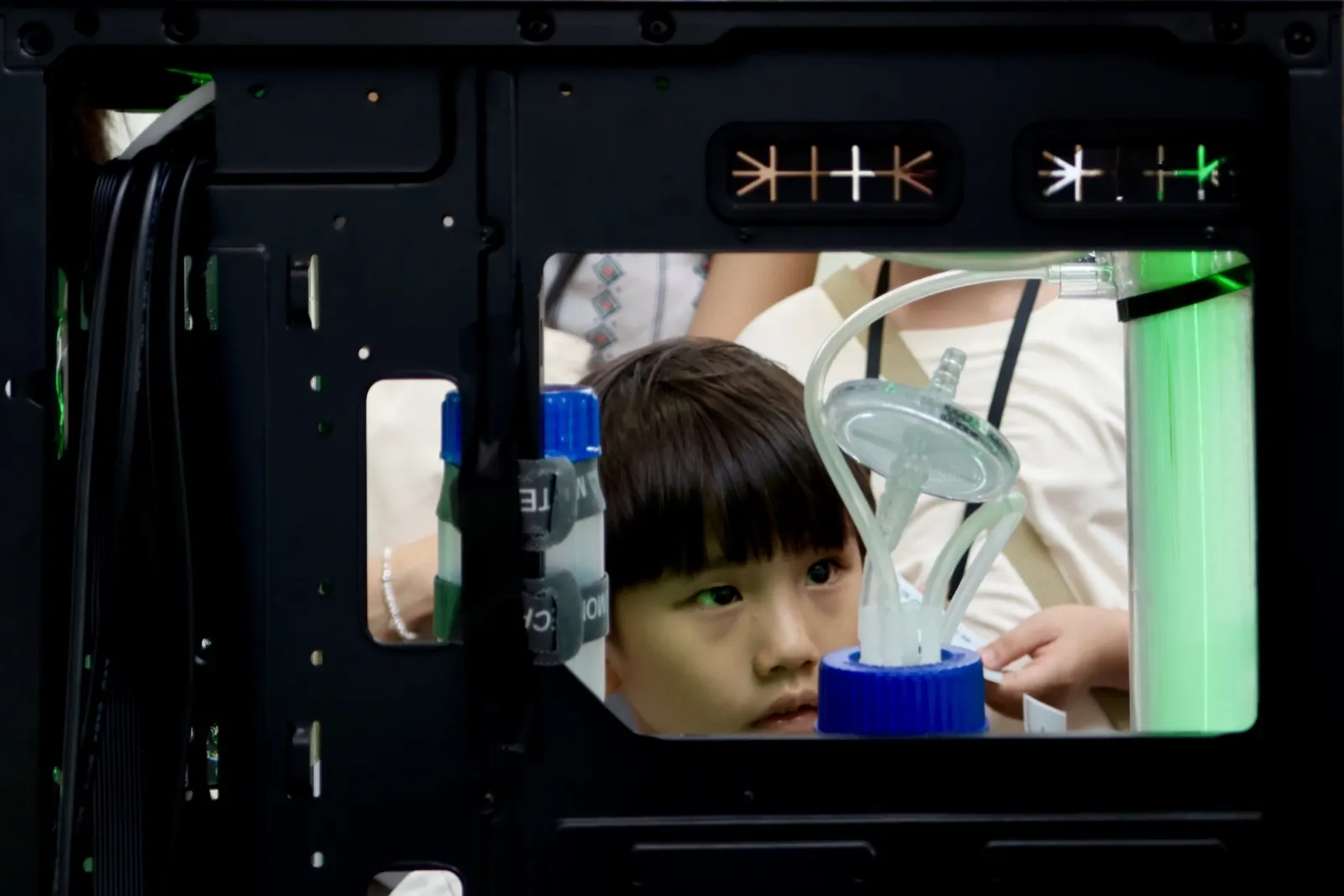
  • Reactor shown in its computer case beside the map, touchscreen readable by visitors
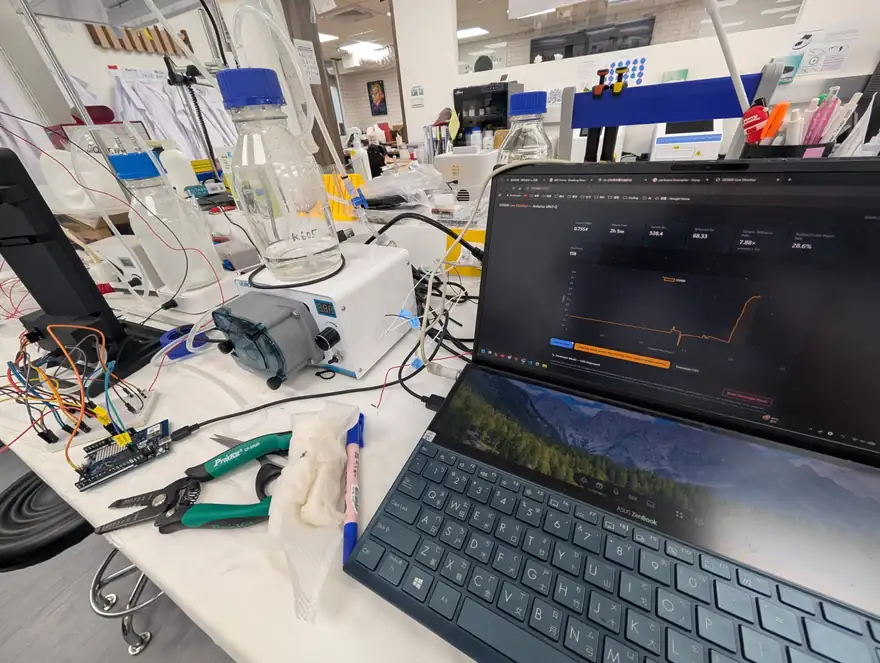
  • Long-run monitoring continued in the incubator, 9 September
  • Operator interface 0906: one-touch recipes, every value tagged by source, a what-if view of the twin, on simulated data
  • Rig firmware v1 written the same day
  • Project poster redrawn after the forum and shown on 10 September
  • Module pressure drop measured against crossflow rate, background subtracted, fitted to a through-origin quadratic
  • 1.03× Hagen–Poiseuille at the 263 mL/min operating point; wall shear from geometry and from the measured drop agree to 2.8 per cent
  • 0.83× at 113 mL/min and 1.27× at 450 mL/min, which sets 300 mL/min as the ceiling
  • One measurement per point
  • Photometer tracks the BioDrop on the same titanium dioxide standard without being calibrated first
  • The regulator’s pressure questions of 8 September cannot be answered
    • No normal operating pressure has been set
    • Design pressure is untested, because testing it would destroy the only reactor
    • What is known: transducers read to 1 MPa, the hollow-fibre module is rated to 0.7 bar
Deliverables 6
Field Dialogue Booth
  • LED stress map of Taiwan, crop yield in coloured paper
  • Plant sound station: drought-stressed tomato and tobacco
  • 116 visitors, 62 survey responses
Reactor at the Forum
  • Prototype VII in its computer case
  • Touchscreen readable by visitors
Long-Run Monitoring
  • 9 September, in the incubator
Operator Interface 0906
  • Recipes: Idle, Grow, Induce, Perfuse, Clean
  • Every value tagged in-line, at-line, soft or planned
  • What-if runner and model register
Rig Firmware v1
Project Poster, Second Version
  • Shown 10 September

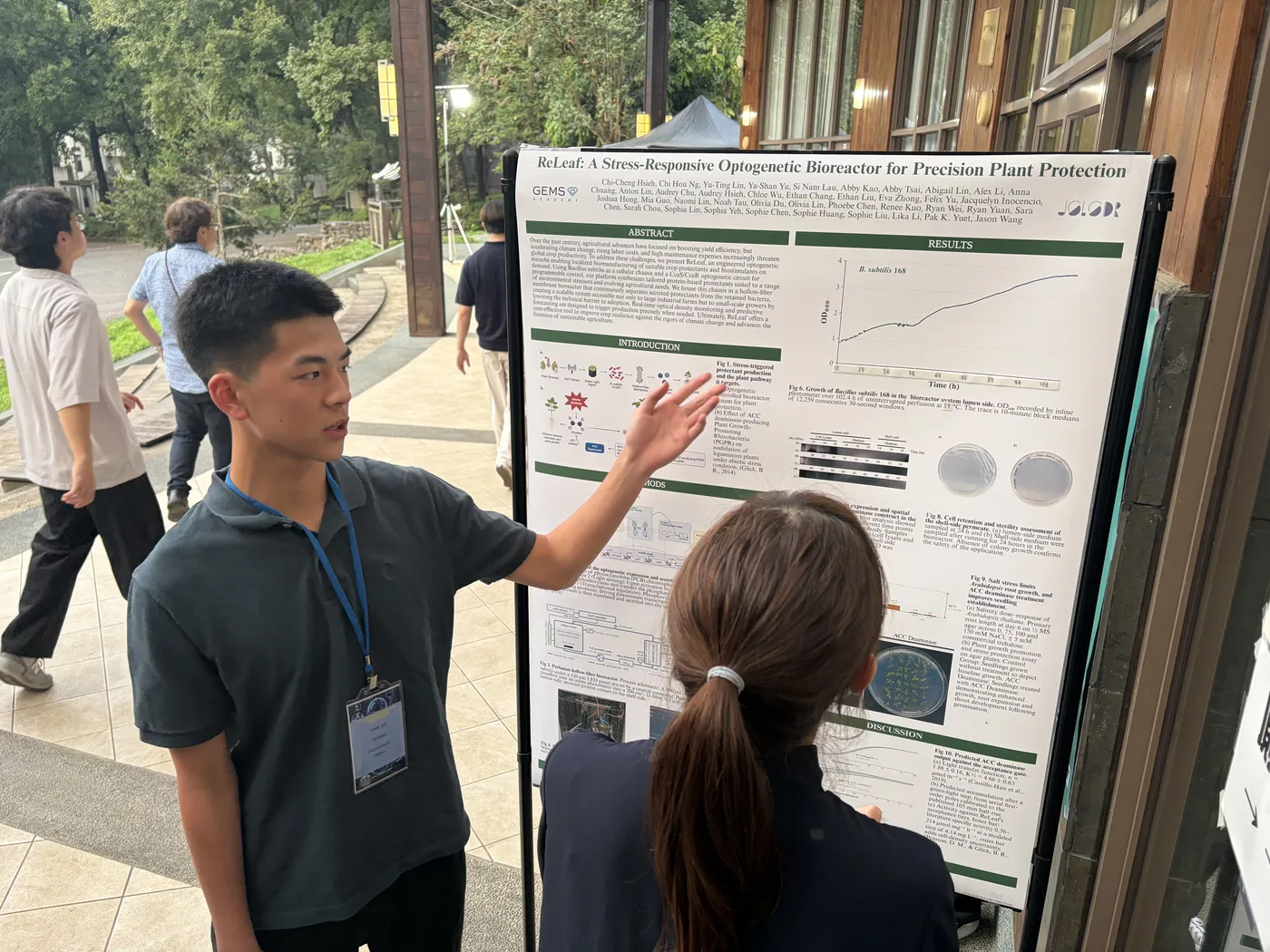
Event Poster at the 2nd International Symposium on Living Systems Design Research, National Chung Hsing University

  • BioreactorPoster Feedback
  • OD600 PhotometerPoster Feedback
Learning loop, for the hardware
  1. Presented

    A poster at the 2nd ISLSDR symposium at National Chung Hsing University on 11 September, where we had been invited. We opened on the reactor.

  2. Heard

    We need a deeper understanding of our experimental data and of the ACCD mechanism, and clear data interpretation to support it.

  3. Learned

    A hardware graph is only as strong as the measurement behind it. An OD600 trace from the in-line photometer needs its calibration against the BioDrop and its error bar beside it; a reactor run needs its length and what was in the loop, stated once.

  4. Changed

    Open on the farmers’ problem and bring the reactor in as the answer. A hardware graph goes on the poster, the booth or the pitch only when the person presenting it can explain all of it, with its calibration and limits underneath.

Next turn of the loop: one length for the continuous run and one flow rate on the Results page, before the freeze.

Results
  • Poster presented on 11 September at the 2nd ISLSDR symposium, NCHU
  • Feedback asked for deeper interpretation of the experimental data and of the ACCD mechanism
  • Hardware figures now carry their calibration and limits wherever they appear
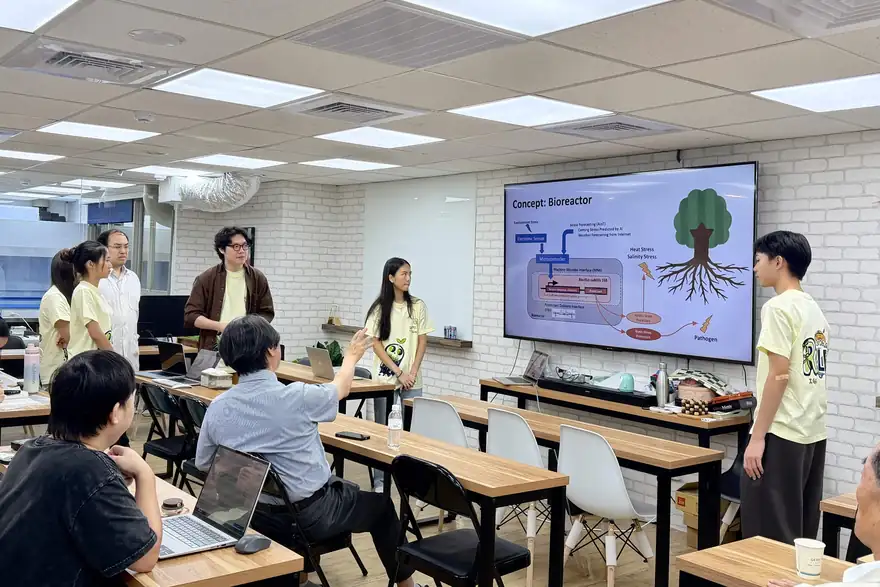
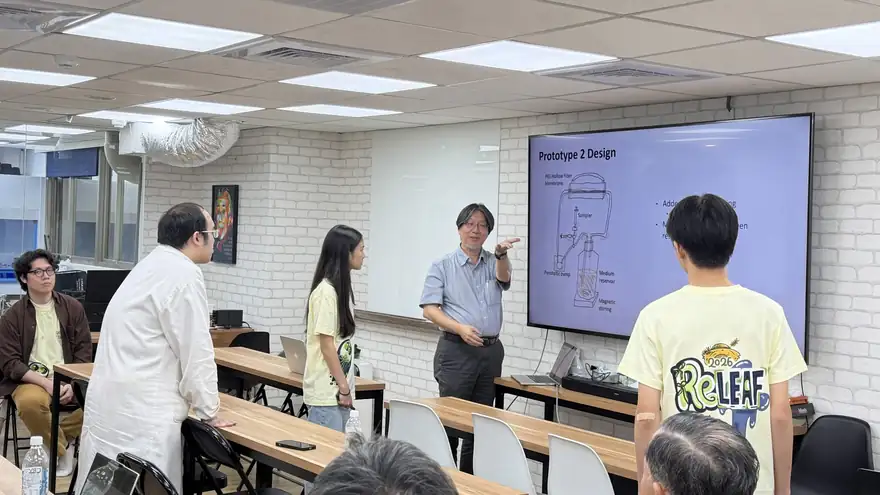
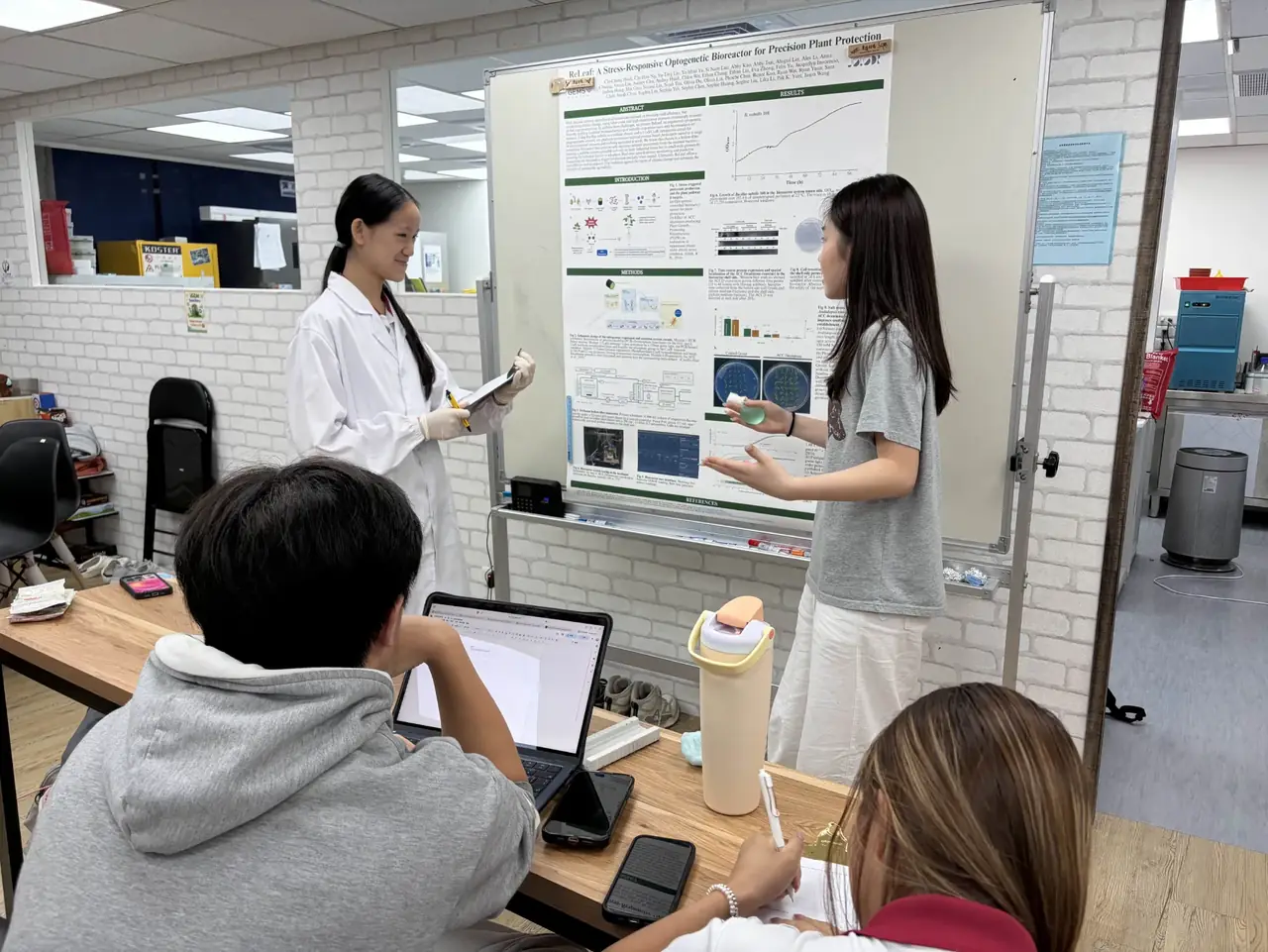
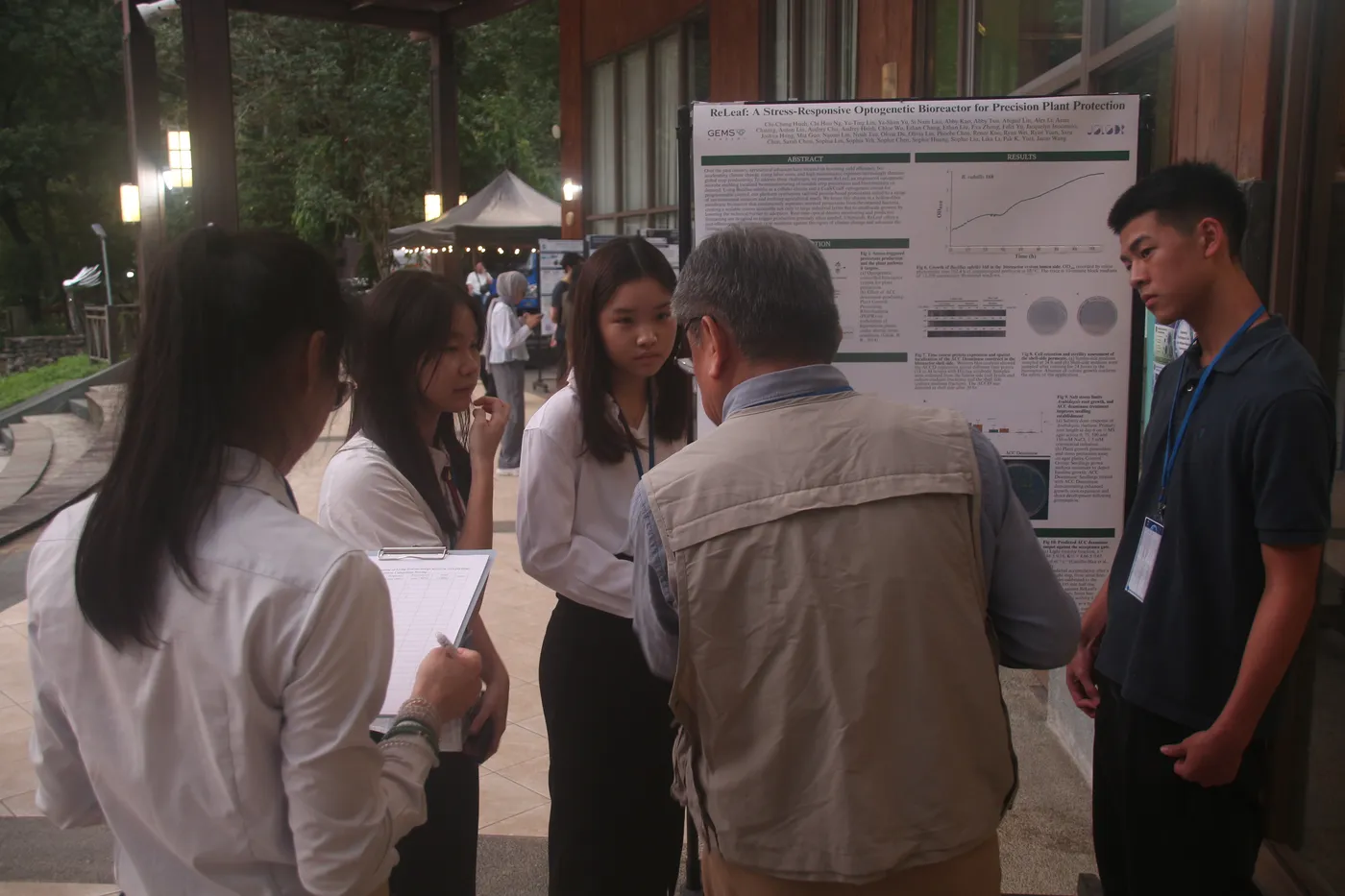
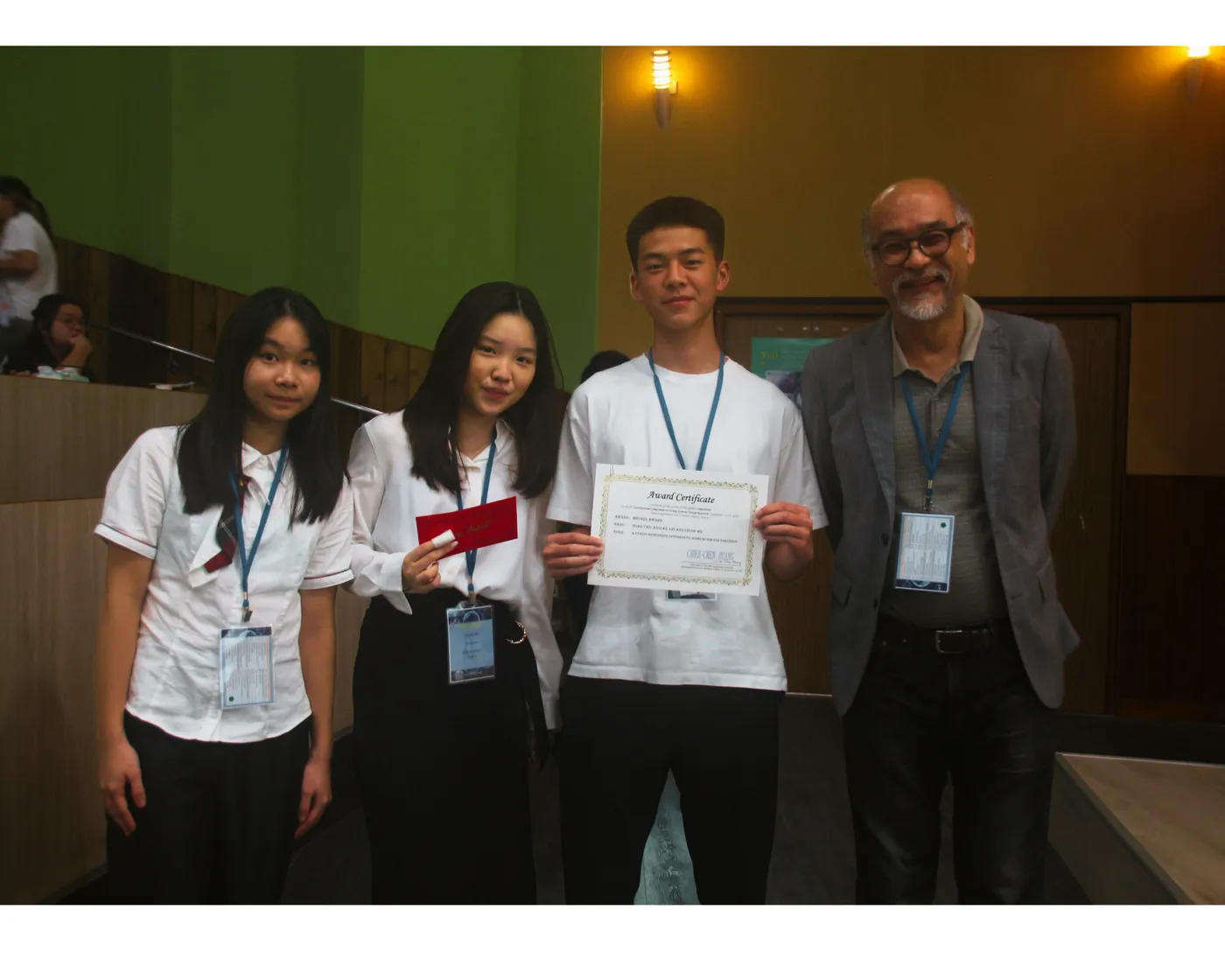
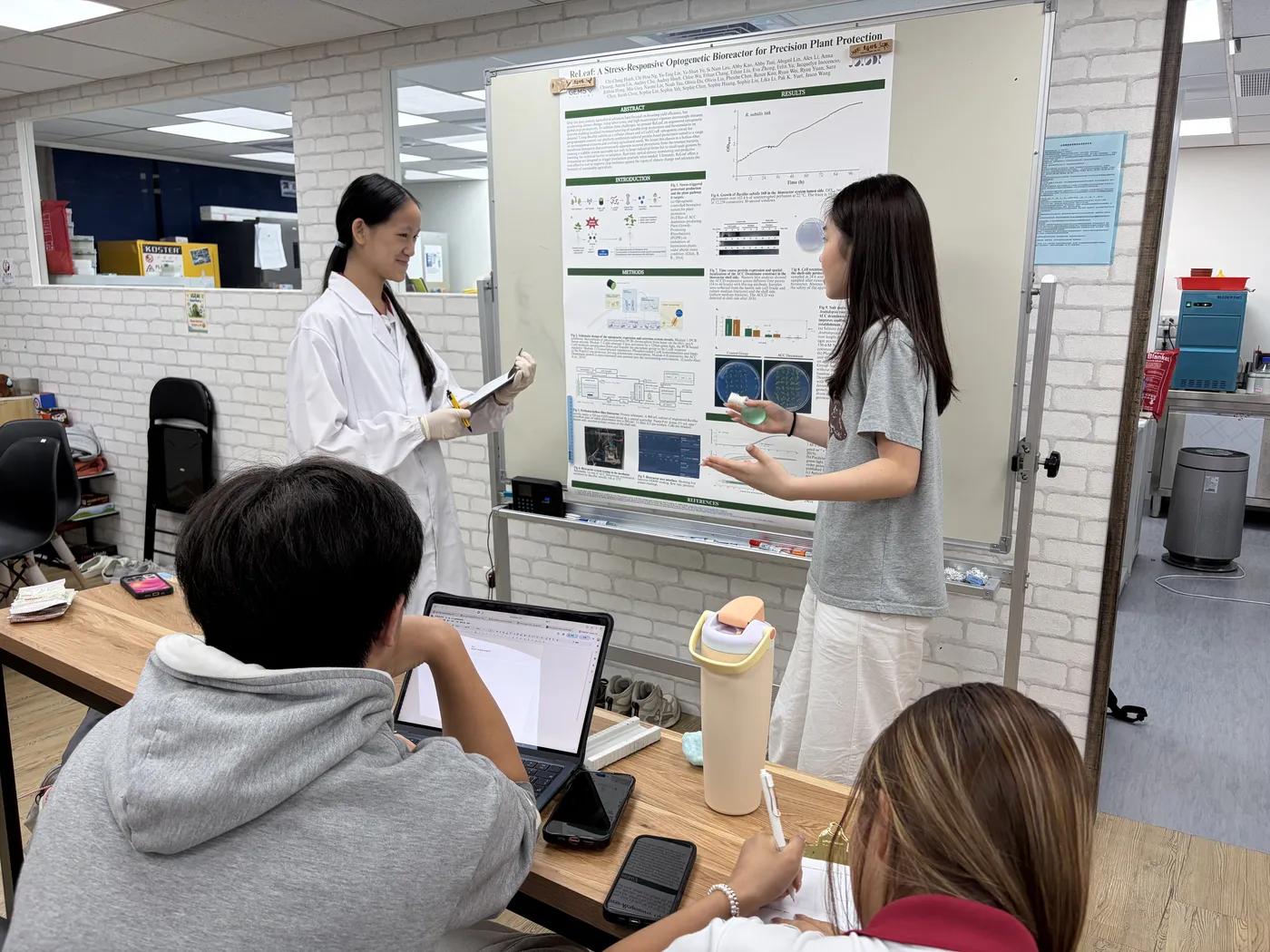
The poster session at NCHUWalking a visitor through the posterWith Dean Huang, who invited usRehearsing the poster in the lab
Deliverables 1
Poster, 2nd International Symposium on Living Systems Design Research
  • Presented at National Chung Hsing University on 11 September, where we had been invited; we opened on the reactor
  • Math ModelingSolute Dispersion, Uptake
  • BioreactorCartridge Upright
  • Protectant DesignBoPEP4 Level 0, Back
  • OD600 PhotometerSilicon Dioxide SOP
Results
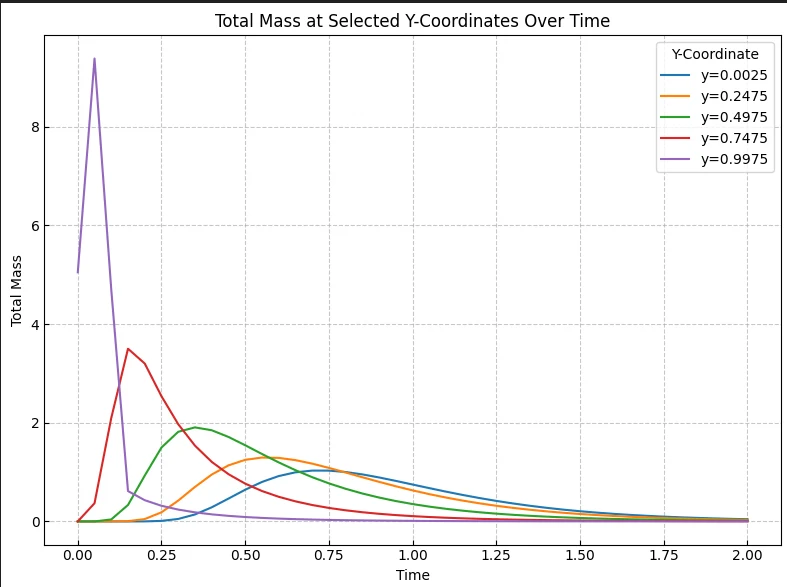
  • Solute dispersion model, 16 September: protectant mass at five depths, the shallowest peaking first and highest, deeper ones later and lower, all decaying by the end
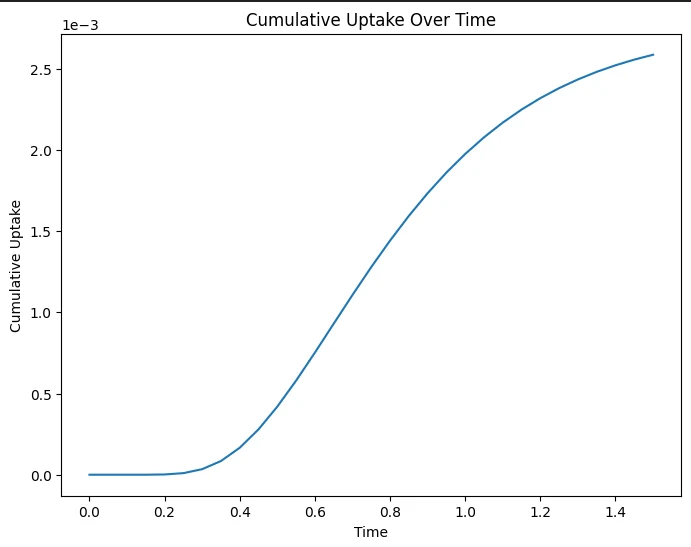
  • Cumulative uptake curve, 17 September: flat, then rising in an S
  • Both still in model units
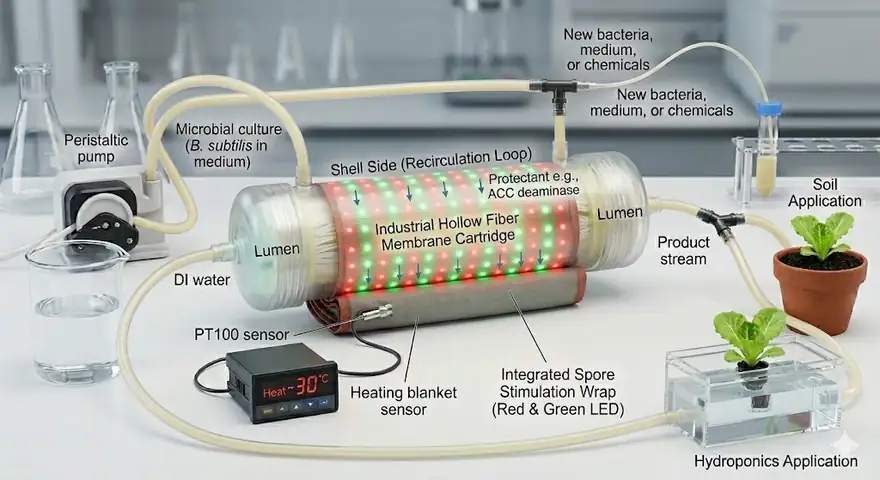
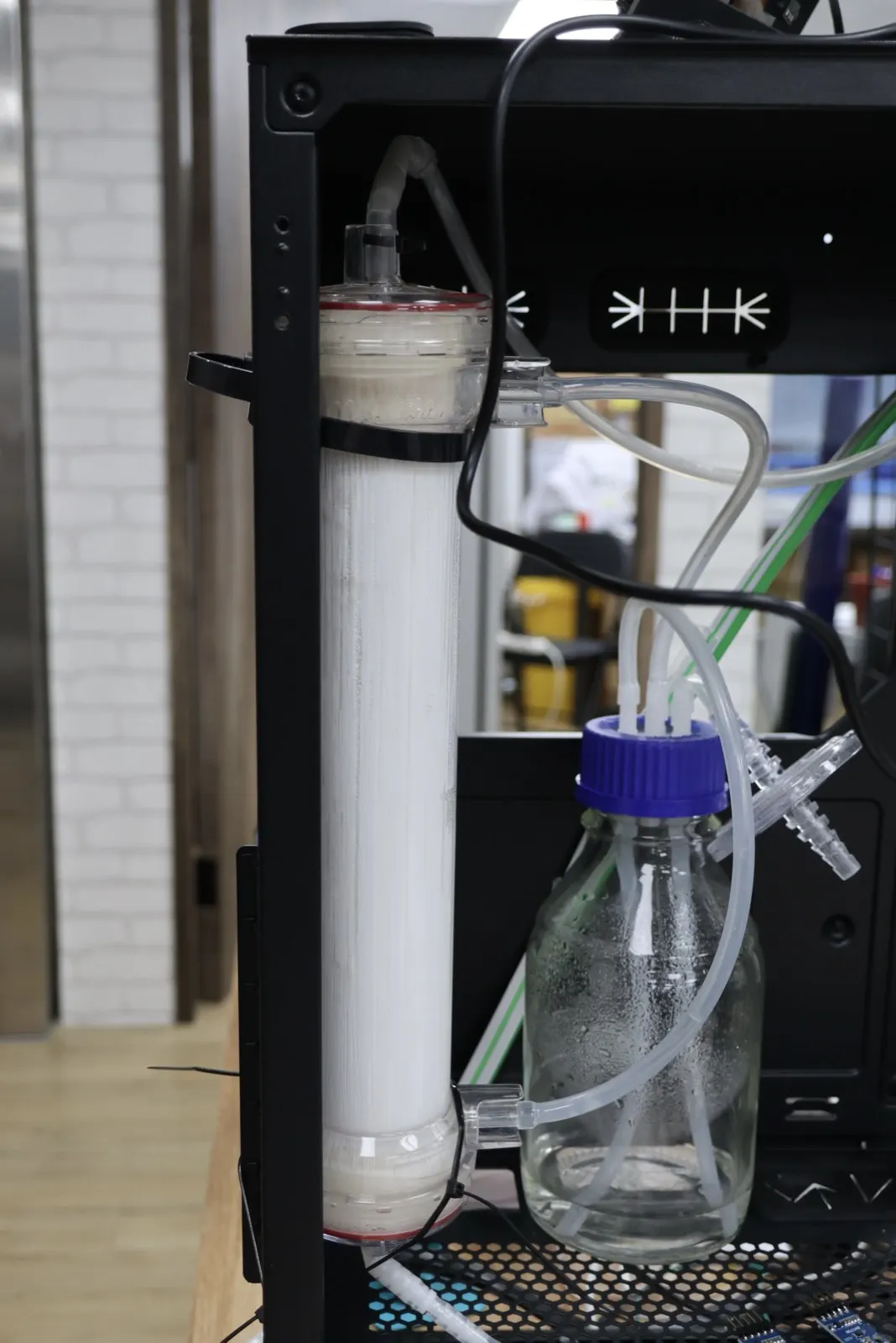
  • Hollow-fibre cartridge mounted upright in the frame beside the media bottle, 12 September
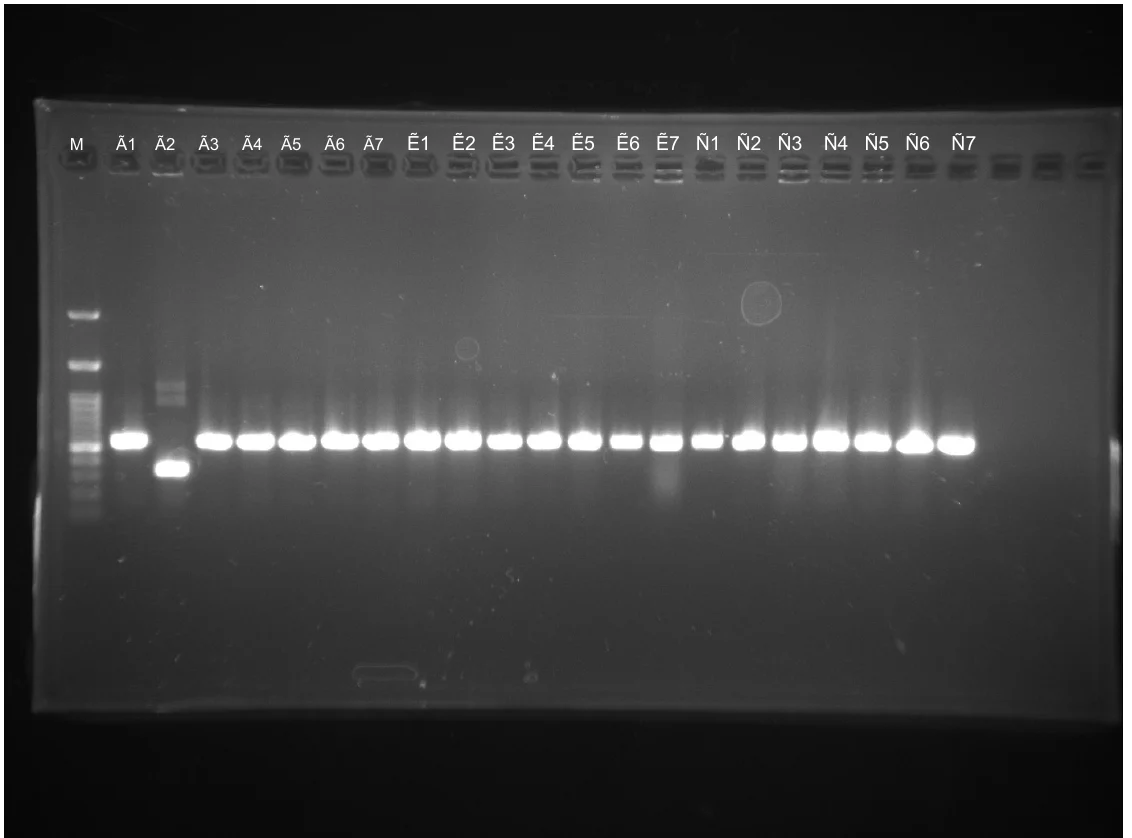
  • Three BoPEP4 Level 0 variants screened at 548 bp on 18 September, 20 of 21 clones banded
  • No expression or assay stands behind them yet
  • Reactor schematic corrected on review, 13 September
    • Shell-side flow arrow reversed
    • OD600 renamed the inline photometer, the pH sensor a pH probe, every pressure sensor a pressure transducer
    • pH probe and outlet below the surface, inlet and air filter above it, turbidimeter in the liquid
  • Version 4 pressure cannot be calibrated: no filter was fitted to the transducer
  • Next build takes a luer valve left of the transducer and the sampler moved to the bottom left
  • Silicon dioxide calibration SOP issued 13 September, the gate before the next round of reactor testing
  • A month of protein runs listed on 13 September, none of it started
    • ACCD: AlphaFold folding-consistency check, Y156C, six unpaired cysteines removed, V293T, the 39–50 lid loop, a count of blocking amino acids, a PLP binding test
    • LEA14: a truncation ladder and an alanine substitution series
Membrane module and media bottle, in the frameSolute dispersion: mass at five positionsCumulative protectant uptakeBoPEP4 Level 0 variants, colony PCR at 548 bp
Deliverables 4
Solute Dispersion Model
  • Total mass at five depths over time
Protectant Uptake Curve
  • Cumulative uptake by the plant over time
Cartridge, Mounted Upright
BoPEP4 Level 0 Screen
  • Wild type, S15A, G17A
  • 21 colonies at 548 bp, 20 banded
  • Light Plate ApparatusFirst Culture Run
  • Digital TwinGrowth Prior, 0924 Build
  • Math ModelingSalt Ladder Refit
  • Wiki & NotebookProgress Check
  • Wet Lab HandoffDiOPAL, for a light-control run
Results
  • First culture run under the light plate, 19 September: pipetted under a safelight, run on DiOPAL in the incubator under green and red
  • OD600 only, so it shows growth under each light, not whether the circuit switched
  • Logistic fit to the plate-reader OD600: r = 0.299 per hour, K = 1.005, 1.9 per cent error
  • Same growth rate in all six light arms, so green light showed no growth burden
  • Operator interface rebuilt on 24 September for the 21 October deliverable
  • Rig firmware v2 moves the safety interlocks onto the microcontroller
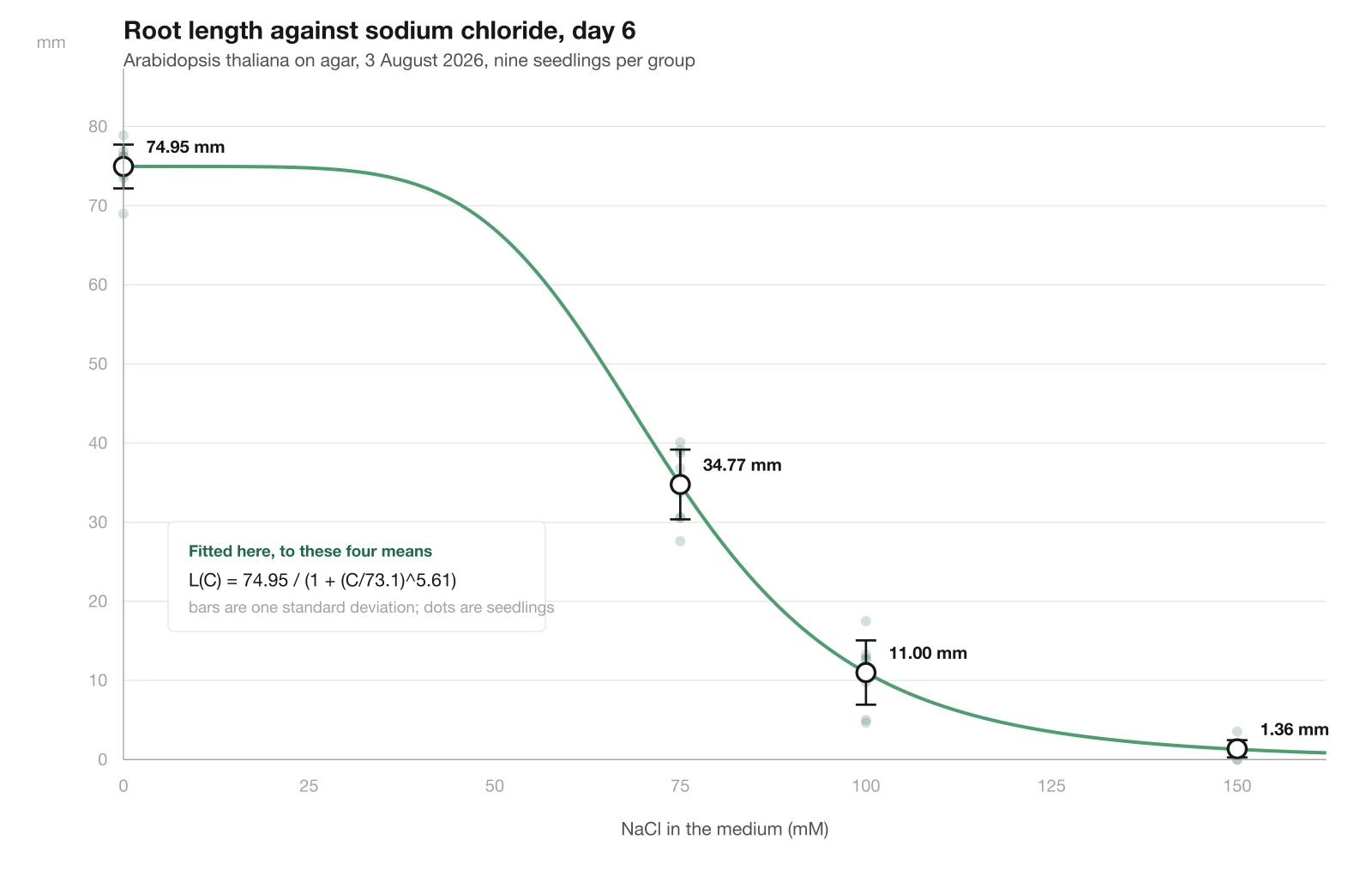
  • Per-seedling root lengths, 22 September: 74.95, 34.77, 11.00 and 1.36 mm at 0, 75, 100 and 150 mM NaCl, nine roots a group
  • A Hill decline puts the half effect at 73.1 mM
  • Math Model page brought up to the 23 September draft
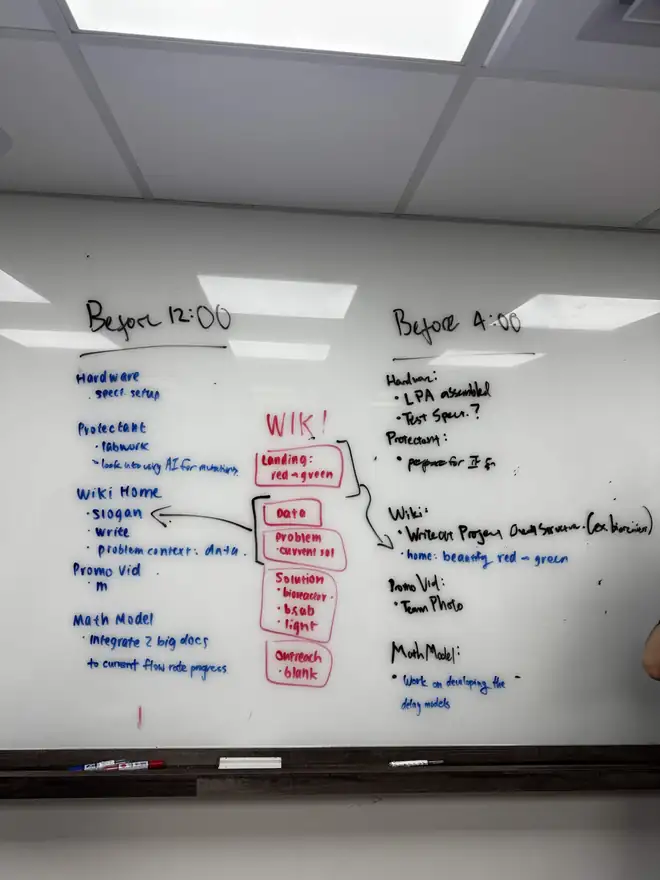
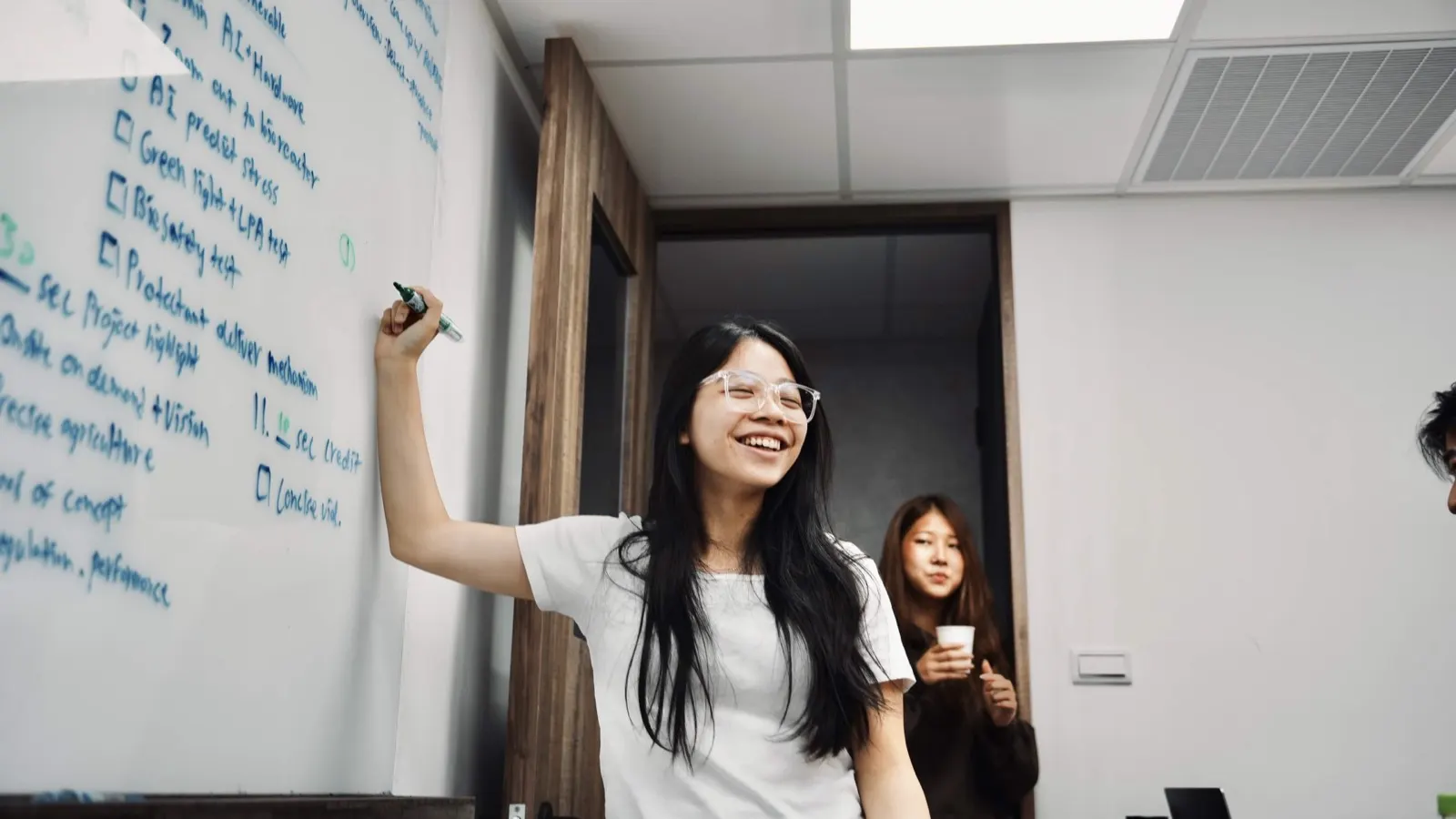
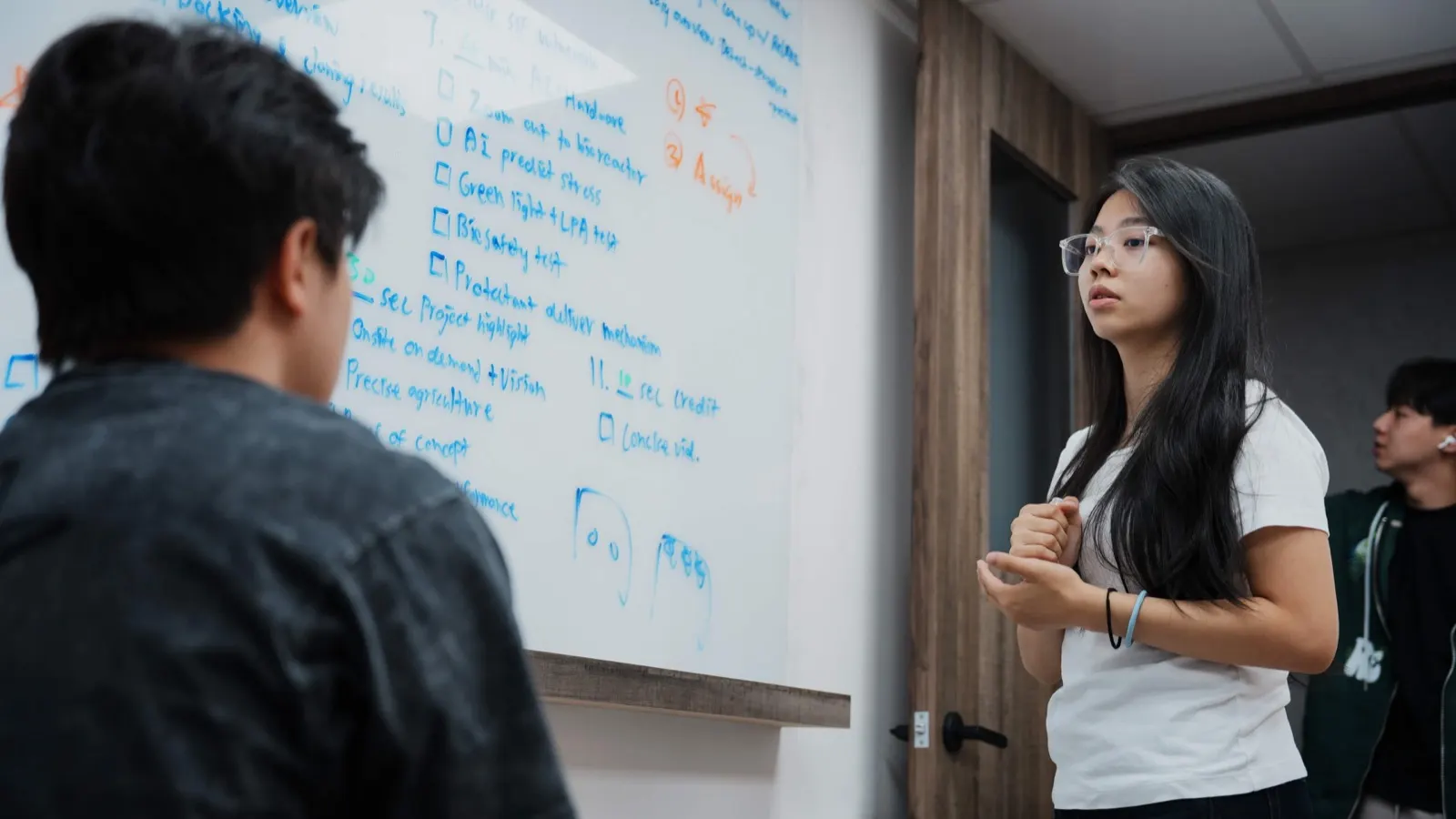
  • Progress check, the list on the board: AI and hardware, zoom out to the bioreactor, AI to predict stress, green light and LPA test, biosafety test, protectant delivery, proof of concept
  • DiOPAL handed to WetLab with six light conditions, four matched LEDs each
Deliverables 7
Light-Control Run 1
  • Six light arms
  • OD600 at 2, 4, 6, 8 and 24 h
Growth Prior
  • Logistic, chosen over logistic with lag
  • r = 0.299 per hour, K = 1.005
  • Same growth rate in every light arm
Operator Interface 0924
  • Six tabs: Today, System map, Growth twin, Weather, Data, Setup
Rig Firmware v2
  • Interlocks on the microcontroller
Salt Ladder, Per Seedling
  • Half effect 73.1 mM, slope 5.61
Dry Lab Progress Check
Wet Lab Handoff: DiOPAL, for a light-control run
  • Sent: DiOPAL, six light conditions with four matched LEDs each
  • Pipetted the cultures under a safelight on 19 September
  • Ran them on DiOPAL on a shaker in the incubator, lit green and red
  • Read OD600 on the plate reader
  • Came back: a logistic fit gives r = 0.299 per hour and K = 1.005 with 1.9 % error, the same growth rate in all six light arms. It was a growth readout: nothing measured the circuit’s output, which is the next run.
  • Wiki & NotebookDrafts Onto The Pages
  • HydroponicsPlate Runs Written Up
  • GIS & Stress ForecastSoil Map, Farm Calculator
  • Data PhysicalizationSurvey Written Up
  • Math ModelingYield-Fitted Index
  • Digital TwinPage Rewritten
  • BioreactorRecord Rebuilt
  • OD600 PhotometerSimplified Optics
  • Protectant DesignSection Rebuilt
  • Plant Growth ChamberHeat Protocol Questioned
Results
  • Student drafts onto the wiki, 25 to 29 September: Bioreactor, Photometer, DiOPAL, Hydroponics, Digital Twin, GIS, Data Physicalization and Protein Design, each stamped 28 September, every hole marked Not written yet
  • Printed floating plate written up: salinity set 1 and two August heat runs, one box per arm
  • The plate works as a carrier; with one box per arm the treatments cannot be ranked
  • Hydroponics page now carries the plate’s measured geometry and print settings
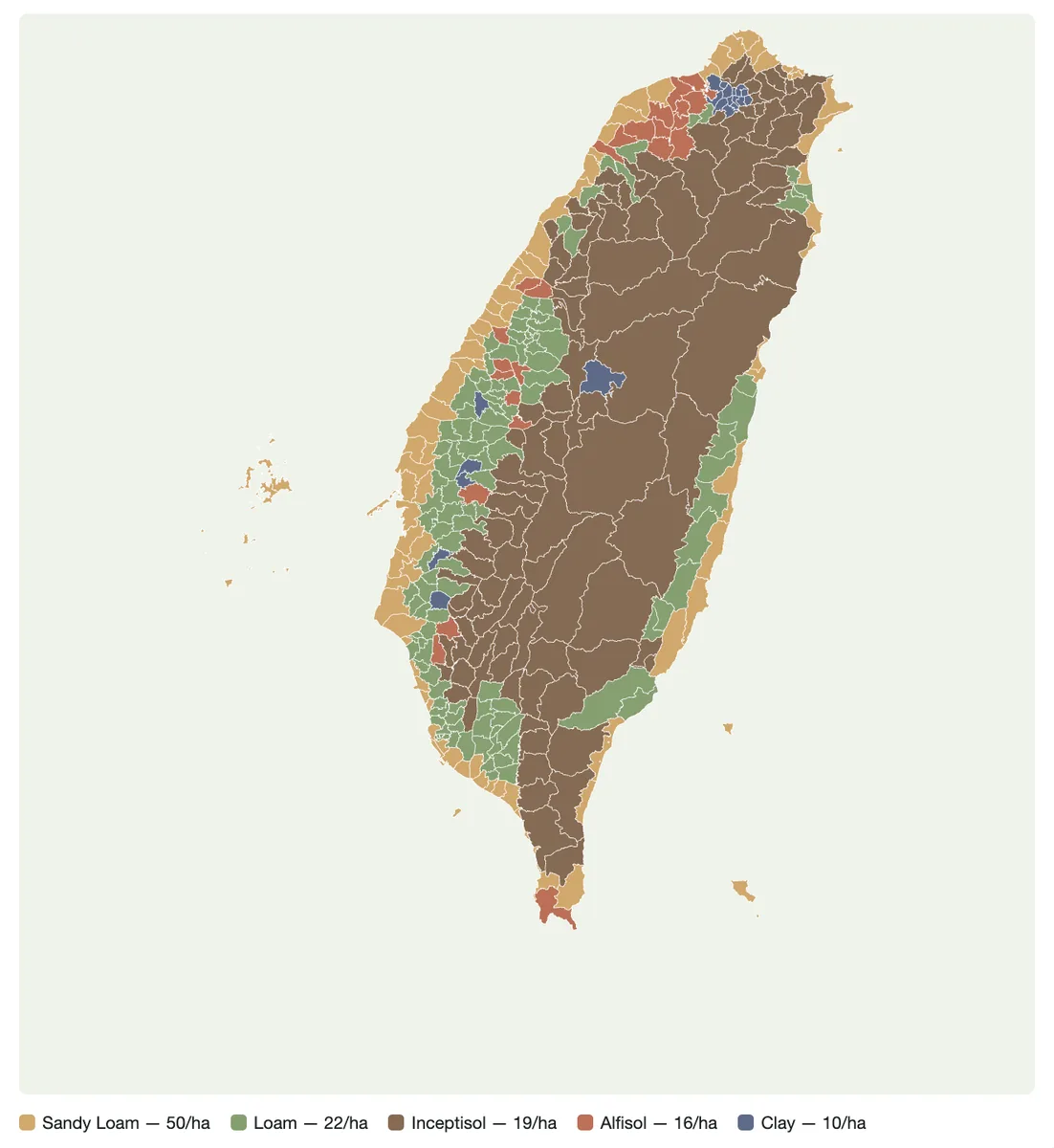
  • Soil map covers all 358 townships with a matching bioreactor density
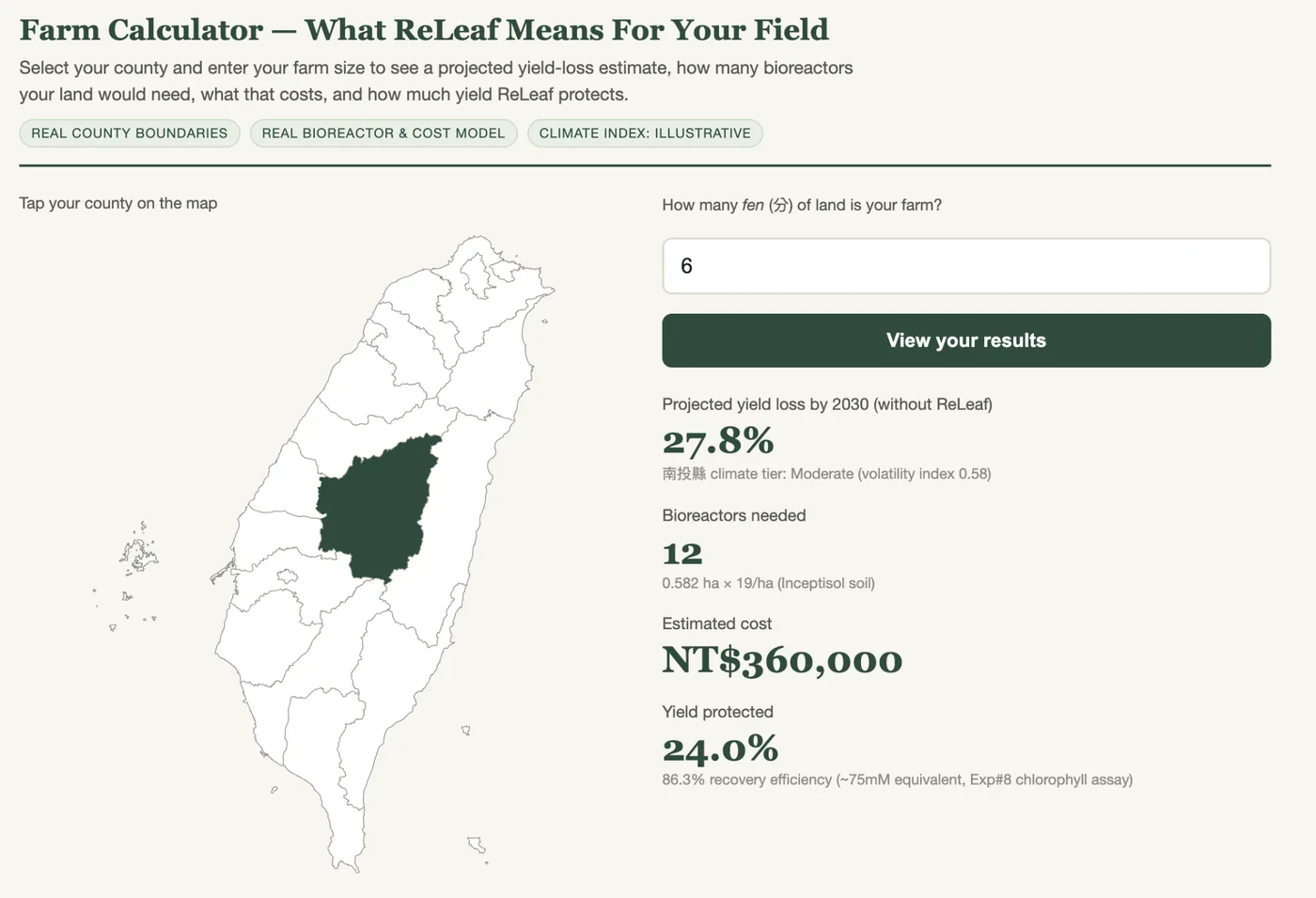
  • Farm calculator turns a county and a farm size into reactors, cost and yield protected
  • Booth survey: 32 of 62 named Yilan the highest-stress region, 59 said the map helped, 60 would pass it on
  • Stress index being refitted to county rice yields
  • Variable selection, the fitted model and a held-out season are still headings, so the weighted composite index stays
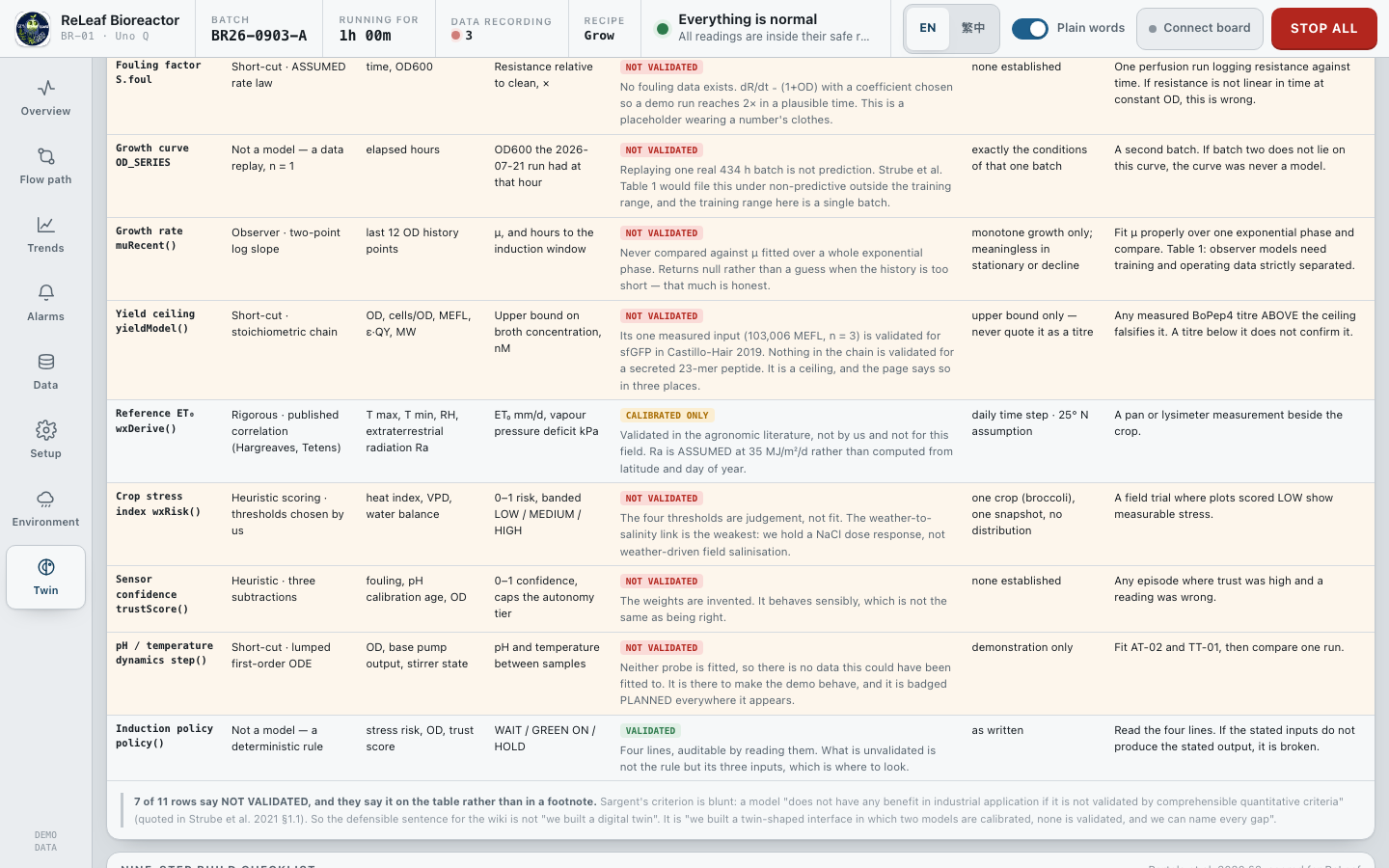
  • Software page rewritten as the Digital Twin around BR-01: process state and provenance, a four-tier decision ladder, a trust layer, a 41-column batch record
  • Monitoring and the batch record run; the control loop is not closed
  • Bioreactor page follows the 25 September draft: eight photometer cycles, the reactor cycles in the team’s own words, a lab-use cost sheet at NT$30,480
  • Simplified photometer, paralleling lens removed and LED head sanded flat: a third the size, about $70 cheaper, bench-tested and not yet on the reactor
  • Protein Design up as one hub with three subpages, none of it yet applied to a plant
  • Heat protocol called too slow on review, 29 September
    • Three hours at 42 °C then five days’ recovery proposed in place of the thermo-priming step
    • Root-length differences under 37 °C on agar are not separating clearly
    • 17 October is the last usable collection date before the freeze
  • Leaf temperature and wetness sensor bought on 2 October, so the twin can take a local measurement beside the online weather it already reads
Deliverables 9
Student Drafts, 25 to 28 September
  • Bioreactor, Photometer, DiOPAL, Hydroponics
  • Digital Twin, GIS, Data Physicalization, Protein Design
Floating Plate, Written Up
  • Salinity set 1: 100 mM NaCl, 28 July to 4 August
  • Heat runs at a measured 33 °C and 35 °C, 14 to 21 August
  • One box per arm
  • Measured geometry, bill of materials, print settings
Township Soil Map
  • 358 townships
Farm Calculator
Booth Survey Results
  • 32 of 62 found Yilan
  • 59 of 62: the map helped
  • 60 of 62 would share it
Digital Twin Page
  • State vector with provenance
  • Four-tier decision ladder
  • Trust layer
  • 41-column batch record
Bioreactor Record
  • Lab-use cost sheet, NT$30,480
Simplified Photometer
  • No paralleling lens
  • LED head sanded flat
  • Built and bench-tested
Protein Design Section
  • Methodology
  • Sprints and Results
  • Molecular Dynamics

October 2026

3 entries, 12 photos3 · 10 · 17
  • Protectant DesignJudging Panel
  • Light Plate ApparatusRun 1 Read Out
  • Plant Growth ChamberSalinity Group Harvested
  • Wiki & NotebookPlant Page Annotated
  • BioreactorRack Drawn To Scale
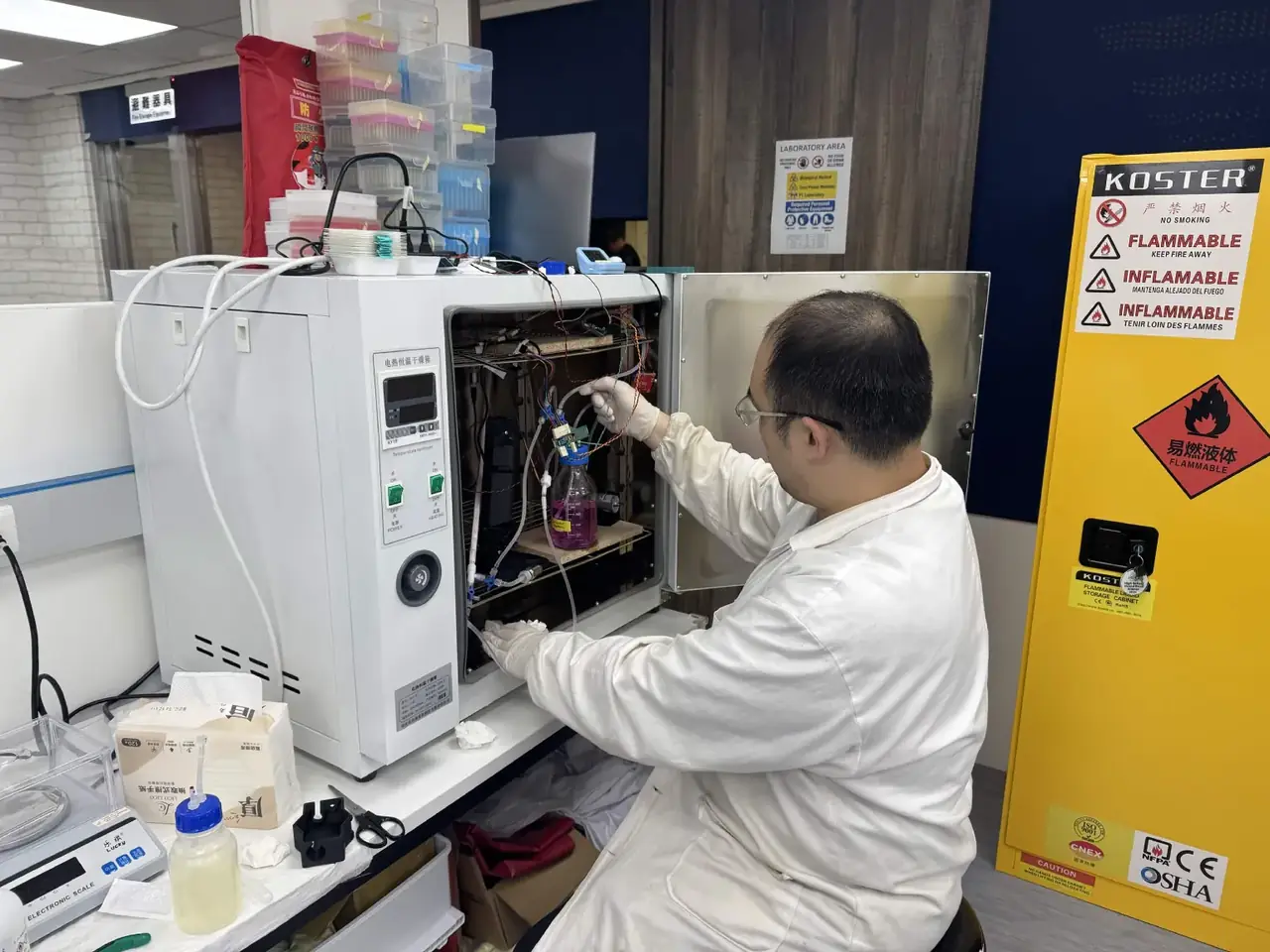
  • Digital TwinRun Archive
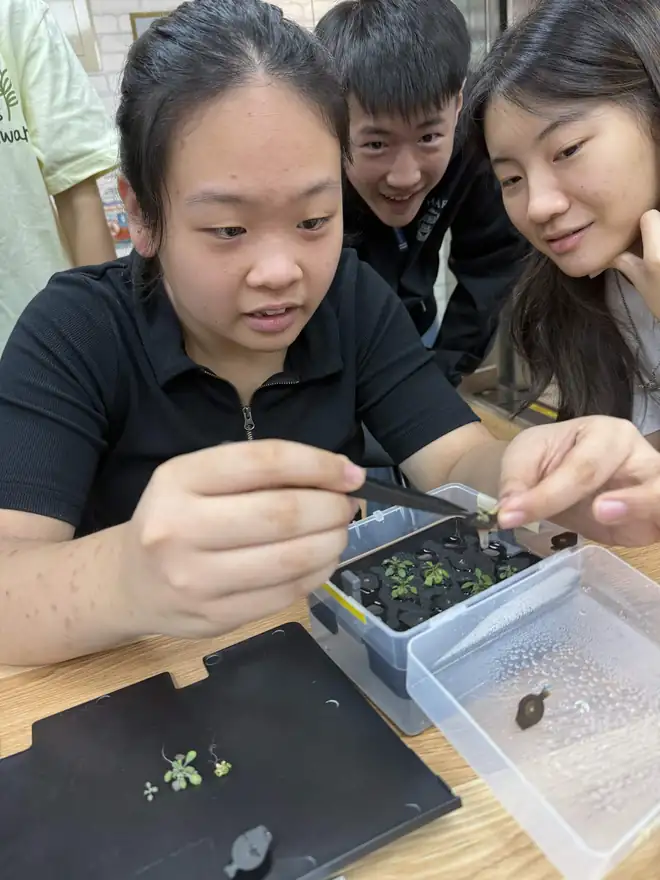
  • Math ModelingThree Blocks Drafted

Participants Anton, Audrey, Ethan, Joshua, Felix, Timmy, Abby, Abigail

Results
  • Point mutation panel for the 3 October judging session: the reasoning behind each BoPEP4 and LEA14 mutation and truncation in the August order
  • OD readings from the 19 September OptoLPA ACCD run posted 3 October, the apparatus’s first output as data, not photographs
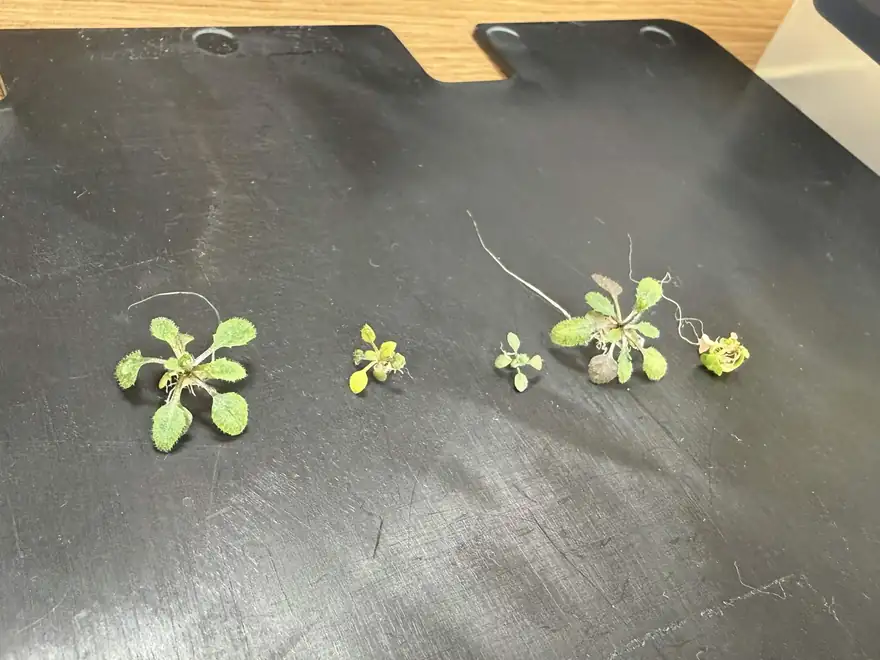
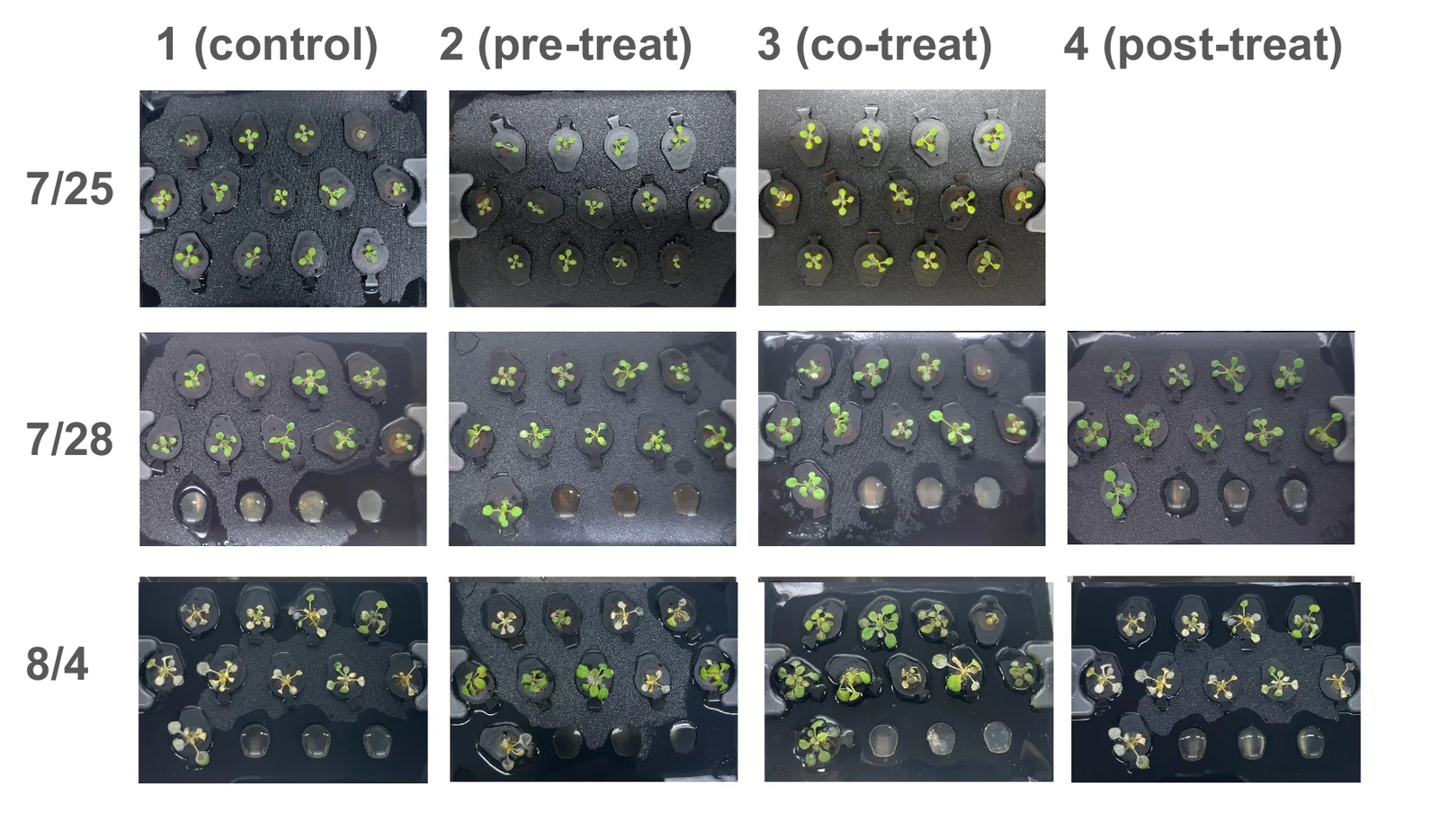
  • Salinity group harvested 3 October: chlorophyll, fresh weight and relative gene expression off the 17 September plates, MDA and total protein to −86 °C
  • Two-paper soil pot comparison sown 6 September measured the same day
  • BoPEP4 co-treatment added to the plates still running
  • Plant wiki draft returned on 4 October with corrections marked through the document
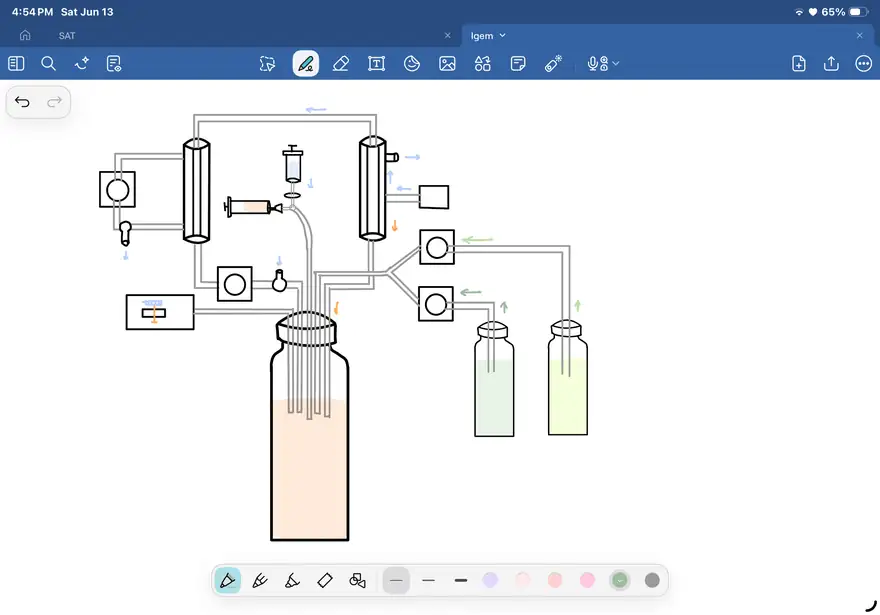
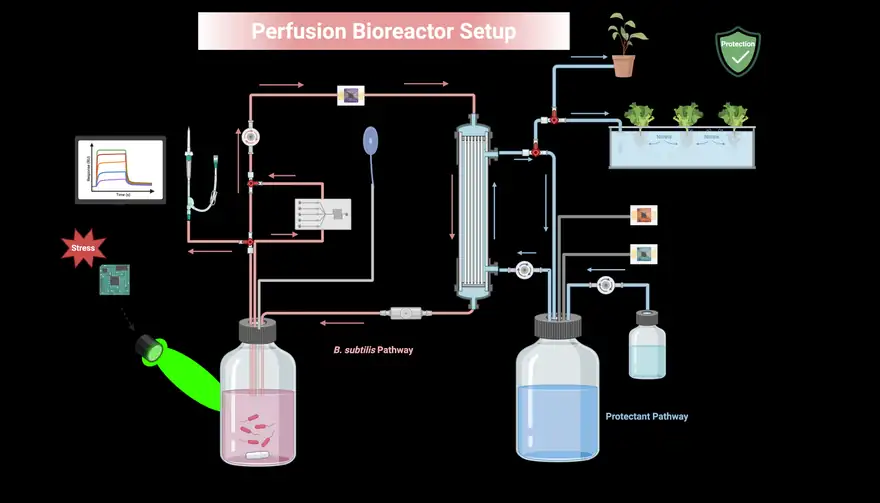
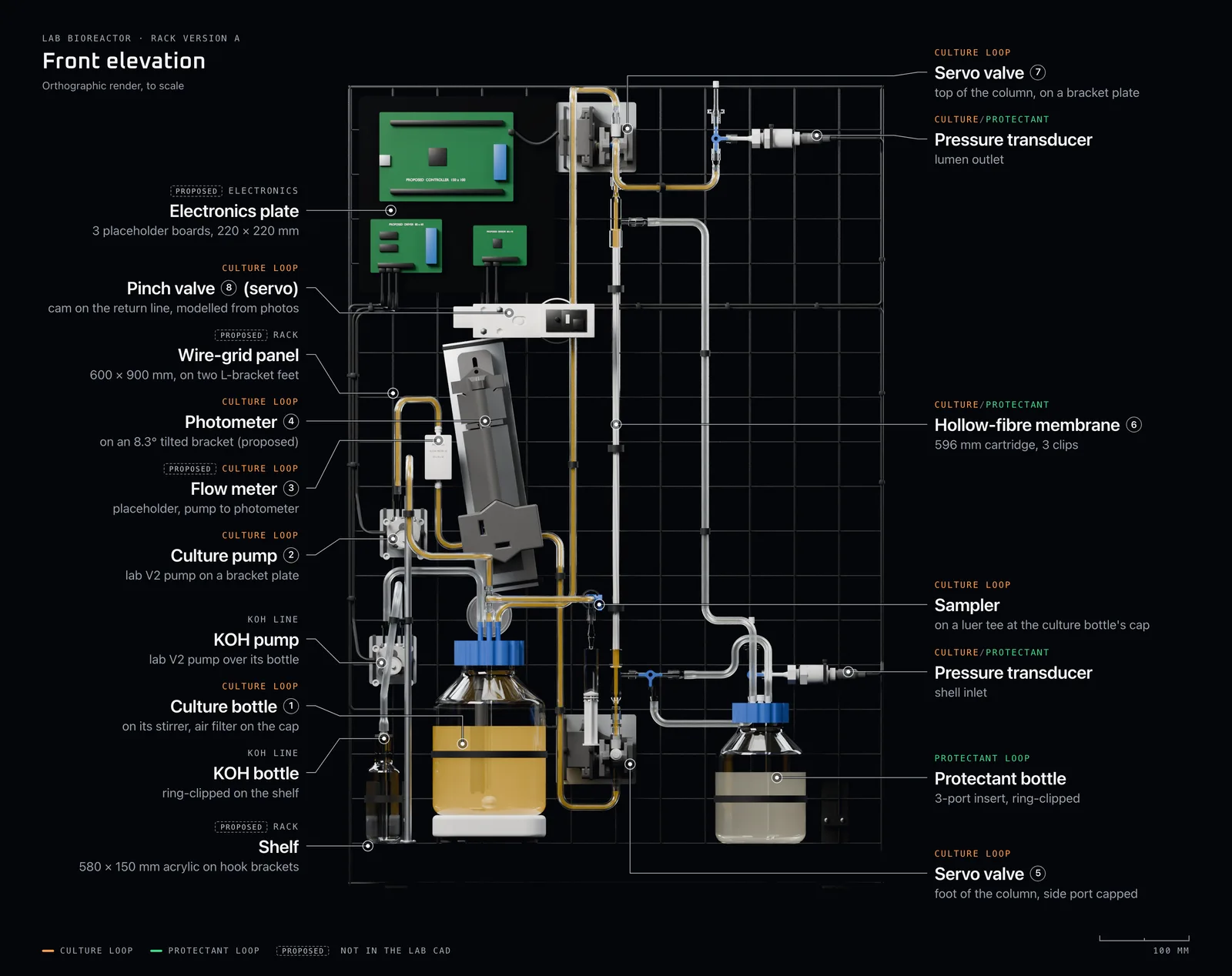
  • Labelled front elevation of the lab reactor, 9 October, orthographic and to scale on the 600 × 900 mm wire-grid panel: culture bottle on its stirrer, pump, flow meter, photometer on an 8.3° bracket, the 596 mm cartridge on three clips, a transducer at each end, two servo valves, the sampler on a luer tee, and the KOH and protectant bottles
  • Electronics plate, flow meter and panel marked as proposals, not in the lab CAD
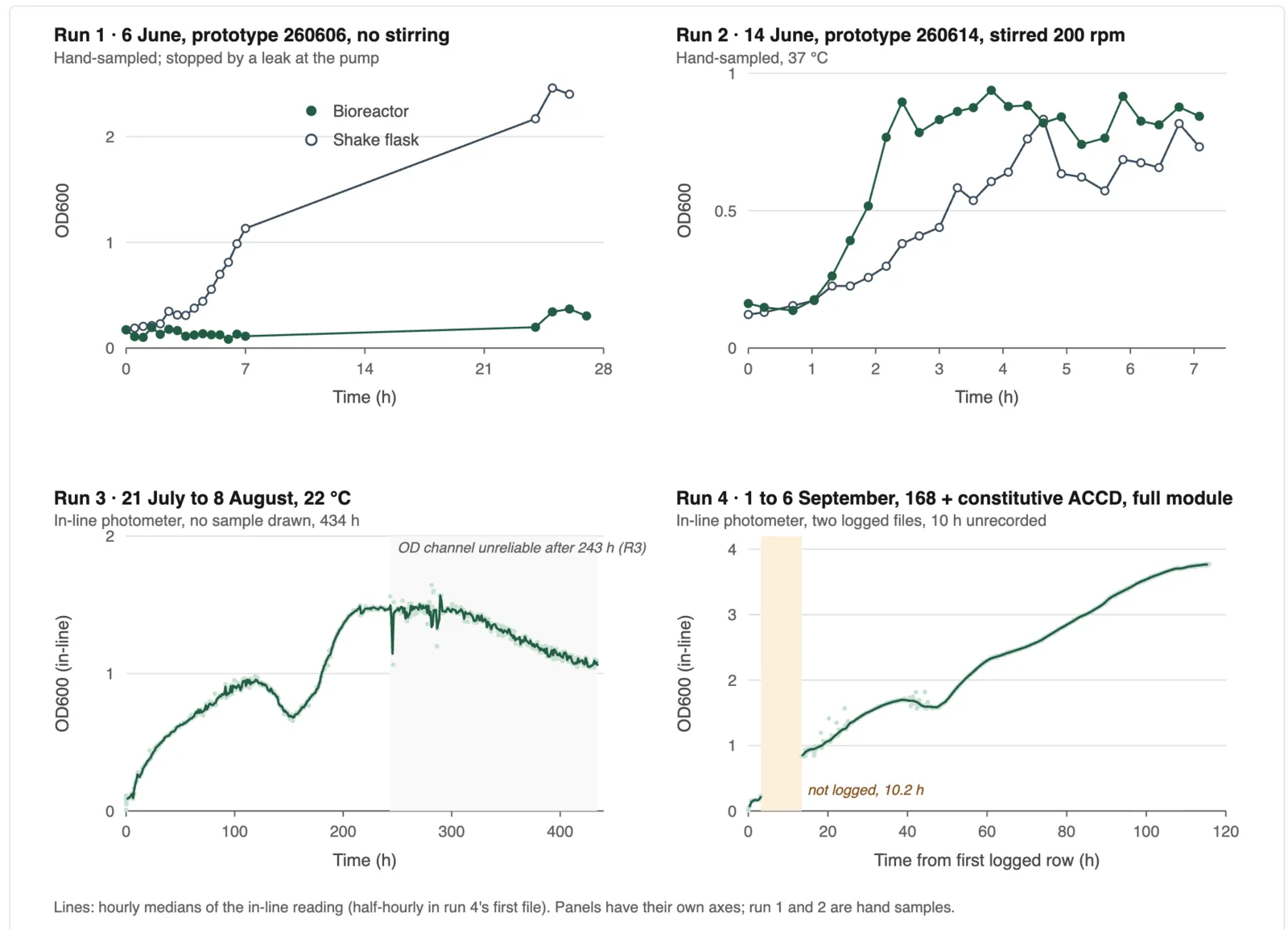
  • Four reactor runs archived on one sheet of axes, 9 October
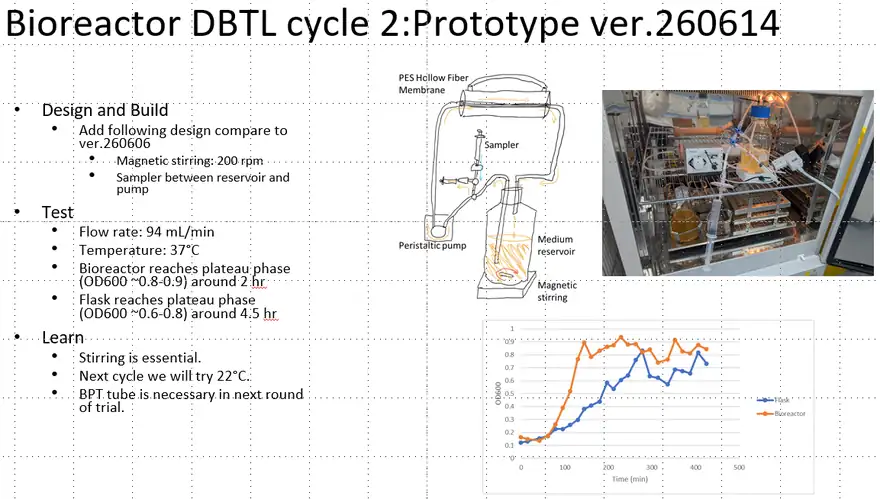
    • 6 June, prototype 260606, unstirred and hand-sampled until a pump leak stopped it
    • 14 June, prototype 260614, stirred at 200 rpm at 37 °C
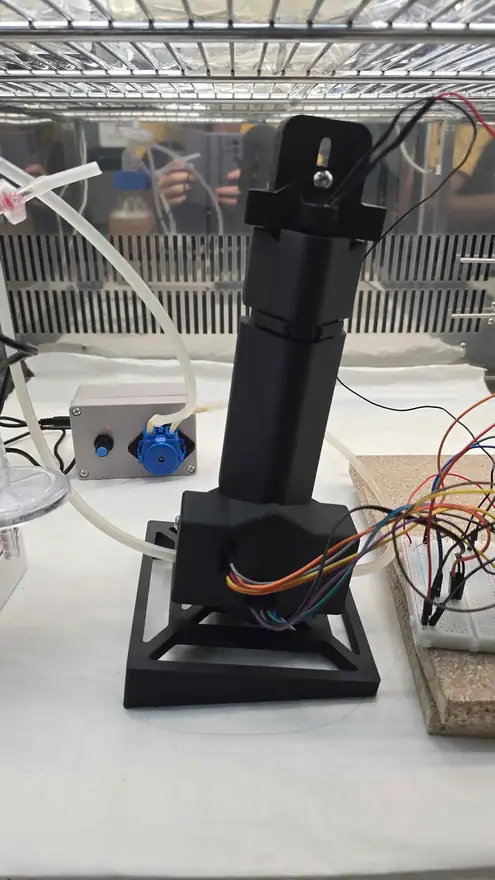
    • 21 July to 8 August at 22 °C, 434 hours in-line, the first 243 usable
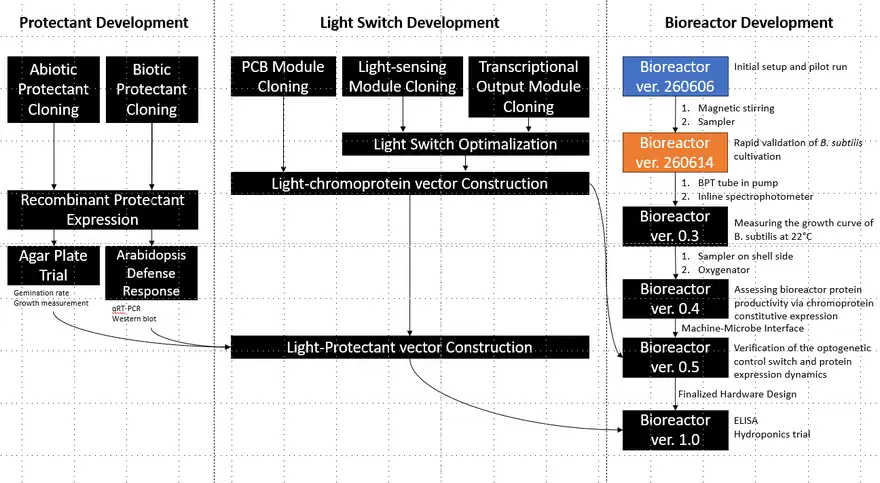
    • 1 to 6 September, B. subtilis 168 with constitutive ACC deaminase: 3.2 h to OD 0.24, 10.2 h unlogged, then 102 h from 0.84 to 3.77
  • Model’s three blocks drafted 7 October and walked through with the wet lab before going near the page
  • The 9 October pass went up on 10 October as one route: 1,670 L per hectare measured on a plate, times a modelled canopy correction of 2.44, is 4,008 L per hectare per application, concentrated tenfold into 400 L of tank mix
  • Every page to open with a header image and a short summary of what was learned and what changed
  • Human Practices pages read against winning undergraduate wikis of 2023 to 2025, marked for cuts, clarifications, mistakes and additions
  • All sixteen video and audio pieces uploaded to the iGEM Video Universe by 8 October, fifteen awaiting moderator review
  • None of the week’s four planned items closed: the GitLab mirror, the repeated 22 °C growth test, section 12’s six open questions, the light plate’s photon flux
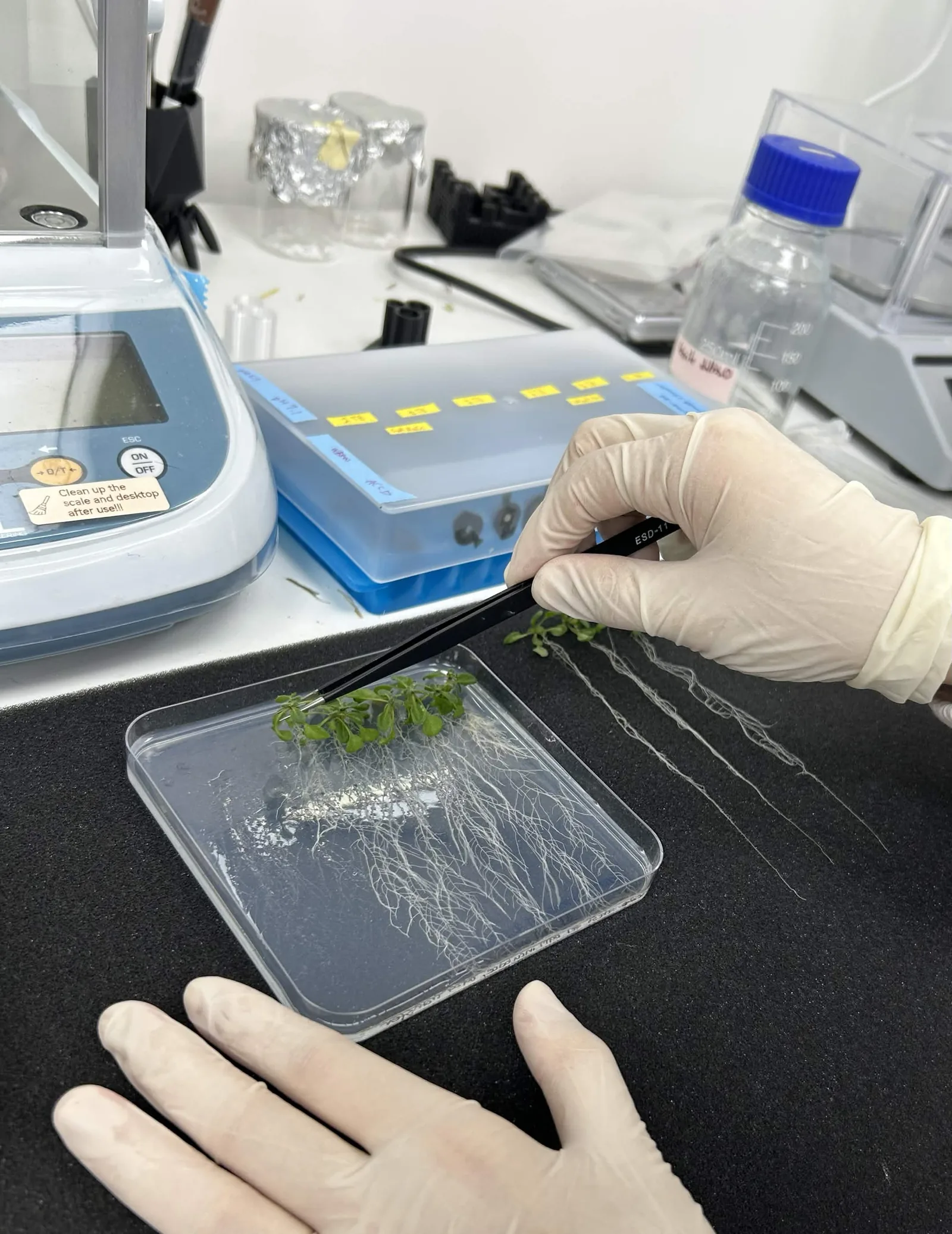
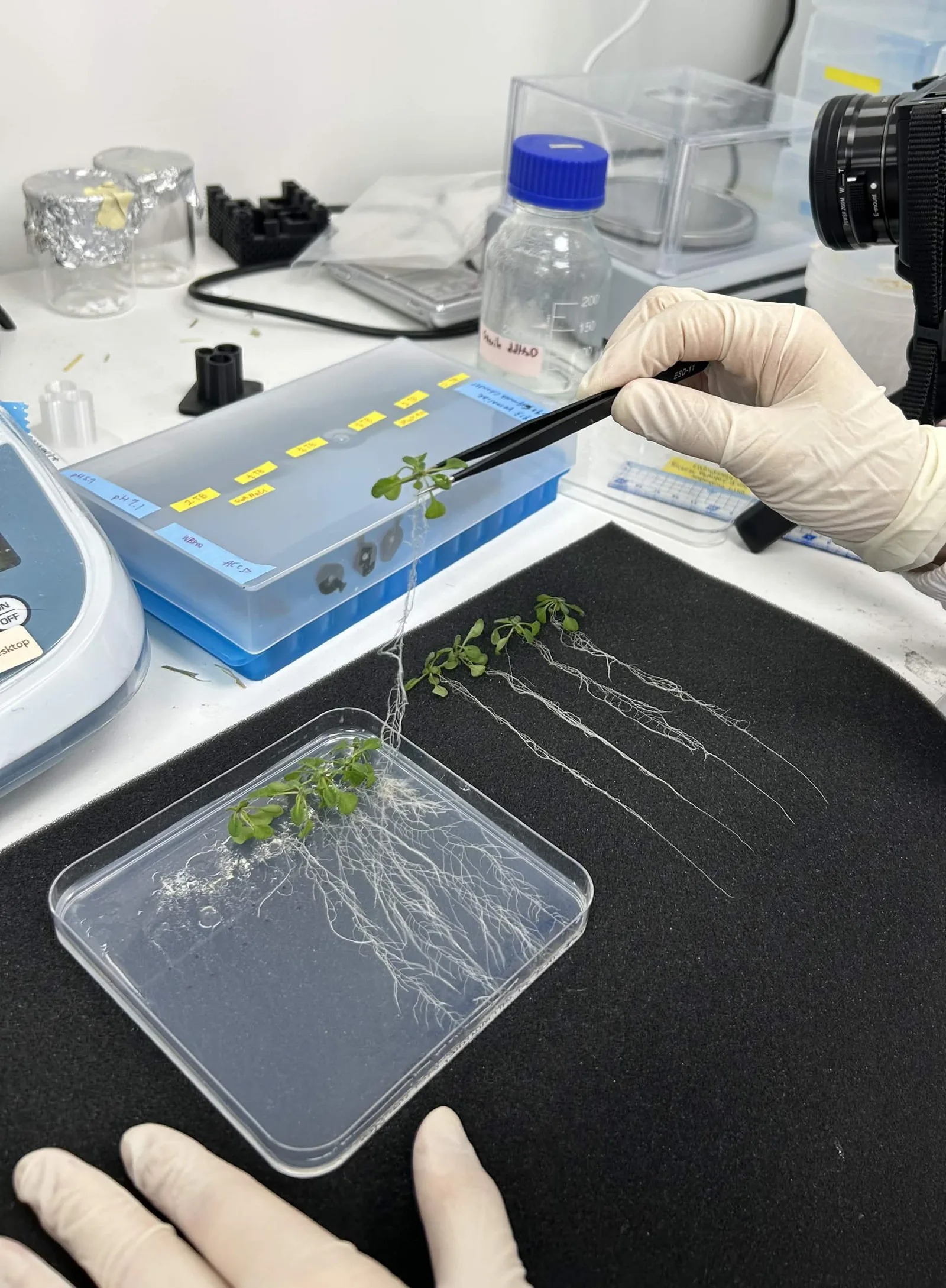
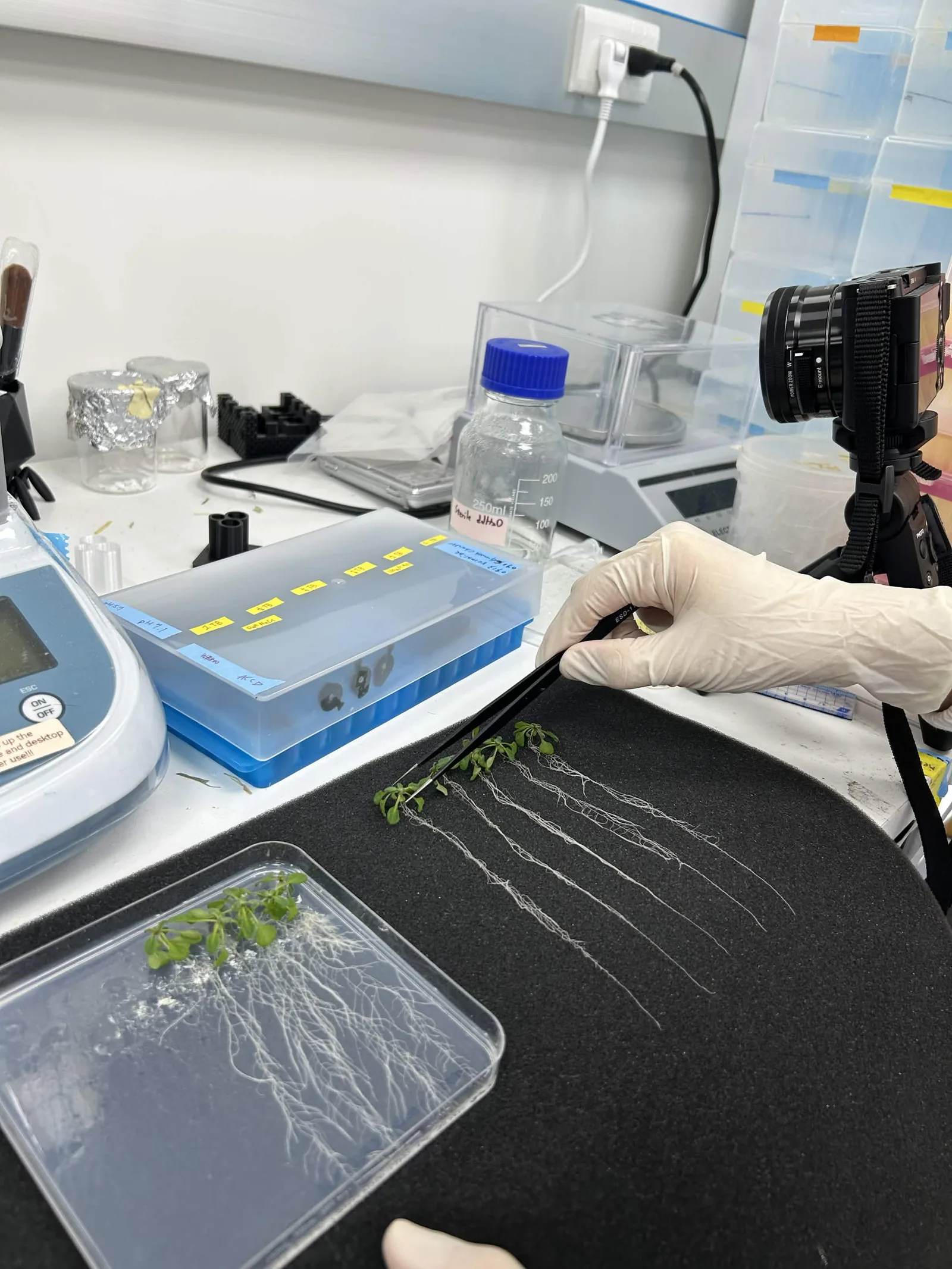
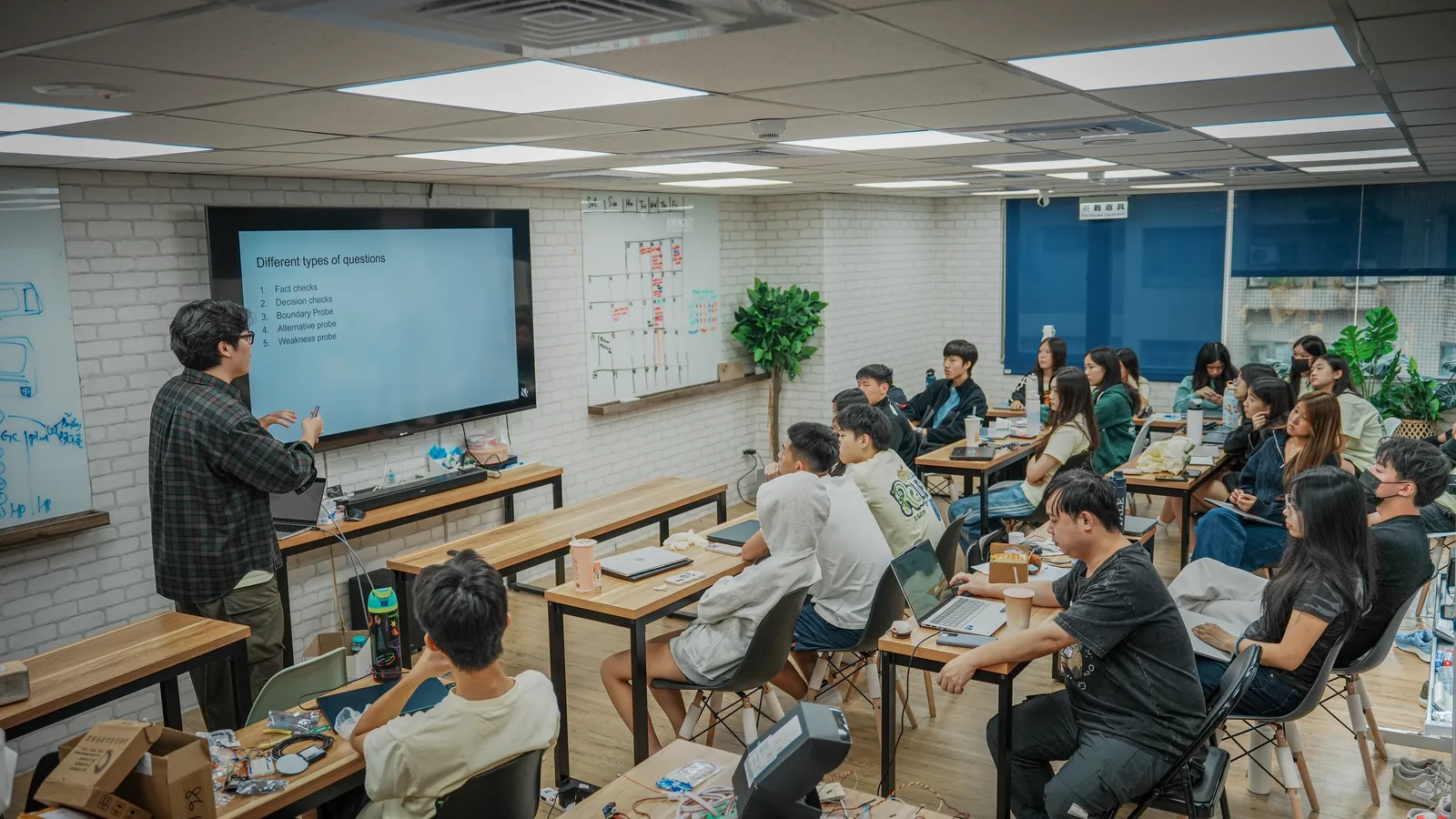
Seedlings off the salinity plate, for fresh weightFive seedlings, roots straightenedThe row from a tripod, for root lengthJudging practice: five kinds of questionRack version A, front elevationFour logged reactor runs, June to September
Deliverables 11
Point Mutation Panel, 3 October judging session
Run 1 OD Readings, posted 3 October
  • From the 19 September OptoLPA ACCD run
  • First output to circulate as data, not photographs
Salinity Group Harvest, 3 October
  • MDA and total protein to −86 °C for later assay
  • BoPEP4 co-treatment added to the plates still running
Annotated Plant Page Draft
Page Opening Convention
Human Practices Read-Through
  • Against winning undergraduate wikis of 2023 to 2025
Video Universe Upload
  • Fifteen still awaiting moderator review
Labelled Front Elevation, posted 9 October
  • Sampler on a luer tee, KOH and protectant bottles
Four-Run Archive, 9 October, on one sheet of axes
  • 14 June, prototype 260614, stirred at 200 rpm at 37 °C
Three Model Blocks, drafted 7 October
Application Rate Route, up 10 October
  • 4,008 L of culture per hectare per application
  • Concentrated tenfold into 400 L of tank mix
  • OD600 PhotometerFinal Calibration
  • BioreactorRecords Rebuilt, Outlet Corrected
  • Digital TwinCut Back To Its Logs
  • Protectant DesignFact Check
  • Plant Growth ChamberBuffer Confounds The Dose
  • Math ModelingPlant Weights Handed Over
  • GIS & Stress ForecastCrop Choice Reopened
  • Wiki & NotebookThe Last Fortnight

Participants Anna, Anton, Audrey, Ethan, Joshua, Felix, Noah, Jacquelyn, Timmy, Abby, Abigail, Alex

Results
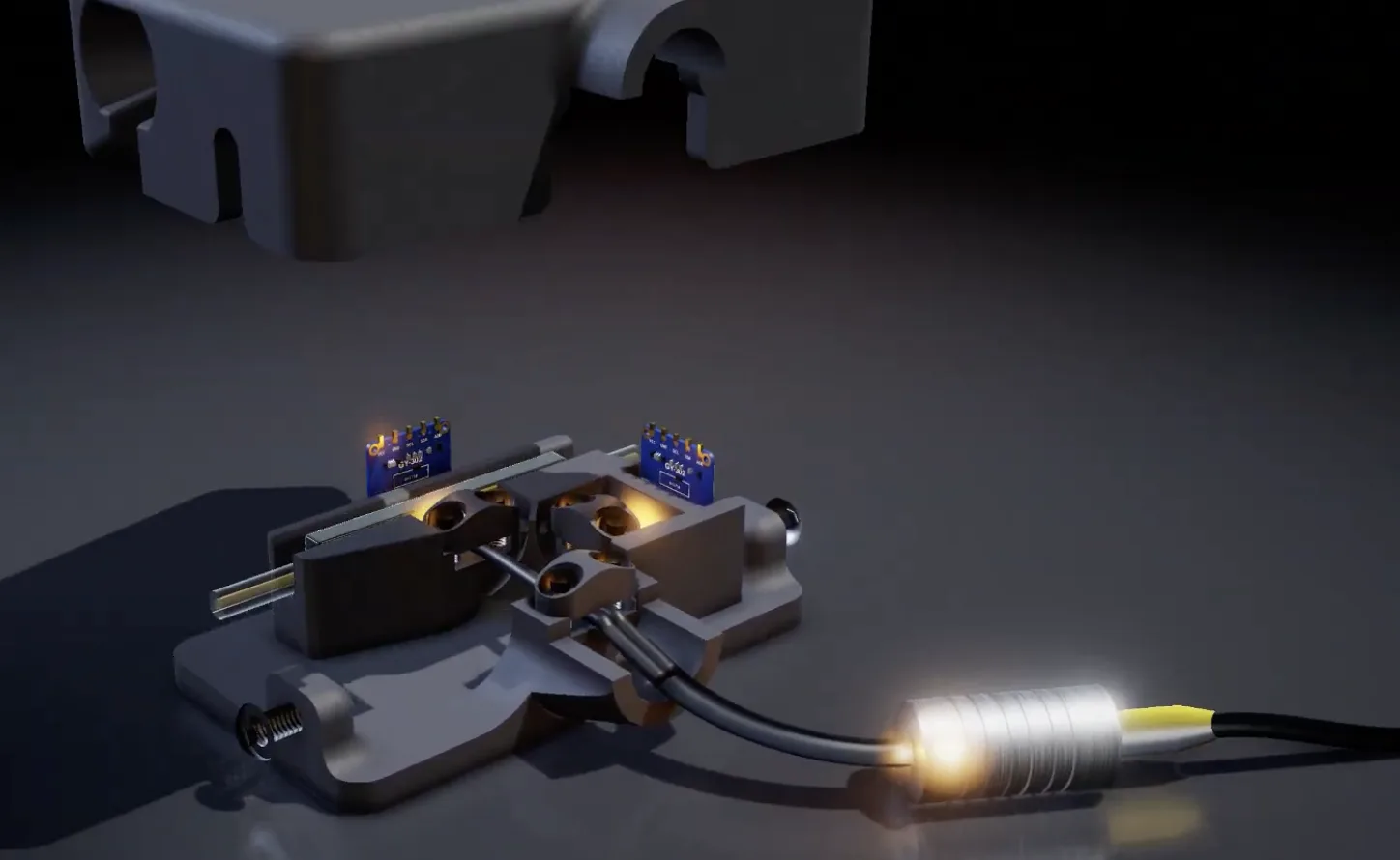
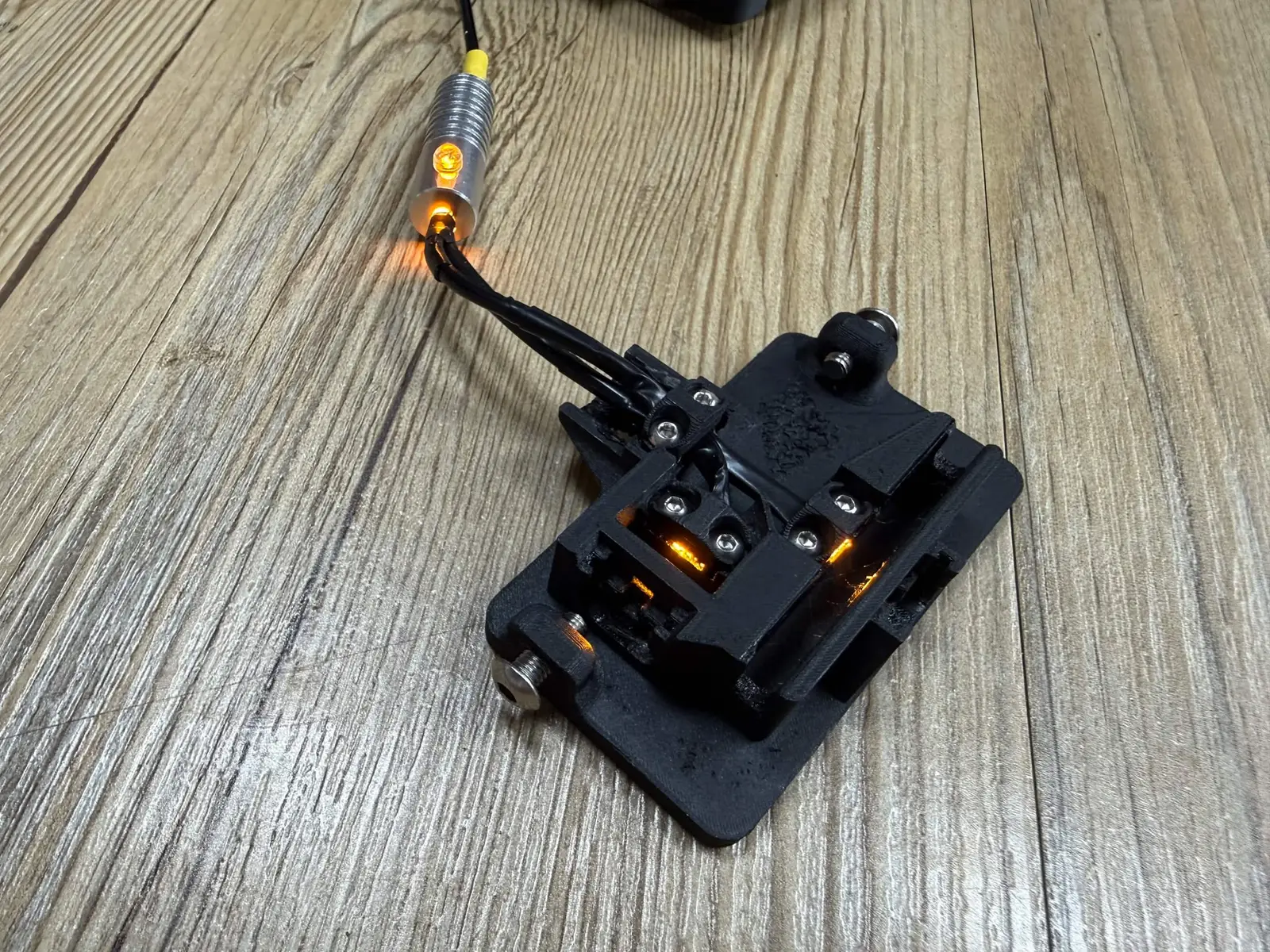
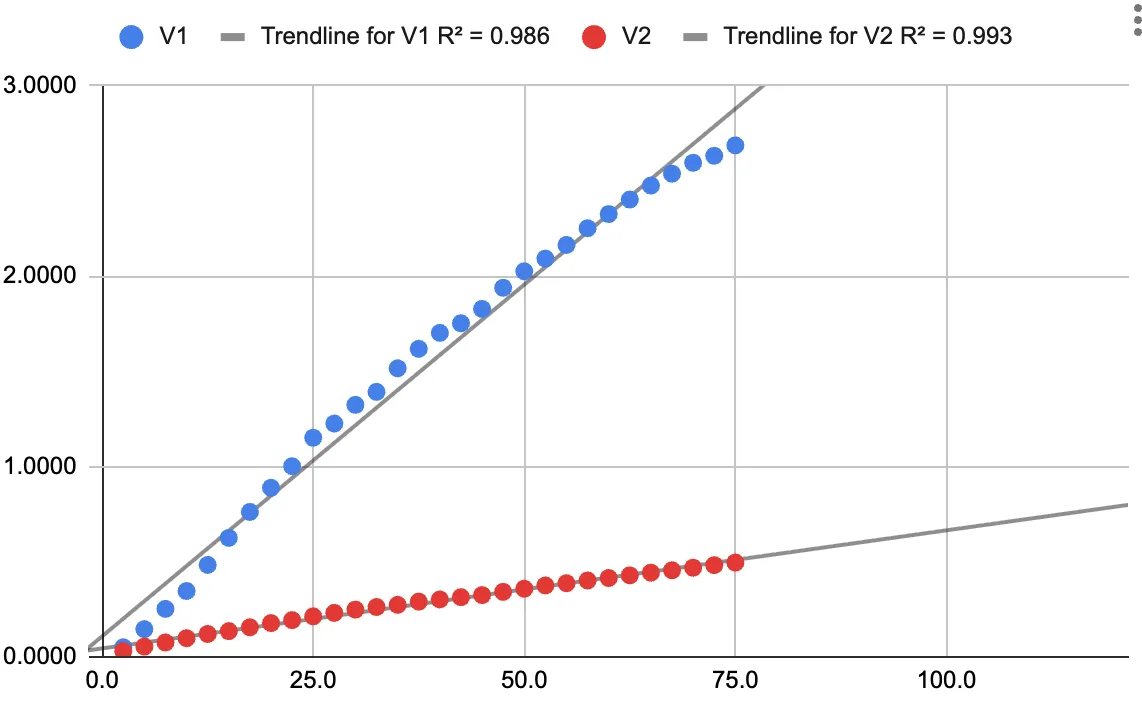
  • Silica series, 10 October: complex build, slim fibre-coupled build and BioDrop down the same forty points, 2.5 mg at a time from 2.5 to 100 mg in 500 mL
  • Complex build tracks the reference one for one to OD 2.5, slope 0.995, intercept −0.074, and reads low above it
  • Slim build is straight across the range and six times compressed, OD = 5.573r − 0.073 at R² 0.993; rescaled it agrees as closely and resolves half as finely
  • The reference runs out first: the BioDrop’s direct channel returns exactly 2.50 from 70 mg on, so every value above OD 2.5 comes from a dilution, and that reconstruction falls at 7 of its 20 steps above 50 mg
  • Against weighed mass our build scatters five times less and never reads lower when more went in
  • The high-OD gap is left unassigned: multiple scattering at that turbidity would look the same
  • Four hardware records rebuilt as chapters under one pinned control, 10 to 11 October
  • Rack drawing corrected 10 October: on the shell side only the top outlet is open, the foot port closed behind a luer valve that connects to nothing
  • Digital Twin cut from about 8,500 words to 6,600, runs renumbered R1 to R6 in the order they were produced
  • Rig application put in the repository, firmware, backend and interface together with its licence
  • Re-reading the September log corrected one of our own figures: that run rises OD 0.83 to 2.45 over 53 h 22 min, and the 0.17 this notebook and Engineering carried is nowhere in the file
  • Protein Design checked against the cloning record, six corrections, 14 October
    • Neither LEA14 truncation, 1–16 or 1–23, reached a sequence-verified construct; every LEA14 plasmid on file carries the full-length 151-residue protein
    • The N-terminal His tag belongs to BoPEP4’s order after 16 August; the June and July cassettes and every LEA14 and ACC deaminase construct carry a C-terminal 6×His
    • The Lys7 salt bridge holds at 96.6 per cent and 2.85 Å in the full-length run; the quoted 98.7 per cent at 2.81 Å belongs to the 7–23 trajectory
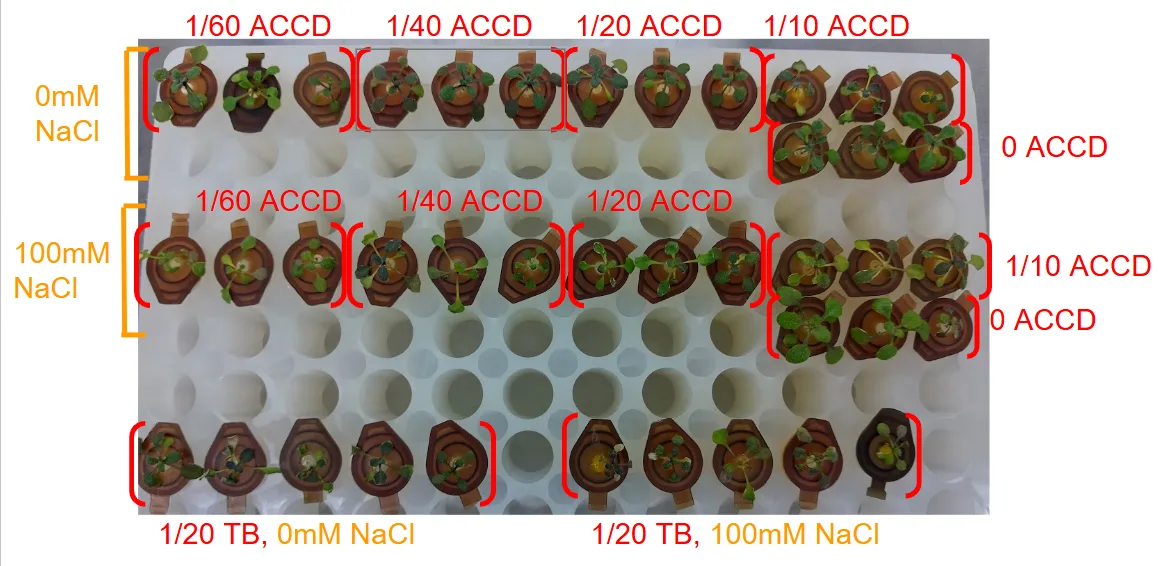
  • ACC deaminase salinity plate labelled 10 October: four enzyme dilutions 1/60 to 1/10 and a no-enzyme arm, at 0 and 100 mM NaCl, with 1/20 TB buffer controls at both
  • The buffer arms show TB itself holding growth back from 1/20 upward, enough to cover whatever the enzyme does, so appearance alone says nothing about salt tolerance
  • Each treated well is 0.5 mL of enzyme preparation in 9.5 mL of medium; the peptide is given at 1/500
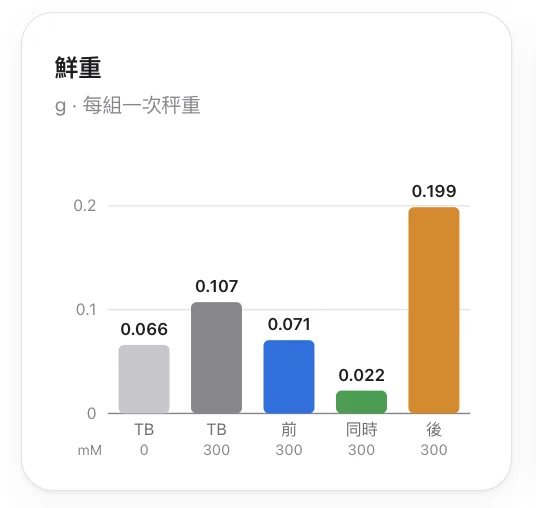
  • Soil salinity fresh weights, 10 October: buffer 0.066 g at 0 mM and 0.107 g at 300 mM, against 0.071, 0.022 and 0.199 g for the enzyme before, with and after the salt
  • The after-treatment arm comes to nearly twice its own buffer control at the same salt
  • One weighing per group, so the figure sets a direction and carries no error bar
  • Rice questioned as the crop to map, 12 October: it is in oversupply in Taiwan, so protecting its yield answers a question nobody is asking
  • GIS asked whether there is time to move the maps onto a crop worth more per hectare and more exposed; four people take one or two crops each, data expected around 18 October
  • Two rules for the fortnight to the freeze: ReLEAF in capitals everywhere a reader sees it, and 10 and 11 October the last days for open-ended changes to writing, layout and figures
  • Over thirty pages moved in that window: Parts became one sortable 32-row table, Protein Design a single vertical stack, Measurement, Math Model, Safety and the Digital Twin took the shared soft layout, and the Homepage the final case render
  • On iGEM’s GitLab the Homepage, the seven Engagement pages and Description are live; twenty-four of the thirty-three addresses are still blank template pages
  • The photometer question taken back to Beer’s law: OD is −log₁₀(I/I₀) and scales with path length and concentration, so a shorter path reads lower
  • Both builds use the same 2 mm flow cuvette, so with path lengths equal the difference is stray light or beam spread before the liquid
  • Two things the calibration leaves open
    • Which slim build is final: the unit measured on 10 October has its beam splitter out as well as its lens, against the design-changes card on its own page
    • The light plate’s photon flux, pencilled in for 3 and then 10 October, is still unmeasured, so every dose on that page is in lux
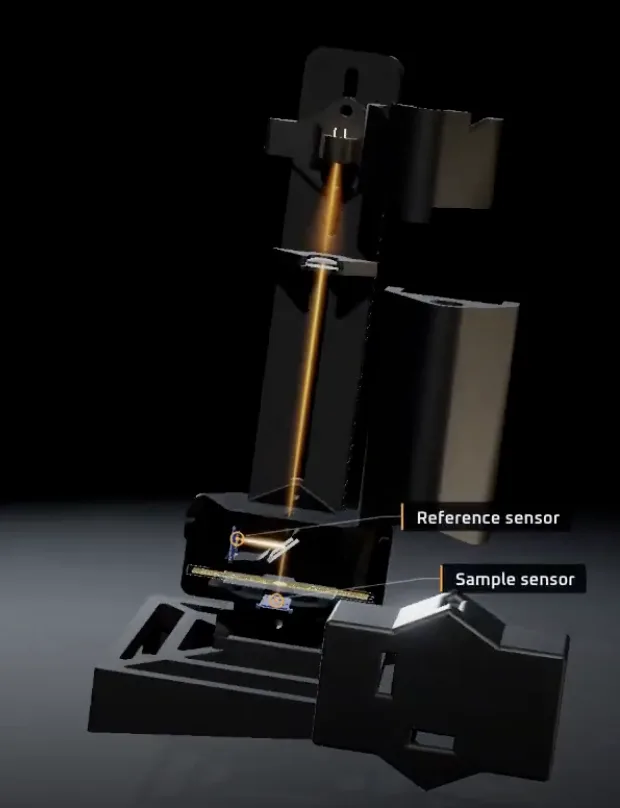
The complex build: beam, reference and sample sensorsThe slim build, fibre-coupledThe slim photometer on the benchThe silica series, both buildsThe salinity plate: four dilutions and the buffer controlsSoil salinity assay, fresh weight
Deliverables 6
Silica Calibration Series
  • Forty points, 2.5 to 100 mg in 500 mL
  • Three figures generated from the workbook
Hardware Records As Chapters
  • Bioreactor, Photometer, DiOPAL, Hydroponics
  • One pinned chapter control per record
Rig Application Source
  • Firmware, backend and interface in the repository
  • MIT licence beside it
Protein Design Fact Check
  • Six corrections
  • Neither LEA14 truncation sequence-verified
  • His tag scoped per construct family
ACC Deaminase Salinity Plate
  • 1/60, 1/40, 1/20, 1/10 and no enzyme
  • 0 and 100 mM NaCl
  • 1/20 TB buffer control at both salt levels
Soil Salinity Fresh Weights
  • Buffer 0.066 g at 0 mM, 0.107 g at 300 mM
  • Enzyme 0.071, 0.022, 0.199 g before, with, after
  • One weighing per group
  • BioreactorRuns 5 And 6
  • Digital TwinForecast Scored, Field Sensors
  • Light Plate ApparatusPrior Crosses To The Reactor
  • Wiki & NotebookResults Page, GitLab Port
  • Math ModelingPlanned to the freeze
  • GIS & Stress ForecastPlanned to the freeze
  • OD600 PhotometerPlanned to the freeze
  • HydroponicsPlanned to the freeze
  • Protectant DesignPlanned to the freeze

Participants Anna, Anton, Audrey, Ethan, Joshua, Felix, Noah, Jacquelyn, Timmy

Results
  • Run 5, 8 to 10 October: restarted three times, four files covering 37.5 of its 38 hours
  • The in-line reading rose 0.10 to 0.30 over nine hours, then fell away with the culture still there: a sixth of the windows carried over 20 per cent bubbles, and the reference channel moved by a factor of 4.8
  • Nothing after 10.6 hours can be read as a growth curve
  • pH then held at 6.90 for twenty hours, the probe and not the culture
  • Run 6, 14 to 16 October, same strain with two changes
    • Permeate drawn at half the rate, 12 mL/min against 24, 36 LMH
    • An acceptance gate holding the last good value when a window fails its checks
  • 41.8 hours without a restart: 31 of 1,083 windows turned away, none over 20 per cent bubbles, the reference within 17 per cent
  • OD600 0.14 at the first window, 1.01 at 7 h, 2.71 at 37 h
  • After that the sample channel fell to a tenth of the reference and the reading stuck near 9.9, flagged low signal and unused by the twin
  • pH fell 6.93 to 6.41 over seventeen hours, then stepped back to 7.0 inside one window, unexplained in the log
  • Excess module pressure over clean-water geometry rose 2.0 to 3.8 kPa over those 42 hours, far from a cleaning threshold
  • Two excursions, 1.1 h and 24.3 h, are the permeate side opened, not the membrane
  • The forecast registered 1 October, before any B. subtilis WB800 run, is scored on run 6; run 5 broke down after ten hours
  • Specific growth rate 0.286 ± 0.010 h⁻¹, doubling 145 min, R² 0.978 on quarter-hourly medians from 1.5 to 6.5 h: inside the registered interval of 0.2705 to 0.3300
  • The rate crossed from a 150 µL plate-reader well to the reactor; the ceiling did not, the run passing K = 1.005 before hour 7
  • Shape and time to OD 0.5 stay unscored: K and X₀ sit on the plate-reader scale, with no cross-calibration to the 2 mm in-line cuvette
  • Over the five hours of the fit a straight line describes the readings as well as an exponential, at half the residual sum of squares
  • Field sensor rig bench-tested 10 October: an ESP32 reading an SHT31 for air and an SN-3001-YM-N01 for leaf temperature and wetness over RS485, both in the same air with no leaf
  • Three sites, three five-minute runs each logged every five seconds, 540 paired readings
  • The SHT31 matched each site; the leaf sensor read 1.2 to 1.9 °C warm, the gap changing site to site, so no fixed offset corrects it
  • Leaf wetness read 0.0 per cent throughout, never wetted, so that channel is untested
  • A second twin built for later testing: six tabs and a record of every run
  • Its Ask tab takes the reader’s own API key in the browser and is off on the wiki, which makes no outside request
  • Four things are still not in the twin
    • Loop temperature: the probe is fitted but has not been answering, so the runs used a temperature typed in by the operator
    • Dissolved oxygen: neither probe can be autoclaved and calibration did not hold, so it is not on the reactor
    • Green light on the bioreactor
    • Leaf wetness and the weather forecast in the green-light decision
  • Results page set out as one chain of six stages, each marked measured, partial or designed
  • Fourteen constructs assembled, each with a colony PCR band at a stated size; both complete systems junction-checked across all three module boundaries before sequencing
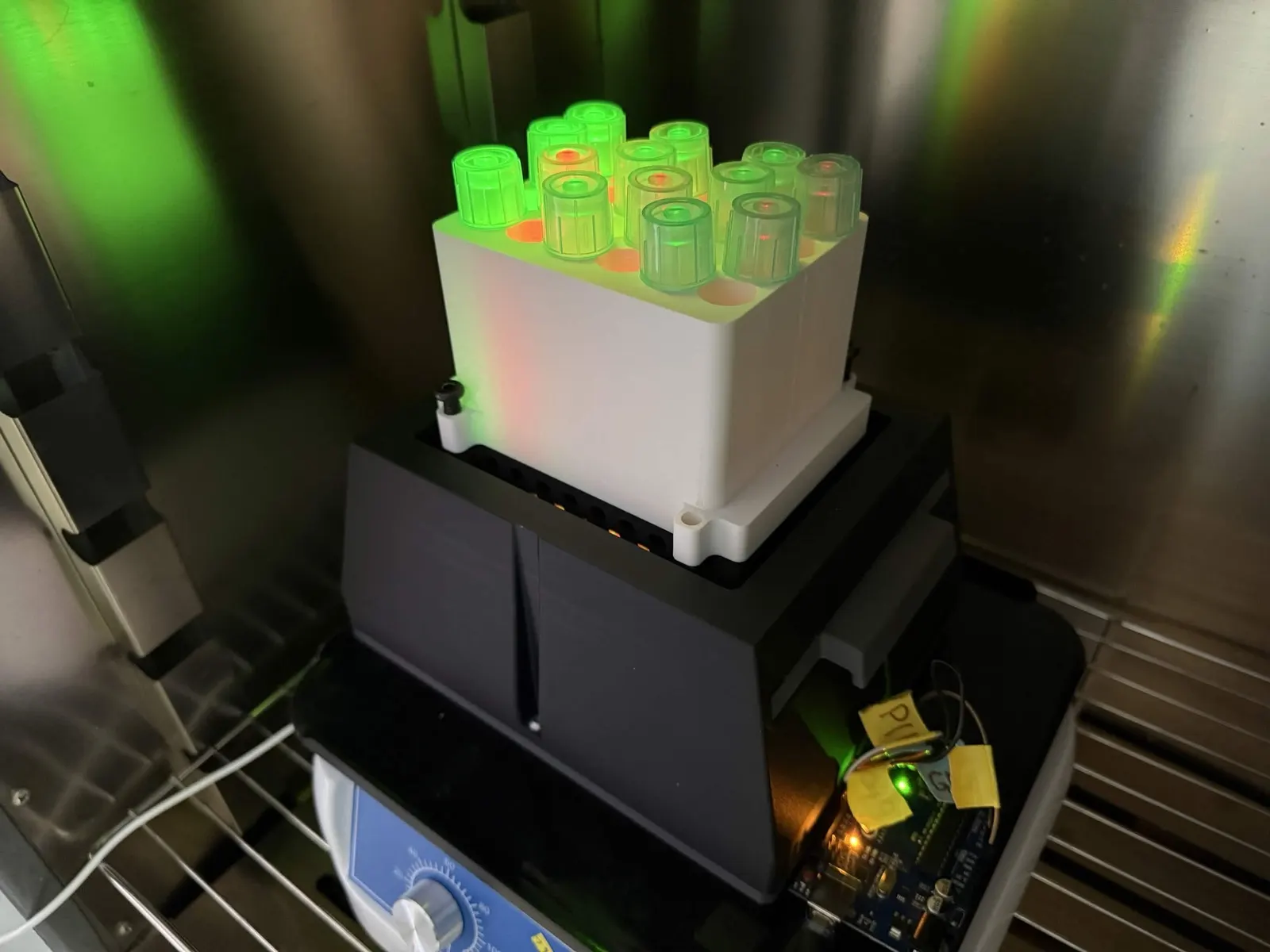
  • Light plate read on both axes: twelve tubes of B. subtilis WB800 carrying CcaSR at 2, 12 and 100 per cent, three per green setting and one per red, OD600 and a Western blot every two hours to 8 h and again at 24 h
  • All six conditions grew alike through 8 h, OD600 0.09 to 0.29
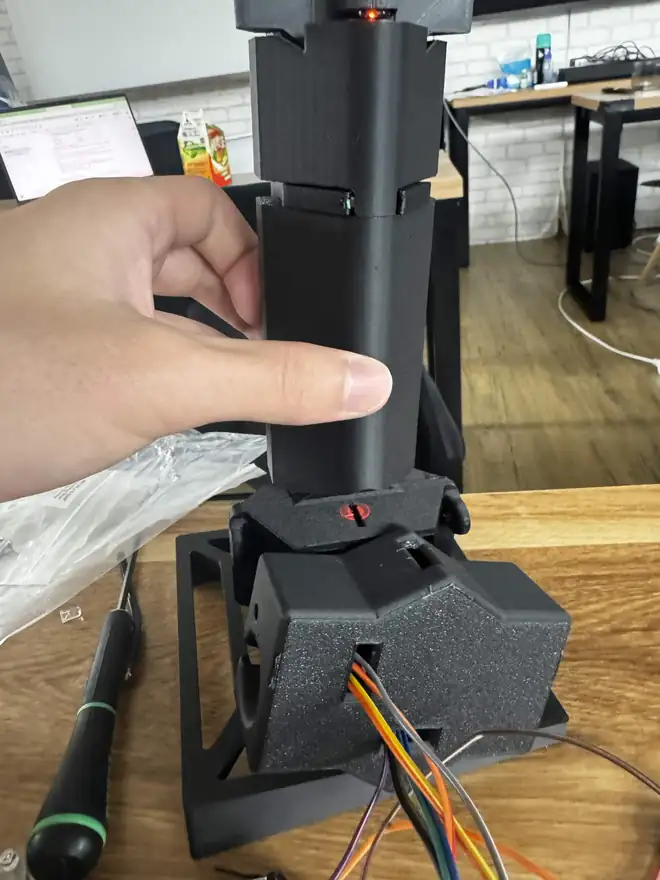
  • At 24 h red read 1.026, 0.969 and 1.026 and green 1.073, 1.034 and 1.017; every tube ended between 0.97 and 1.08, so green light neither helped nor hindered growth over a day
  • ACCD bands rise with time under green light but not in order of intensity: green 2 per cent faint until 6 h, green 12 per cent the strongest green lane at 8 h, red 100 per cent as strong
  • Bands ran near 63 to 75 kDa against a 35 kDa monomer, possibly the homodimer and untested
  • The first blot used wild-type AcdS on Level 2 construct ABDI; the rest use codon-optimised AcdS 2.1 on ABDQ, which expands in liquid culture where the original did not
  • So the plate serves as the light-control platform; light intensity is still not shown to control output
    • Closed by a dose series quantified against a loading control, with a plasmid-free B. subtilis WB800 lane
    • And by repeating the run
  • Both October runs put B. subtilis WB800 in the loop for the first time, so neither is paired with B. subtilis 168 at the same settings
  • No sample was drawn from either for a cell count
  • Still open at the freeze
    • Photon flux per well, then green against dark on the Level 2 strain
    • The repeated 22 °C growth test and the proof-of-concept run
    • The pressure ceiling and the command watchdog in the rig firmware
    • Section 12 of the Math Model, and the stress index as the contingency
    • The crop the maps answer for
    • Which slim photometer build is final, and the STEP files
    • Assembly drawings and print settings for the four hydroponics STLs
    • Twenty-four of the thirty-three GitLab addresses, before 21 October at 23:00
Deliverables 9
Run 5 Dataset, 8 to 10 October
  • Readable as a growth curve only to 10.6 hours
Run 6 Dataset, 14 to 16 October
  • 41.8 hours without a restart, 31 of 1,083 windows turned away
  • OD600 0.14 at the first window, 1.01 at 7 h, 2.71 at 37 h
  • Excess module pressure 2.0 to 3.8 kPa over 42 hours
Forecast Scorecard
  • Inside the registered interval of 0.2705 to 0.3300
Field Sensor Rig Bench Test, 10 October
Second Digital Twin
Dose Run On Both Axes
Results Page
GitLab Port
Fourteen Assembled Constructs
  • Each with a colony PCR band at a stated size

Compiled from the dry lab’s weekly notebook, the Discord record and the team photo archive.

★ marks a frame the team starred in its own filename.