Biomanufacturing

Biomanufacturing. A team member lifts a pipette above a flask under the red glow of an LED bar, while a second watches in the darkened lab.

Abstract

ReLEAF grows a secreted protein protectant in a 1 L perfusion reactor beside the plants that need it, and works out what breaks when that unit is replicated.

Cells circulate on the lumen side of a 0.2 µm hollow-fibre cartridge and the protein leaves on the shell side, so one cartridge retains and recovers and the process has no downstream train. The loop has run 102.4 hours unattended at OD600 0.8 to 3.8, with transmembrane pressure within about ±0.1 bar. Green light is the command path, so production would be commanded from software without opening the vessel; the plate series reads ACC deaminase under green light. Replicating the module holds wall shear and permeate flux fixed, so medium, pumping and power bind before the membrane does.

Contents

On this page

Synthetic biology for agricultural biomanufacturing

Agriculture increasingly depends on biological solutions that can help a crop survive environmental stress it cannot escape. Green biotechnology applies biological systems and engineering principles to improve crop production and resilience. ReLEAF works on agricultural biologicals: plant-protective molecules that support crops under heat, drought and salinity.

Finding a molecule that protects a plant is only part of the challenge. It also has to be produced reliably, delivered at the right time, and used in a way that is affordable and contained, and these practical barriers are what usually determine whether a protective protein reaches a field. ReLEAF answers them with a localised, responsive production model: the molecule is made at the point of use, on the day it is needed, by a machine small enough to stand beside the crop.

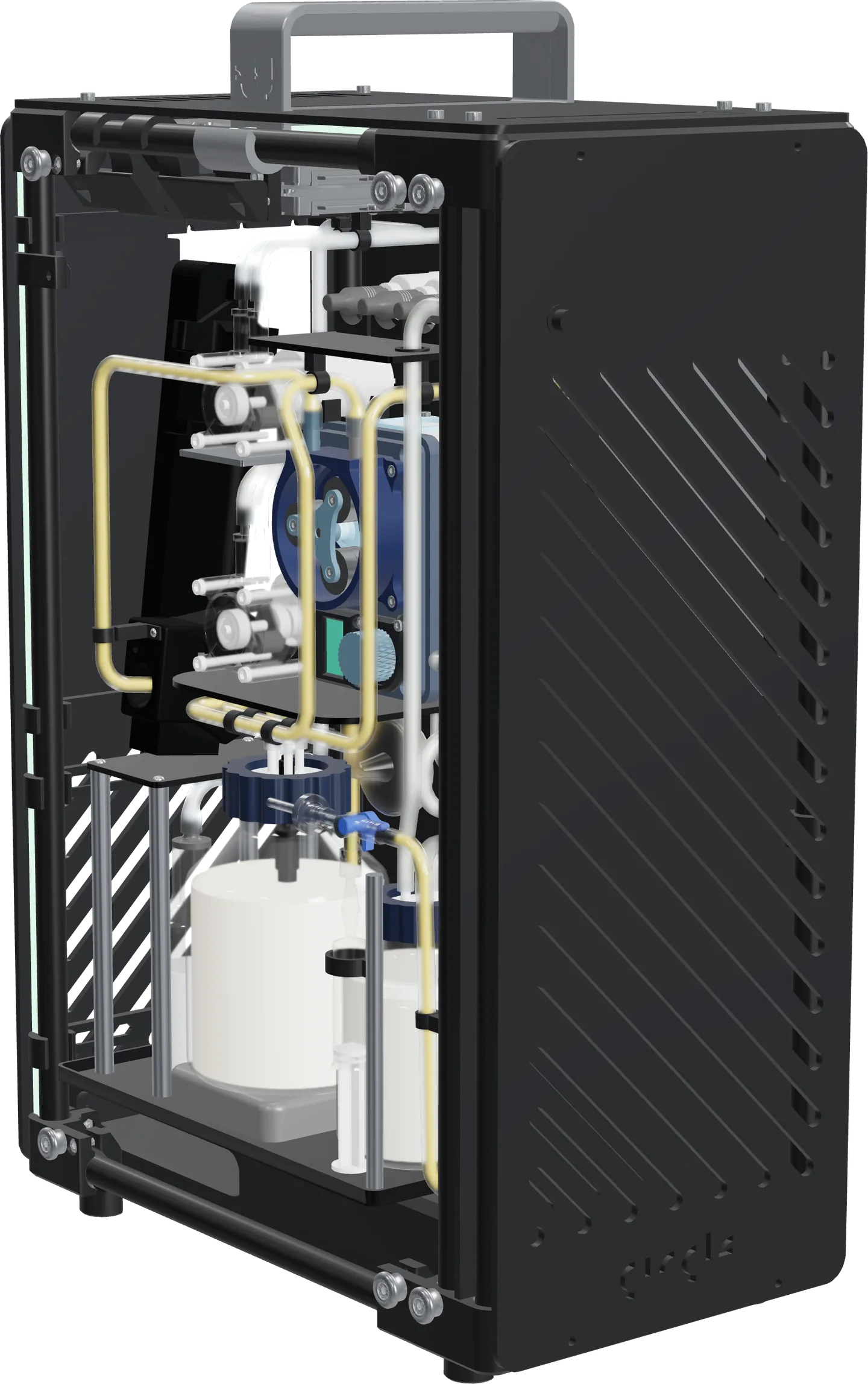
The ReLEAF bioreactor as a sealed black carry case with a handle, one side open to show the culture reservoir, the peristaltic pump, the hollow-fibre module and the tubing inside.
The unit as built: a sealed case holding the culture, the pump, the membrane and the light. The permeate line is the only thing that leaves it. Build history on Hardware: Bioreactor.

ReLEAF detects environmental stress through electronic sensors and activates engineered B. subtilis using green light. The bacteria produce plant-protective molecules inside a hollow-fibre bioreactor, which releases the protectants while retaining the engineered cells.

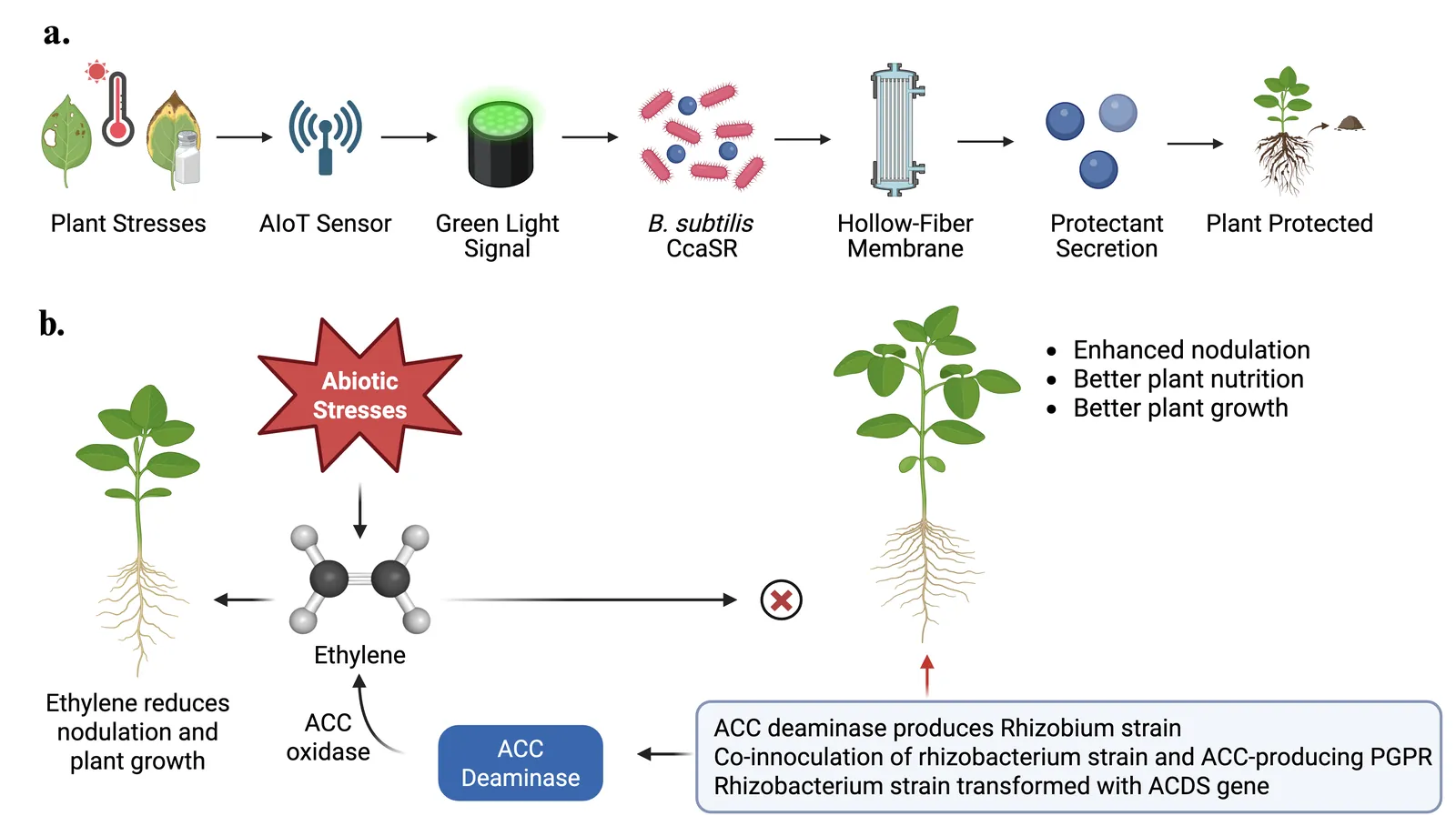
ACC deaminase is the protectant every bench result on this wiki was produced with. It interrupts the ethylene route, shown in the lower panel. Abiotic stress raises ACC, which ACC oxidase would normally convert into ethylene, and it is ethylene that reduces nodulation and growth. ACC deaminase competes for the same substrate and degrades ACC before that conversion occurs, which lowers ethylene production while leaving the rest of the plant's stress signalling intact.

Two panels. Above, the ReLEAF chain from plant stresses through an AIoT sensor, a green light signal, B. subtilis CcaSR and a hollow-fibre membrane to protectant secretion and a protected plant. Below, the ethylene pathway that ACC deaminase interrupts.
Above, the production chain. Below, the ethylene route ACC deaminase cuts. The chain stage by stage is on Results.

Product

A secreted protein protectant. ACC deaminase is the one every bench result on this wiki was produced with; LEA14 and BoPEP4 are designed. Protein Design

Chassis

Bacillus subtilis, non-pathogenic and a natural secretor. Every reactor run to September is B. subtilis 168; the production strain WB800 took the loop twice in October. Parts

Parts

Nine Level‑1 modules confirmed by colony PCR, amplicon check and sequencing; a Level‑2 device junction-checked on three clones at 375, 632 and 661 bp. Results

Vessel

A hollow-fibre perfusion loop, 0.2 µm rating, 1 L working volume since September and 300 mL before. Retention and recovery in one cartridge, so there is no downstream train. Hardware

Everything below is about how the protein is made. What it does once it reaches a root is on Plants and Math Model.

Optogenetics for bioproduction

We wanted production that could be commanded while the culture was running, so ReLEAF uses the green-light-responsive CcaS/CcaR system. When CcaS receives a green-light signal it activates CcaR, which switches on expression of the protectant in the output position: ACC deaminase, LEA14 or BoPEP4.

Four of the collection's five modules build that command chain: a ho1:pcyA operon supplying the chromophore without which the photoreceptor is apoprotein, CcaS‑m3 as the sensor, CcaR as the response regulator, and PcpcG2-veg driving a secretion tag fused to whichever protectant sits in the cargo slot. The fifth carries the same cargoes behind a constitutive promoter, so a negative protectant result has one fewer explanation to rule out.

Light was chosen as the trigger for three process reasons. A chemical inducer such as IPTG has to be bought, stored and metered into a sterile vessel, so it adds a recurring cost to every batch; it leaves residue to be accounted for in the product stream; and dosing it means opening the system. Light adds no line into the loop, leaves no residue in the permeate, and can be commanded from software through an LED, so a forecast can drive production directly. Optogenetic control also addresses the growth–production tradeoff. Resources spent on recombinant protein are resources not spent on growth, so continuous expression taxes the chassis for the whole run, whereas a light-responsive culture can build biomass first and switch to protectant when the forecast indicates the stress is coming.

Before using optogenetics for production we tested whether the light conditions themselves affected growth. Across six light arms on 19 September, the growth rate spans 0.279 to 0.317 h−1, all within one standard error of each other, and the strongest green arm reaches the highest final plateau. Under the conditions tested, green induction therefore carries no measurable growth penalty at these intensities.

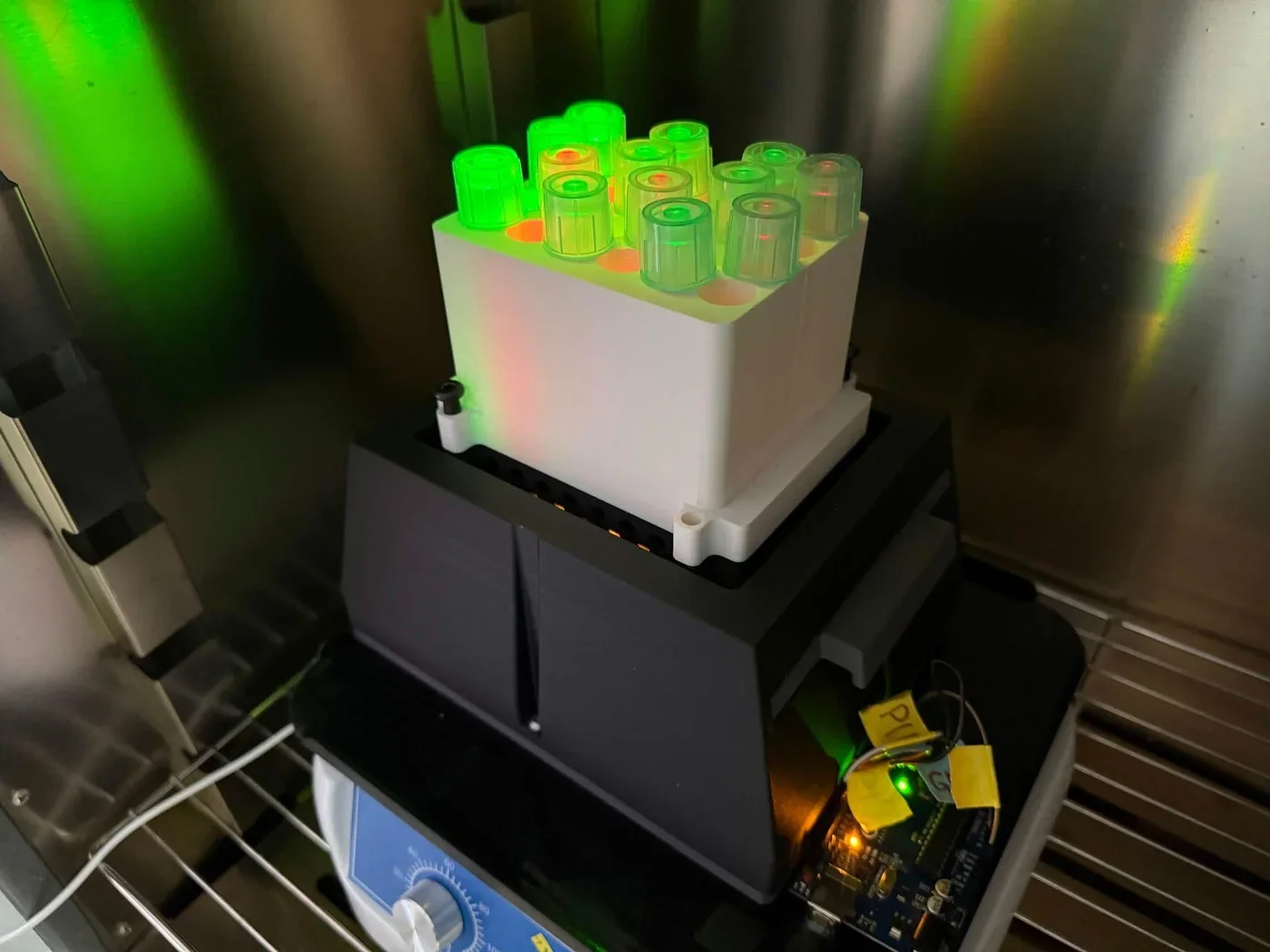
The light plate apparatus running inside an incubator, its white well plate lit from below so that the culture tubes glow bright green, with the controller board visible beneath.
Six light arms running at once on the light plate apparatus. Green is the induction signal, and each arm's intensity is set by pulse-width duty cycle. The build and the per-unit LED measurements are on Hardware.

Full record: the thirty-five parts in five modules on Parts, the logistic fit and its held-out test on Digital Twin, the builds and the gels on Results.

Protein engineering, secretion and recovery

The product is one of three plant-protective proteins: ACC deaminase, which lowers stress-induced ethylene; LEA14, a late embryogenesis abundant protein that stabilises other proteins under osmotic stress; and BoPEP4, a twenty-three residue elicitor peptide that signals drought through the PEPR1 receptor. Sequence analysis, structural modelling and targeted substitutions compared the candidates before any DNA was ordered, against two constraints at once: the receptor has to recognise the molecule, and B. subtilis has to translate it, push it through the Sec pathway and leave it whole in a protease-rich supernatant.

Two of those results changed a construct. BoPEP4 opens with an uncharged GILIGS segment that makes no receptor contact and is conserved nowhere; removing residues 1 to 6 leaves the docking score flat, so the peptide gets shorter at no cost. And the six-histidine purification tag was ordered on the wrong end — fused after Asn23 it spends the free carboxylate that salt-bridges Arg487, and under an atom-resolved criterion that bond is present in no frame of the tagged trajectory against every frame of the wild type.

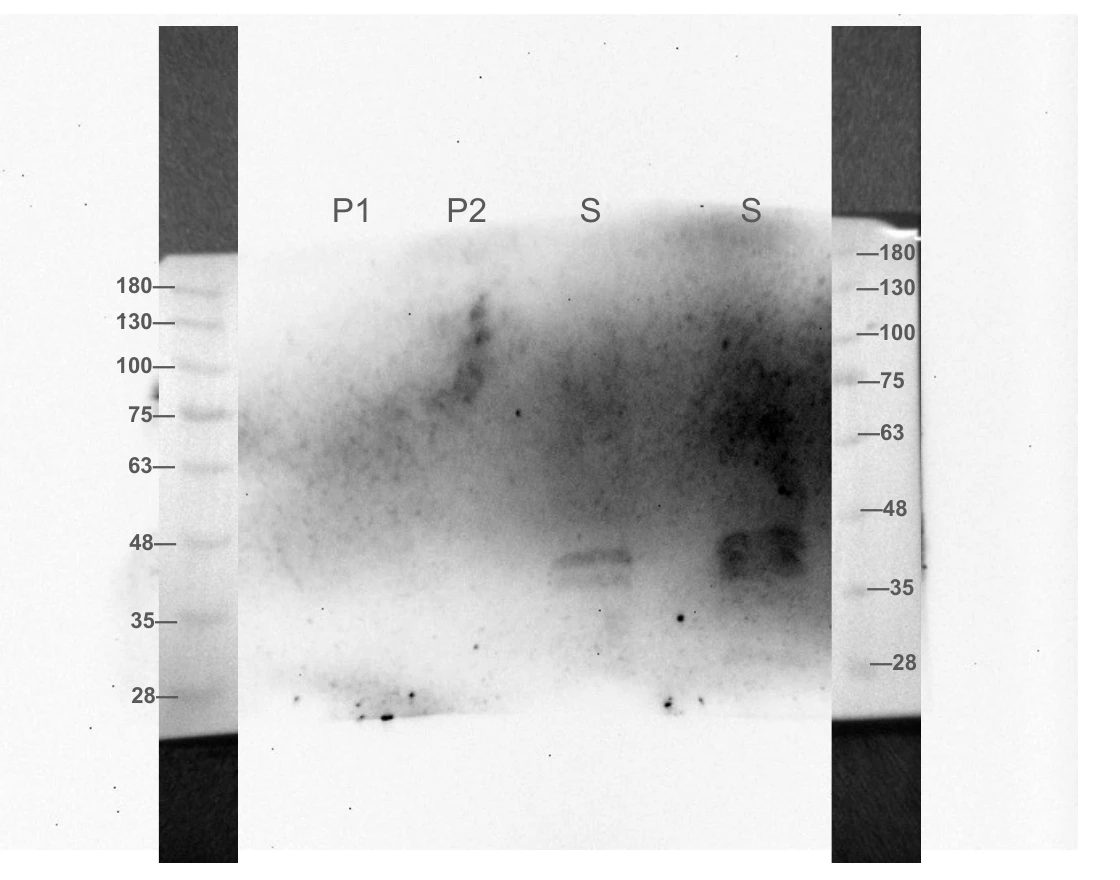
Secretion and recovery are part of the design of the system. The cell exports the protectant, it crosses the membrane, and it leaves the machine on the shell side, separated from the producer by the same component that contains it. The fractionation result opposite is qualitative evidence of extracellular recovery; quantifying identity, concentration and activity in the permeate is work still to be done, and is tracked on Engineering.

Western blot membrane with two ladder strips and four sample lanes labelled P1, P2, S and S, with bands visible only in the two S lanes between the 35 and 48 kilodalton marks.
ACC deaminase fractionation, 2 August 2026. P1 total pellet, P2 soluble pellet, S supernatant, six-minute exposure, dual ladders from 28 to 180 kDa. Signal appears in the supernatant fraction only, which is consistent with recovery of the protein outside the cells. Full record on Results.

Full record: selection, alignments, docking and the molecular dynamics on Protein Design.

The bioreactor system

ReLEAF's vessel is a hollow-fibre module run as a perfusion culture, where containment and product recovery are the same operation.

The culture circulates through the lumen side of a hollow-fibre cartridge rated at 0.2 µm. Whole cells are retained in the loop, smaller soluble proteins cross into the shell side, and the shell-side permeate is what leaves the machine. One cartridge performs retention and recovery at once, so the process has no downstream train. Unlike a batch fermenter, the cells are not harvested after each production cycle: the culture stays in circulation while product is removed continuously, so one culture supports repeated production over time.

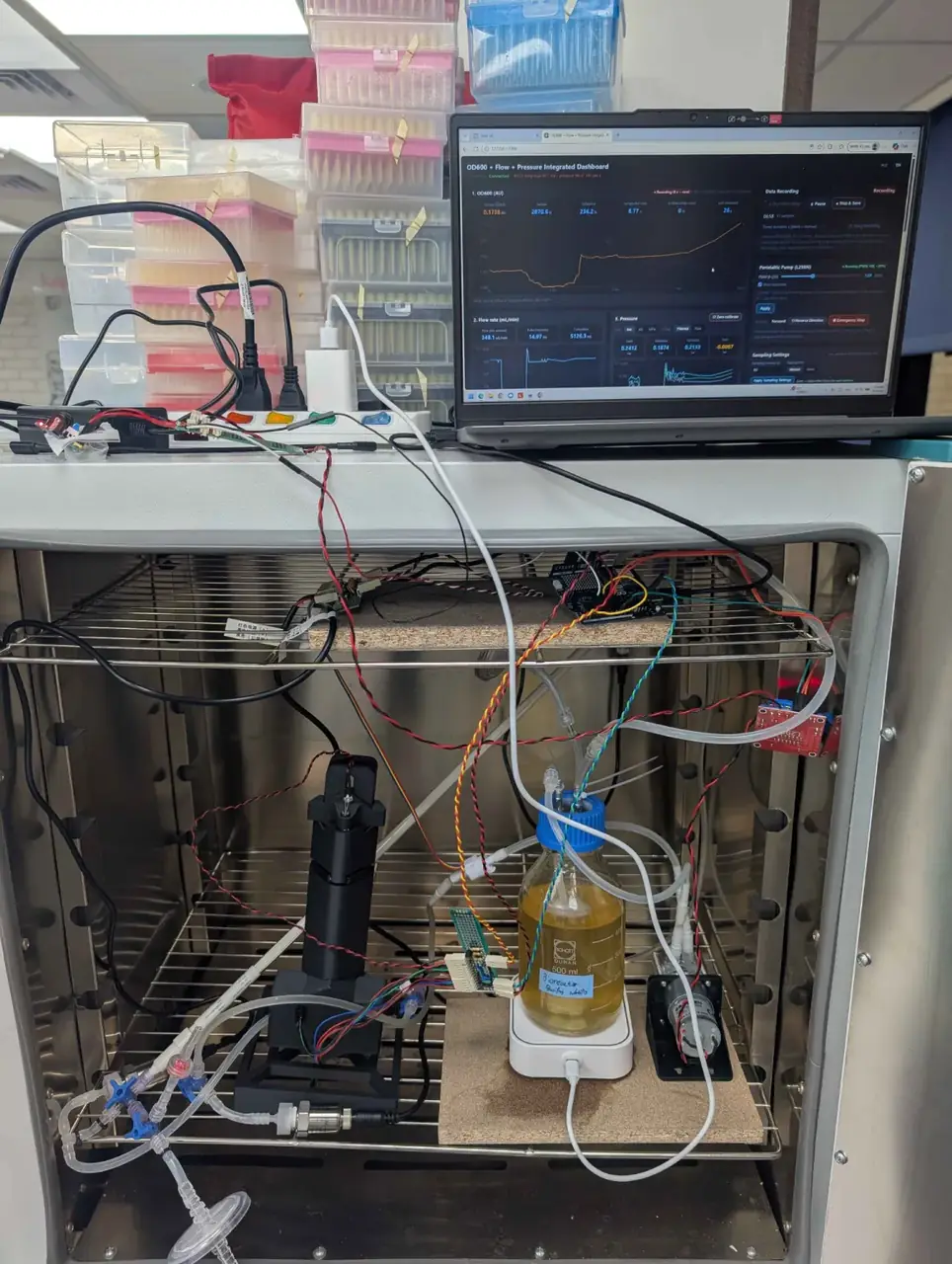
The perfusion loop running on a shelf inside an incubator: culture bottle, peristaltic pump, hollow-fibre module and tubing, with a laptop beside it showing the live optical density trace.
The loop running on 1 September, with the live optical density trace on the laptop beside it. The curve was recorded in line, without drawing a sample or opening the vessel.
Key resultValue
Longest uninterrupted run102.4 h, OD600 0.8 to 3.8, perfusion growth model R² = 0.991
Crossflow and pressure through that runabout 371 mL/min, transmembrane pressure within about ±0.1 bar
ModulePES hollow fibre, 0.2 µm rating, 1 L working volume [1]

The longest run held four days unattended while the culture grew from OD600 0.84 to 3.77. A farm unit has to hold an operating window of that order. The two October runs put the production strain through the same loop, the second of them for 41.8 h without a restart, and its membrane needed only 1.8 kPa more pressure at the end than at the start.

A reactor standing beside a field has nobody available to sample it, so the measurement instruments are the part of this process we had to build ourselves. The inline photometer is the project's Process Analytical Technology tool: it reads culture turbidity continuously, in the loop, without drawing a sample, and a reference beam allows an instrument fault to be distinguished from a process event. The light plate apparatus is the rig that defines what a light dose is, and it sets the duty cycle each arm receives. Together they make the culture a process that is measured and regulated while it runs.

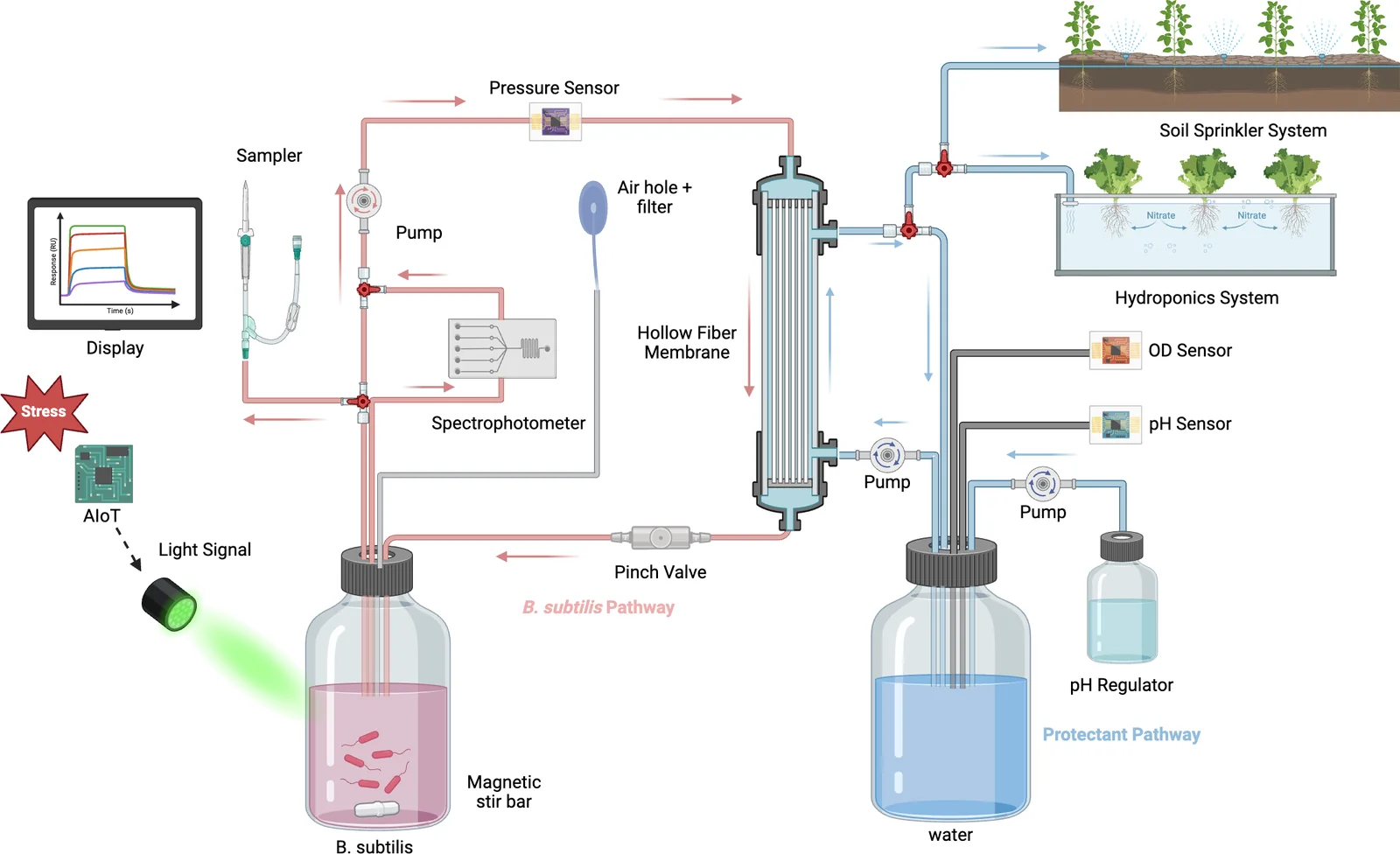
System diagram of the perfusion bioreactor: culture vessel under a green LED, peristaltic pump, sampler, spectrophotometer, pressure sensor, hollow-fibre membrane, pinch valve, permeate reservoir with pH regulator, feeding a hydroponics system and a soil sprinkler line.
The loop as built: engineered B. subtilis under green light, a peristaltic pump driving crossflow through the module, the inline photometer in the loop, the pinch valve that builds outward pressure, and the permeate path to hydroponics or a sprinkler line.

Full record: the run and its limits on Results, the three build cycles on Hardware, and the photometer calibration on Measurement.

The digital twin

A reactor standing beside a field has no operator, so the monitoring and the decisions are carried in software. ReLEAF's digital twin reads optical density, pH, four pressures and cross-flow from the loop while it runs, and commands the pinch valve and the four Luer valves from the same interface. It is an AIoT system: the bioreactor's sensors and valves are wired to a board that logs every reading, and models are fitted to those logs and to regional weather data.

Two of those models have been tested against recorded runs. An autoencoder trained on the healthy first 120 hours of the 434-hour run flagged the inline photometer 26.7 hours before its reading became unusable. A Kalman filter forecasting the batch two hours ahead reduced the forecast error by 41% against assuming no change, and a growth rate written down on 1 October, before the run it was tested on, came out inside its interval when the 14 to 16 October run was fitted. The forecast is what sets when the green light is switched on and for how long, and a person approves that decision. Green light and dissolved oxygen have been tested separately and are not yet joined to the live loop, and the models so far run on recorded data after each run.

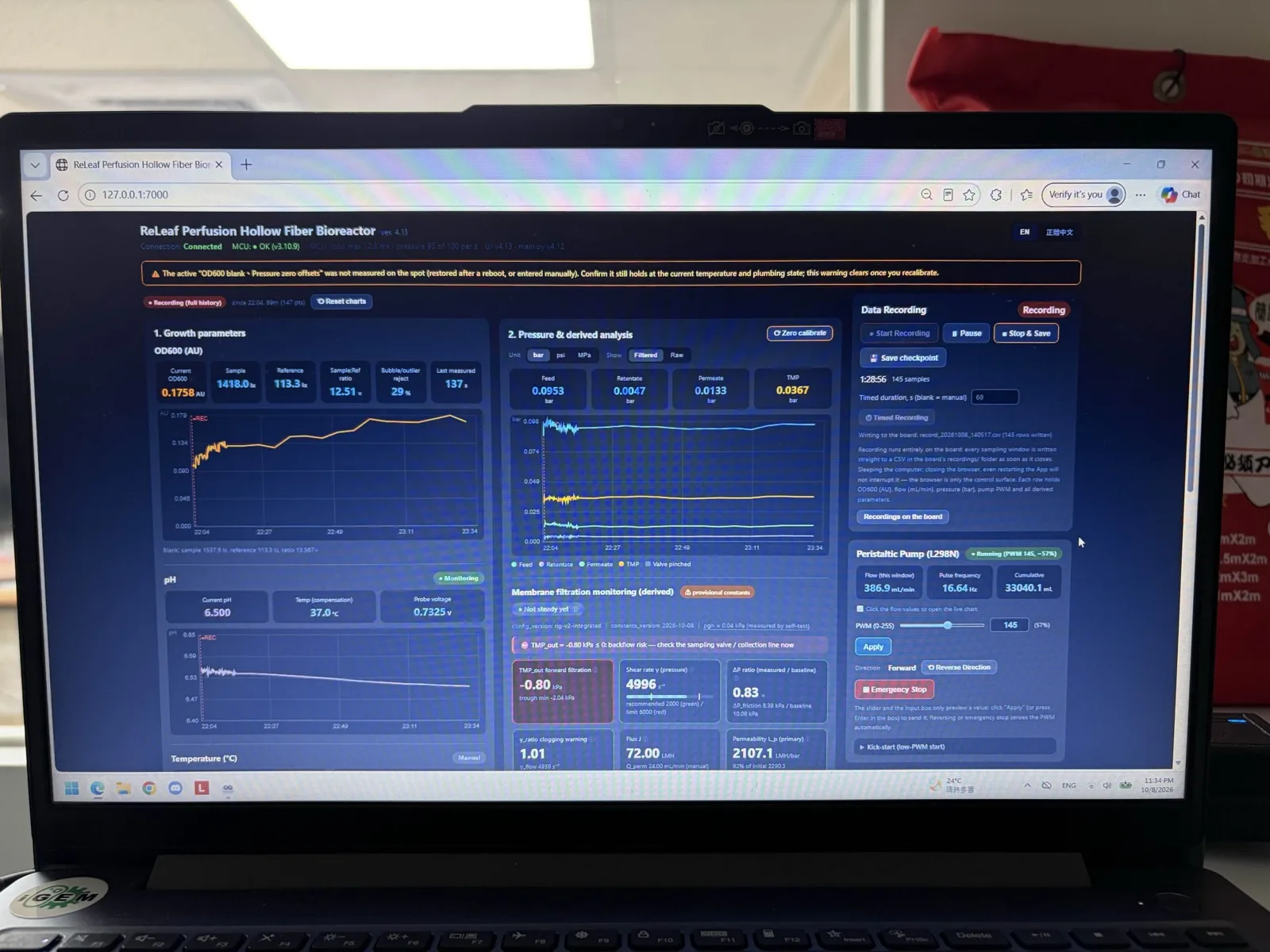
A laptop screen showing the Digital Twin dashboard during a run: optical density and pH charts, four pressure traces, membrane filtration values, data recording and pump controls.
The Digital Twin during the run on 8 October 2026. Optical density and pH, the four pressure traces, the membrane filtration values and the pump controls are read and commanded from one screen.

Full record: the channel table, every run, the induction decision flow and the next interface on Digital Twin.

Regulation and biosafety

Farmers want to be able to say their crops are organic, and the bioreactor was built around that. The hollow-fibre membrane keeps the engineered B. subtilis inside the culture loop while the protectant passes into the product stream, so only the protectant leaves the machine.

Containment and recovery are the same unit operation in this system. No filtration or kill step sits between the culture and the product, so the membrane both recovers the protein and retains the organism, and a module failure affects the two together. Monitoring membrane performance is therefore part of monitoring containment: pressure and flow are logged continuously, the microcontroller opens the pinch valve if pressure rises above 0.50 bar, and a droplet sensor beneath the rig provides a second check for external leakage.

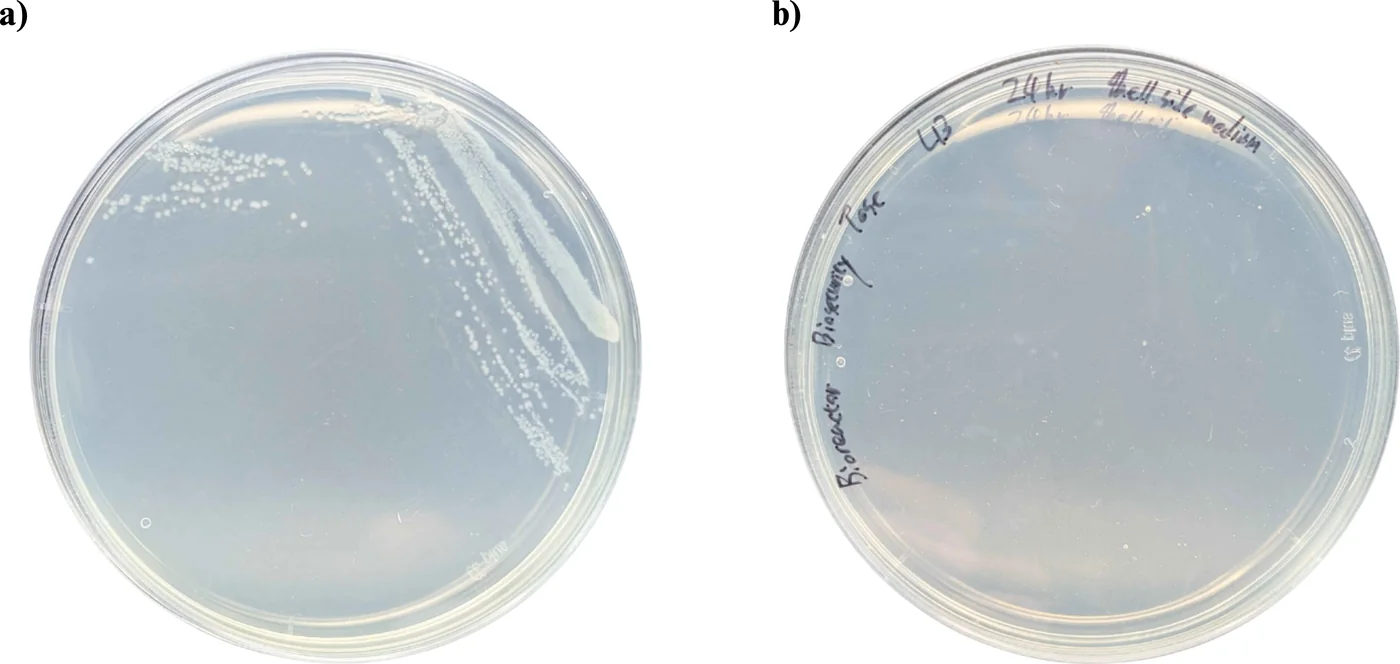
Two agar plates side by side: the lumen-side sample grows colonies, the shell-side sample is clear.
Lumen side against shell side, plated from a running reactor and read after 24 h at 37 °C. The lumen sample grows; the shell-side medium is clear. Full argument on Safety.

For on-site biomanufacturing deployed directly in agricultural settings, that physical separation is also what keeps the regulatory picture tractable, because ReLEAF would be regulated as three components, each following a different route.

The bioreactor is equipment

Pressure integrity, leak prevention, material compatibility, electrical safety, cleanability and routine maintenance of fluid-contact parts. The membrane is both the recovery step and the containment barrier, which is why those obligations matter here more than on an ordinary machine.

The culture is a contained GMM

The engineered B. subtilis sits in a replaceable cartridge and would be regulated separately as a genetically modified microorganism for contained use, with controls on handling, transport, storage and cartridge replacement. In the EU that is Directive 2009/41/EC.

The permeate is the product

Cell-free, so it is classified by composition, intended function and product claim rather than by how it was made. In the EU a non-microbial product whose claimed function is improving tolerance to abiotic stress can fall under Regulation 2019/1009, PFC 6(B) plant biostimulant.

In Taiwan and the United States classification is less straightforward, and can depend on whether the product is treated as supporting nutrient use, altering plant physiology, or acting as a plant regulator. ReLEAF therefore evaluates the biostimulant, biofertiliser and biopesticide routes separately for each protectant and each market, without assuming one classification across all jurisdictions.

Keeping the organism inside the machine is what allows that separation to hold, because it gives the production strain and the agricultural product two independent regulatory paths. Two themes are consistent across all three markets: biosafety and containment of the engineered microorganism, and a separate plant-biostimulant or fertiliser route for the recovered output. The claimed function, improving tolerance to abiotic stress, determines which route applies.

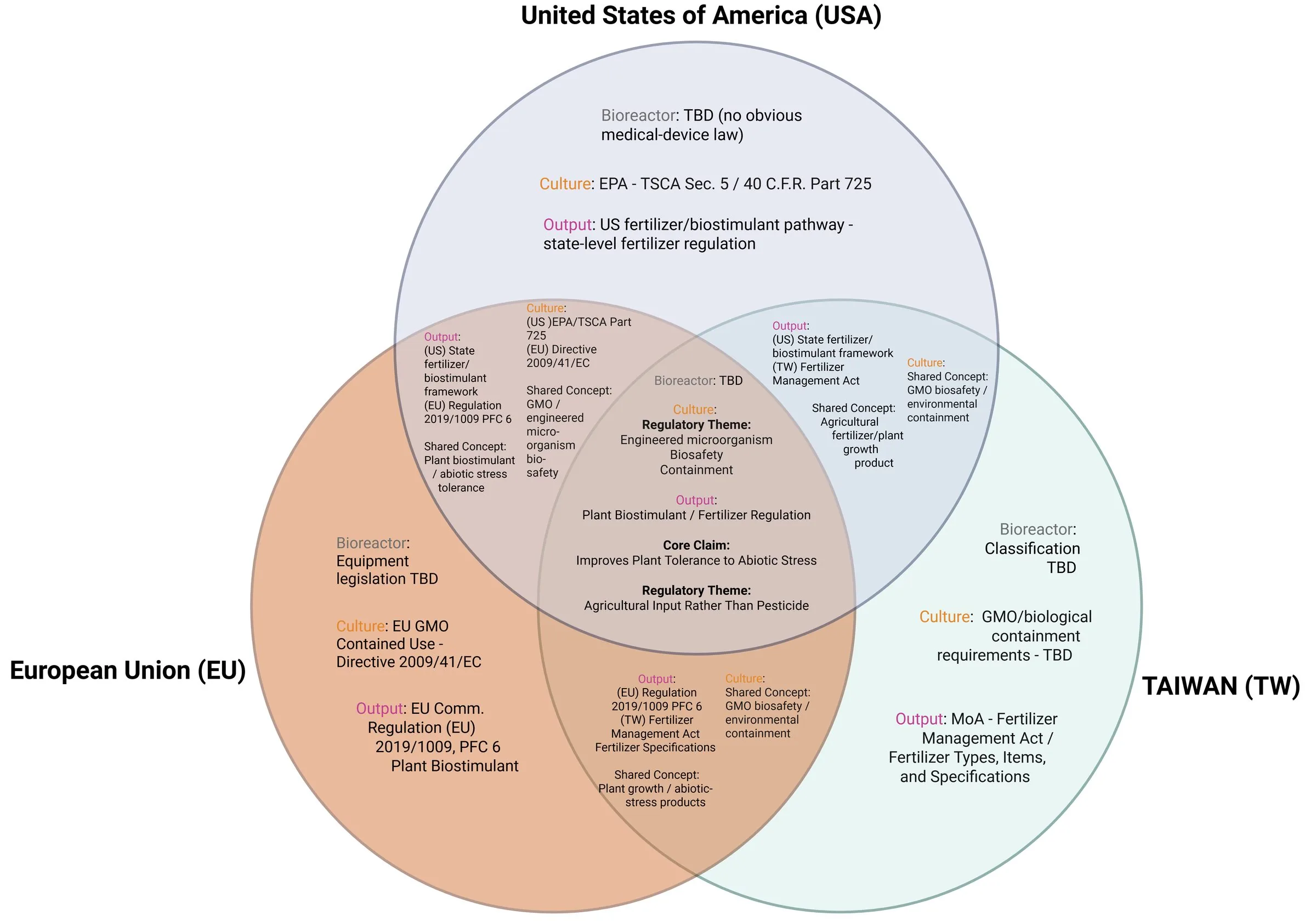
A three-circle Venn diagram for the United States, the European Union and Taiwan. Each circle lists the rules for the bioreactor, the culture and the output; the overlaps list shared concepts such as engineered-microorganism biosafety and plant-biostimulant or fertilizer regulation. The centre reads: core claim, improves plant tolerance to abiotic stress; agricultural input rather than pesticide.
Overlapping regulatory themes across the European Union, Taiwan and the United States, read separately for the equipment, the culture and the output. Market by market on Laws and Regulations.

Full record: the three-market comparison on Laws and Regulations, the risk assessment and the interlocks on Safety.

Market

Shipping a biological to a farm means a cold chain: refrigerated storage, refrigerated transport and a shelf life to manage. A protectant made on the farm never enters that chain, but every farm needs its own machine, and the case for ReLEAF rests on that trade.

Feasibility depends on whether the protectant a unit produces justifies the cost of running the system. The prototype build is the only cost figure we have, and it is a build cost for one hand-made unit, not a unit cost at volume: NT$52,578 for the bacterial kit and NT$30,450 for the bioreactor, NT$83,028 together, roughly US$2,800. A techno-economic analysis would set production performance and operating cost against that number to give a cost per unit of protectant, a break-even yield, and a comparison with what a farmer buys today.

Students in ReLEAF shirts standing at the edge of a rice paddy, talking with a farmer who carries a harvesting basket.
Farmer Chen's paddy, 21 July. The pilot's first question is what a machine costs to run on somebody else's field. Visits on Integrated Human Practices.
NT$83,028

Prototype build

Bacterial kit NT$52,578 and bioreactor NT$30,450, about US$2,800 together. Draft figures from the business plan, one unit, hand-built.

5–10

Pilot units

One growing season with agricultural cooperatives, research farms and extension offices, before any purchasing or service agreement is offered.

Before any individual sale, ReLEAF would pilot with agricultural cooperatives, research farms and extension offices: five to ten systems deployed for a single growing season, long enough to measure operating cost, reliability, maintenance, usability and field performance under conditions we do not control. If individual ownership remains too expensive, cooperative purchasing, seasonal rental, cartridge subscriptions or subsidised deployment could spread the cost [11]. Which of those fits is a question the pilot would answer.

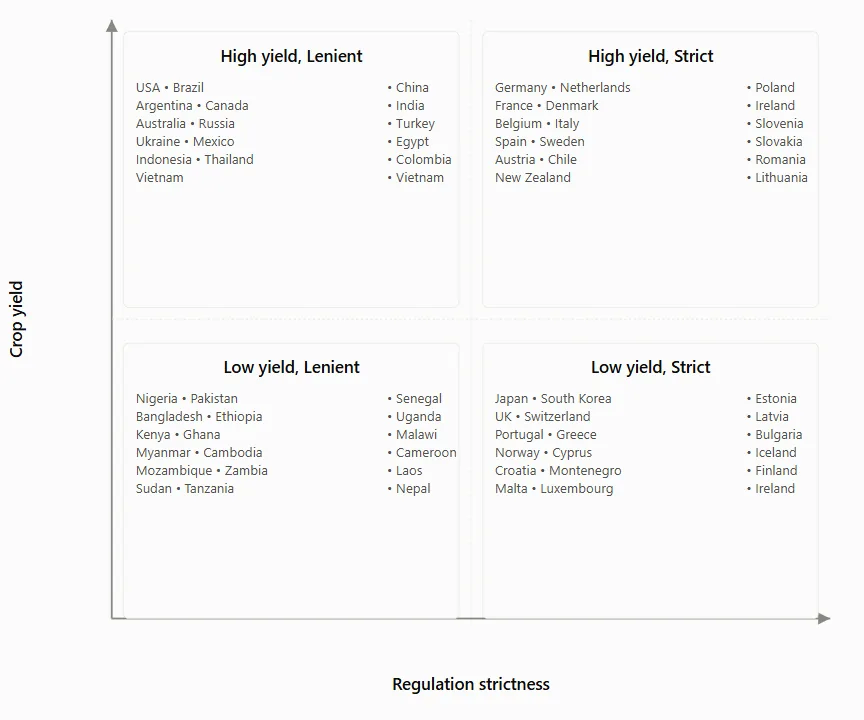
Where that pilot is placed first we read against two variables together, which the chart opposite sets out. A market with a large yield opportunity and a settled regulatory route is worth a unit before a market with greater upside and an unsettled classification, because the second would spend the pilot season establishing its classification instead of producing the field data the business case requires.

Chart positioning candidate markets against yield opportunity and regulatory difficulty.
Where a unit-based product is worth placing first, read against yield opportunity and regulatory difficulty.

Full record: market sizing, the business model canvas, the social-enterprise structure and the draft figures on Entrepreneurship.

Scaling

Production capacity can be increased along one of two routes. Scale-up enlarges a single vessel, so every quantity that depends on a length scale has to be re-established at the new size: mass transfer, oxygen supply, heat removal, mixing time and membrane area per unit volume. Scale-out holds the unit fixed and replicates it, so each module operates at conditions that have already been characterised and total capacity is set by the number of modules. ReLEAF scales out [12].

We chose that route because tangential-flow filtration provides a formal method for it, and this is also why a hollow-fibre module was selected over a stirred tank with filtration on the side. Linear scale-up holds every scale-independent hydrodynamic quantity constant and increases only the channel count, with transmembrane pressure controlled so that the concentration at the membrane wall does not change [3]. Van Reis and colleagues report a 400-fold increase in scale carried by this method without an intermediate pilot stage. Hollow fibre is the geometry best suited to it, because a scale-down module can be built with the same fibre length as an industrial one. Our module is of fixed length and therefore serves directly as the unit cell to be replicated.

Tall racks of identical growing trays in a commercial vertical farm, lit from above by rows of purple LEDs.
A commercial vertical farm visited on 11 August stacks identical growing units and adds capacity by adding units. A ReLEAF fleet would grow the same way, one module at a time.
QuantityOne moduleEight modulesBinding?
Membrane area200 cm²1,600 cm²No. Shear, flux and fouling margin are unchanged by construction
Permeate0.67 mL/min at 2 LMH5.3 mL/minNo
Medium draw0.96 L/day7.7 L/dayYes, for an unattended week in a field
Cross-flow pumpingone pump, continuouseight pumps, continuousYes. Pumping is per module, so the power balance fails long before the membrane does
Oxygen transferkLa of 12.5 h−1 required at OD 1.454per module, unchangedYes, per unit
Energy3 to 8 W continuous24 to 64 WYes. A 45 W panel harvests 101 Wh/day at Taiwan winter sun
Control bandwidthθ/τ of 0.7 to 7.0per module, unchangedNo. It does set the stress timescale the device can answer

We worked each requirement of one module through to eight modules, and asked in each case whether the quantity binds. The table above gives the result. The membrane itself is the last entry, which follows from the method: replication holds wall shear, permeate flux and the fouling margin fixed by construction. The quantities that do bind are the support systems around the module. Oxygen transfer and energy bind per unit; medium supply and cross-flow pumping bind in aggregate. None of the four is addressed by the reactor arithmetic.

Three of those four would be reduced together by one change. Running the recirculation pump on a duty cycle instead of continuously reduces the dominant electrical load, the cumulative shear exposure and the medium draw at the same time, and the reactor has margin for it: at the design flux it already delivers more medium per day than a week-long field deployment could carry, and the biology responds over hours. The cost would be settling in the fibres during the off phase, which we have not measured. We would run that experiment before any other on the hardware side.

The fourth quantity, control bandwidth, does not bind, but it does determine what the device can be used for. The CcaSR activation half-time of 105.1 ± 1.5 min [2] exceeds every other lag in the loop by an order of magnitude, so the loop is dead-time dominated at every flux we can run. ReLEAF is therefore specified for drought and salinisation developing over hours to days.

The arithmetic behind the table wall shear, critical flux, cell-specific perfusion, oxygen, energy and dead time

The numbers below are taken from the dry lab's reactor calculation sheet of 23 September 2026. They are computed from the module geometry and were not measured, so an error in the assumed geometry propagates into all of them.

Wall shear and the operating envelope

Wall shear rate sweeps the membrane surface, sets the critical flux, and is the quantity held constant to make the scale-up linear. For laminar flow in a round lumen it is determined by the flow per fibre alone:

\[ Q_1 = \frac{Q_{xf}}{N} \qquad \dot\gamma_w = \frac{32\,Q_1}{\pi d_i^{3}} \qquad \tau_w = \mu\,\dot\gamma_w \qquad \mathrm{Re} = \frac{4\rho Q_1}{\pi \mu d_i} \]

The cross-flow has to be divided by the fibre count before it enters the single-fibre expression; substituting the pump total overstates the wall shear by a factor of N, and we found that error in more than one published reactor write-up. Taking the module as eight fibres of 1.0 mm bore, the operating envelope is as follows.

Cross-flowLumen velocityWall shearShear stressReAxial dropSingle pass
230 mL/min (vendor floor)61 cm/s4,881 s−14.9 Pa61011.6 kPa0.98 s
377 mL/min (band closes)100 cm/s8,000 s−18.0 Pa1,00019.0 kPa0.60 s
792 mL/min (Re 2,100)210 cm/s16,806 s−116.8 Pa2,10040.0 kPa0.28 s
2,600 mL/min (wide open)690 cm/s55,174 s−155.2 Pa6,897131.5 kPa0.09 s

Conventional hollow-fibre microfiltration of bacterial cultures operates at 2,000 to 8,000 s−1, and Maiorella and colleagues place the balance between sweeping the membrane and damaging the cells nearer 1,500 to 3,000 s−1 [8]. The pump's vendor floor of 230 mL/min [9] already produces 4,881 s−1, in the upper half of the conventional band, and the band closes at 377 mL/min, which is 6% of a dial that reads to 2,600 mL/min. The lowest available pump setting is therefore the only one that falls inside the band.

B. subtilis is a walled organism, so the 3 to 5 Pa wall-stress ceiling quoted for mammalian perfusion does not apply, and single-pass exposure carries a wide margin at every setting in the table. Cumulative exposure we have not established: at 230 mL/min a 100 mL loop passes the fibres about 138 times an hour. Van Reis and colleagues attribute protein aggregation in such loops to pump passages and air entrainment rather than to shear itself [3].

Critical flux and the fouling margin

Below a critical permeate flux, particle deposition is negligible and transmembrane pressure does not drift. Above it, cells accumulate on the membrane surface as a cake layer and the membrane fouls [5]. For a particulate suspension in laminar cross-flow, the shear-induced diffusion model estimates that threshold [6][7]:

\[ J_{crit} = 0.072 \left( \frac{a^{4}}{L} \right)^{1/3} \dot\gamma_w \ln\!\left( \frac{\phi_w}{\phi_b} \right) \]

With a = 0.71 µm as the equivalent-sphere radius of a 0.8 × 3 µm rod, the wall fraction pinned at random close packing (0.60) and the bulk fraction computed from cell density (OD600 1.454 at 109 cells per mL per OD unit), the threshold at the 263 mL/min operating point with eleven fibres, wall shear 4064 s−1, is 46 LMH against a design flux of 2. The ratio J/Jcrit is 0.04.

The membrane is therefore oversized for the duty by more than an order of magnitude, which follows from selecting the module for its fibre geometry and accepting the area supplied with it. Flux could be raised about 23-fold before fouling becomes limiting. That headroom is still short of what cell-specific perfusion would require, which begins at about 60 LMH for a litre of culture (below), so on this module the membrane and the medium supply become limiting together. Two qualifications apply to the estimate. Local flux is not uniform across the surface, so low-level fouling can occur below the nominal threshold and no operating point should be quoted as sitting exactly at Jcrit [4]. And the model treats the feed as cells in water, whereas secreted protein, media components and cell debris each add resistance that the expression does not account for.

Cell-specific perfusion rate

The governing quantity for this reactor is the cell-specific perfusion rate, the volume of medium delivered per cell per day. The chemostat washout inequality D < µmax does not apply, because a 0.2 µm membrane retains rods of 1 to 2 µm: permeate leaves the system and biomass does not, so the dilution rate can exceed the growth rate without washing the culture out. This retention of biomass at high dilution is the defining property of perfusion culture.

Modern perfusion practice sits between 0.02 and 0.5 nL; at 2 LMH, with OD600 1.454 in 1 L and 109 cells per mL per OD unit, ours is 0.0007, about thirty times under the band, so the culture is being fed very lean per cell. Reaching the bottom of the band, 0.02, needs about 60 LMH, above the 46 LMH fouling threshold, and 0.05 needs about 150. The medium arithmetic points the same way: at 2 LMH the module draws 0.67 mL/min, which is 0.96 L of medium a day and about ten turnovers of the 100 mL loop; at 60 LMH it is about 29 L a day. At the design flux, 0.96 L a day is unremarkable for a bench run over a shift. For a device meant to sit unattended in a field for a week, the medium it would take to feed the cells conventionally is the binding constraint, and more membrane alone does not remove it.

Oxygen, energy and dead time

Oxygen supply limits cell density before any other quantity does. At the carrying capacity of OD600 1.454, taking 0.4 g dry cell weight per litre per OD unit and a conservative uptake of 3 mmol g−1h−1, the culture consumes 1.74 mmol L−1h−1 and requires a kLa of 12.5 h−1. That figure is modest for a sparged fermenter and demanding for a closed loop with no gas port. The dissolved inventory shows the constraint more clearly than the rate does: a 100 mL loop held at 30% of saturation contains 0.006 mmol of dissolved oxygen against a consumption of 0.174 mmol per hour, so an interruption in supply exhausts it in about two minutes, and in just under seven minutes from full saturation. Oxygen behaves here as a throughput quantity, and cell density has to be capped at what the loop can transfer.

Energy determines whether a unit can be deployed in a field at all. We sized the supply against Taiwan's worst-case winter peak-sun-hours of about three per day, and not against the annual average. At a 75% harvest efficiency from panel through battery to load, a 45 W panel returns 101 Wh per day against a draw of 72 to 192 Wh; at a mid-point draw of 5 W the balance supplies 0.84 of the requirement, and a 53 W panel would close it. The whole of that spread comes from one unmeasured quantity, the continuous draw of the recirculation pump, which a clamp-meter reading would resolve.

Loop dead time θ is the sum of sensor sampling, controller cycle, LED ramp, the CcaSR activation half-time, secretion lag and pump transit, of which the activation half-time of 105.1 ± 1.5 min [2] exceeds the others by an order of magnitude. The system time constant τ is the shell exchange time, 150 minutes at 2 LMH and 15 minutes at 20 LMH, so θ/τ falls between 0.7 and 7.0: comparable to the time constant at the design flux and dead-time dominated above it. Such a loop remains controllable but responds slowly. Raising the flux shortens τ and increases the ratio, so the delivery rate cannot be selected on plant-response grounds alone.

The transmembrane pressure the scale-up method is supposed to hold constant is read at ±10 kPa against an axial drop of 11.6 kPa at the pump floor [10], so fouling has to be read from a trend over time and not from a single reading. A 0 to 100 kPa sensor resolves ±1 kPa and is the least expensive upgrade available to this reactor; the sensor specification is on Measurement.

Where the geometry comes from

Our own records give the module as both 150 cm² with eight fibres and 200 cm² with eleven. The one place the arithmetic has been checked against the bench agrees with eleven: on 16 August 2026, water at 22 °C, eight pump settings with the module fitted and with a jumper in its place, both fitting ΔP = aQ + bQ² through the origin at module R² 0.9954; at 263 mL/min the net module drop is 0.096 bar, 1.03 times the Hagen–Poiseuille prediction for eleven open fibres. A lumen weighed on 13 August gave 7.0 to 7.2 mL of holdup against a computed 3.74 mL. The shear table above uses eight fibres, so the shear values it reports are the conservative, higher ones. The membrane area, permeate and medium figures use 200 cm² and eleven fibres, which is what the bench check and the rig software's constants agree on. Bench calibration of the pump puts setting 10 at about 100 mL/min against the vendor floor of 230, and three calibrations across three days span 100 to 140, which widens the usable shear window rather than closing it. The hydraulic fit is R1 on Digital Twin.

Full record: the growth and transport models on Math Model, the build and the teardown on Hardware: Bioreactor, the measured runs on Results, and the deployment economics on Entrepreneurship.

References

  1. Biophsep mPES Minilab hollow-fibre module, HF-E-MI-M020-10-60-P. Vendor specification: 0.2 µm rating, polyethersulfone fibres. The fibre count and membrane area used on this page are the eleven fibres and 200 cm² that the 16 August hydraulic fit agrees with.
  2. Castillo-Hair, S. M., Baerman, E. A., Fujita, M., Igoshin, O. A., & Tabor, J. J. (2019). Optogenetic control of Bacillus subtilis gene expression. Nature Communications, 10, 3099. doi:10.1038/s41467-019-10906-6
  3. van Reis, R., Goodrich, E. M., Yson, C. L., Frautschy, L. N., Dzengeleski, S., & Lutz, H. (1997). Linear scale ultrafiltration. Biotechnology and Bioengineering, 55(5), 737 to 746. Source of the linear scale-up method used in Scaling, and of the 400-fold scale-up carried without a pilot stage.
  4. van Reis, R., & Zydney, A. (2007). Bioprocess membrane technology. Journal of Membrane Science, 297(1–2), 16 to 50. doi:10.1016/j.memsci.2007.02.045
  5. Field, R. W., Wu, D., Howell, J. A., & Gupta, B. B. (1995). Critical flux concept for microfiltration fouling. Journal of Membrane Science, 100(3), 259 to 272. doi:10.1016/0376-7388(94)00265-Z
  6. Zydney, A. L., & Colton, C. K. (1986). A concentration polarization model for the filtrate flux in cross-flow microfiltration of particulate suspensions. Chemical Engineering Communications, 47(1–3), 1 to 21.
  7. Belfort, G., Davis, R. H., & Zydney, A. L. (1994). The behavior of suspensions and macromolecular solutions in crossflow microfiltration. Journal of Membrane Science, 96(1–2), 1 to 58.
  8. Maiorella, B., Dorin, G., Carion, A., & Harano, D. (1991). Crossflow microfiltration of animal cells. Biotechnology and Bioengineering, 37(2), 121 to 126. Source of the 1,500 to 3,000 s−1 balance point.
  9. ZP4000-N79H peristaltic pump, N-tube head. Vendor specification: 230 to 2,600 mL/min. Bench calibration of the same unit disagrees with the floor and is recorded in the wet lab experiment archive.
  10. BP8G-AGA pressure transmitter. Vendor specification: 0 to 1 MPa, 0 to 5 V output, 1.0% full-scale accuracy, 24 VDC supply.
  11. How India's new cooperative grain network could help farmers avoid distress sales. Organiser, 6 September 2026. organiser.org Source for the cooperative purchasing and flexible cost models in Market.
  12. Scale-out manufacturing: a faster path to commercial launch. AGC Biologics. agcbio.com