




Sustainability

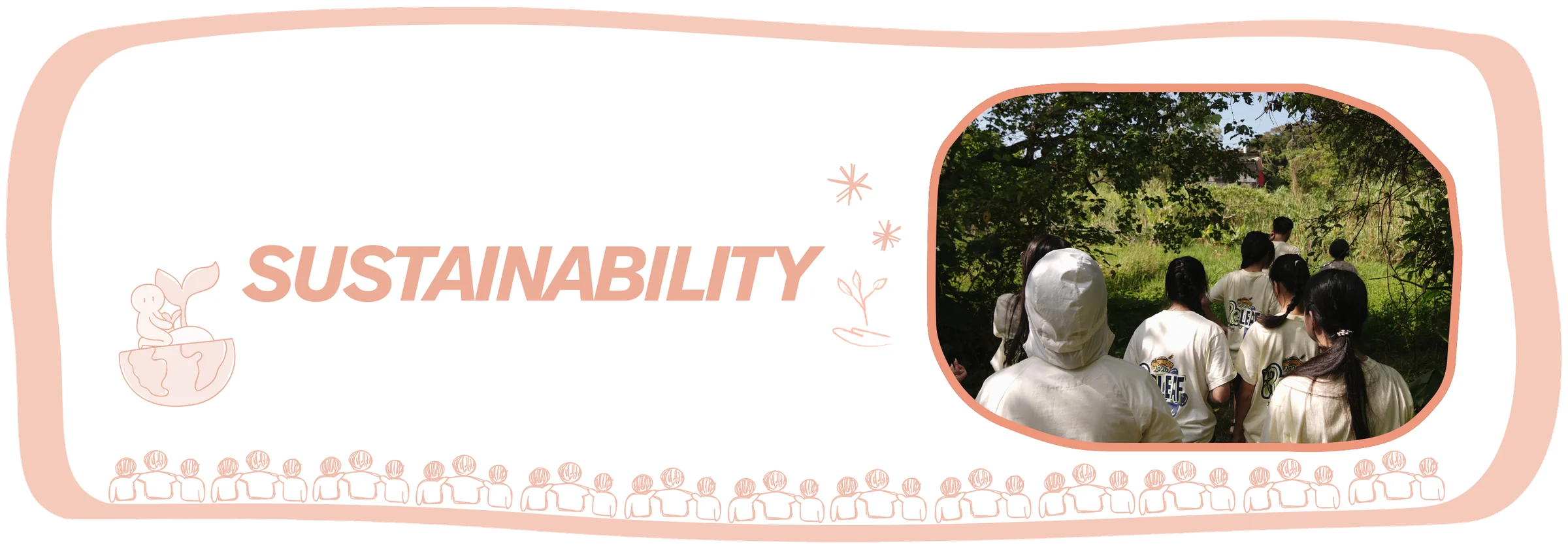
Sustainability. Team members in white caps and team shirts walk away from the camera along a grassy path into dense green trees on a farm visit.

Abstract

Sustainability is not only limited to environmental sustainability, but also the sustainability of our societal structure.

We talked with the leader of Ubuntu Social Enterprise Ghana; climate is actively harming their crops. We have an education website where we compiled all of the education resources from this year and previous years. Our culture medium turns agricultural and food-processing residues (hay, okara, papaya pulp and peels) into a growth medium for the bioreactor. Our product cannot reverse the damage done to the environment and soil directly. Due to the fact that our product always immediately supplies plants with the necessary protectants, it might make it so that the plants never actually grow their own resilience. This was mentioned by a natural farmer, Ms. Chen.

Contents

On this page

Overview

ReLEAF started as a way to help farmers cope with climate stress. As the project grew, we saw that sustainability had to be built into it. Our project started as a way to help farmers combat climate-related stress, but as we continued to do our project we realized that one of the best ways to combat that is to incorporate various concepts that promote longevity into our project. Sustainability is not only environmental, but also societal. That means ensuring that the education and knowledge we provide to the next generation is sufficient to sustain current progress and advance, to sustain the rights of all people regardless of demographic. That is what sustainability is to GEMS-Taiwan, and here are some ways that we’ve tried to make our own contributions to the big mission that is sustainability. These are based on the Sustainable Development Goals (SDGs) agreed upon by the United Nation (UN) to achieve by the year 2030.

Why we chose the SDGs that we did

Out of all the 17 SDGs available, we chose our SDGs first based on their relation to our project, then we narrowed it down based on which ones we can actually make an impact on and change, whether through hypothetical implementation of our business plan, through current real-life action, or hypothetical usage and results of our bioreactor. Through the first condition, we can whittle the SDGs down to SDGs 2, 3, 4, 7, 10, 12, 13, and 15.

All of these SDGs are ones that we want to impact and might be able to through our project, but ultimately we had to condense it down to only the ones that we can actually do. For example, while Climate Action can be affected through improving the environment through using our bioreactor, it isn’t the main point of our project and neither is what we do rooted in resolving climate change in itself. Therefore, we might have an impact on the SDGs not chosen, which are SDGs 3, 7, and 13, but it’s not significant enough to be considered as an SDG that we can claim we target. After putting all the related SDGs through similar processes of elimination, we ended up with SDGs 2, 4, 10, 12, and 15, all of which are targets that we actively considered and either have or plan to enact in our project.

Our SDGs

A bowl of rice with chopsticks.

SDG 2

Zero hunger

Problem

In 2024, over 295 million individuals experienced acute hunger in 53 different countries, and while part of this can be attributed to issues such as distribution, part of it is also caused by extreme temperatures in recent years that lead to crop loss (FAO 25). This is especially acute for farming families that not only sell their crops, but rely on their farm to feed themselves. Early on into the project, we talked with the leader of Ubuntu Social Enterprise Ghana, Gilbert Nkpeniyeng. From that meeting, we learned that it’s true that climate is actively harming their crops and making it harder to farm on generational land.
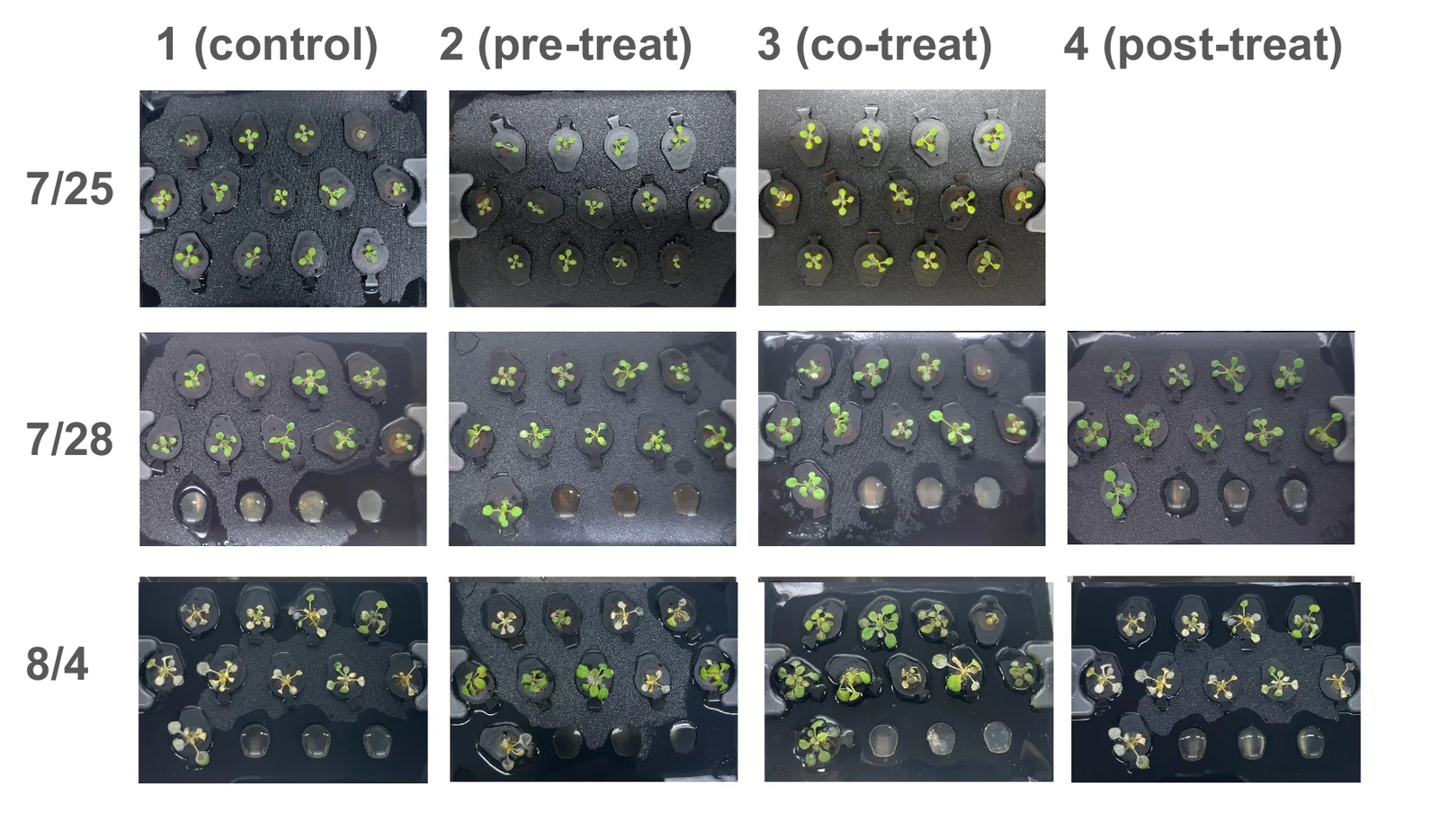
A grid of hydroponic boxes photographed from above. Columns are box 1 control, box 2 pre-treatment, box 3 co-treatment and box 4 post-treatment; rows are 25 July, 28 July and 4 August. By 4 August the co-treatment box carries the largest and greenest rosettes and the post-treatment box the palest.

Solution

Our protectants are designed to help crops to continue growing under stress, which can increase food production and offset the loss caused by the aforementioned stress. By reducing the adverse effects of stress, the protectants allow plants to devote more energy for crop production. We’ve proven that plants can grow better under stress using protectants like ACCD with our Arabidopsis thaliana, which as a relative to mustard plants we know will at least translate into some other crops. In the long term, our bioreactor can help gradually increase the amount of crops that are produced and reduce the impact of chemical pollution by allowing the land to heal over time on its own. Though our solution does not directly solve world hunger, we do hope to alleviate not only farmers’ financial pain but also provide more healthy and sustainable food sources to the world.

An open book.

SDG 4

Quality education

Problem

A lot of people have misconceptions regarding synthetic biology due to not knowing where to look, not having access to the resources to learn about it, or being unaware of what it is outside of what they assume synthetic biology is from name alone. For example, many still have pre-existing stigmas on synbio being a biological threat to humanity because they don’t have easily accessible resources to teach/tell them otherwise outside of scientific papers that are hard to understand from the get go. This may cause them to openly show distrust or act ignorantly towards new inventions and products due to that very lack of understanding.

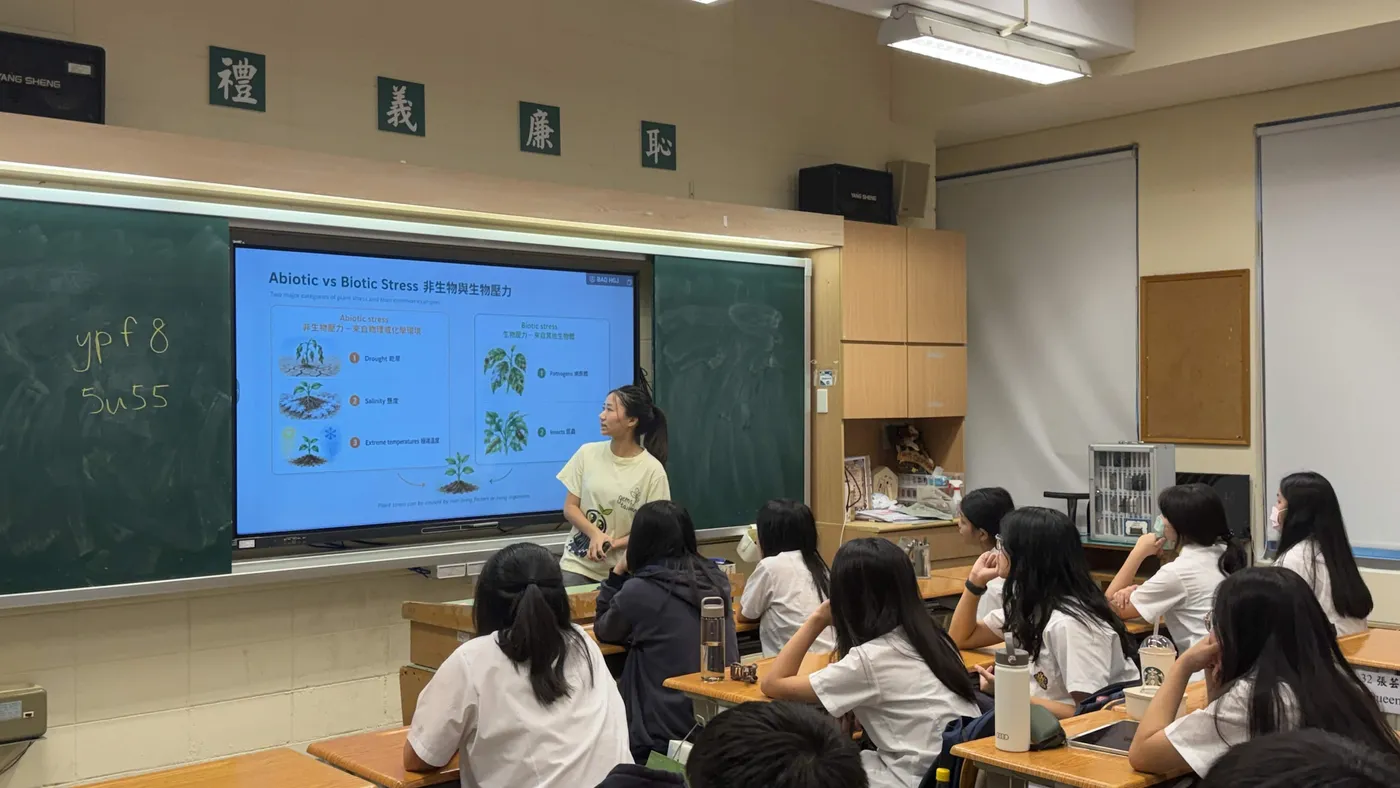
A ReLEAF team member teaching a high school class in front of a projected slide reading Abiotic vs Biotic Stress, with students seated at desks facing the board.
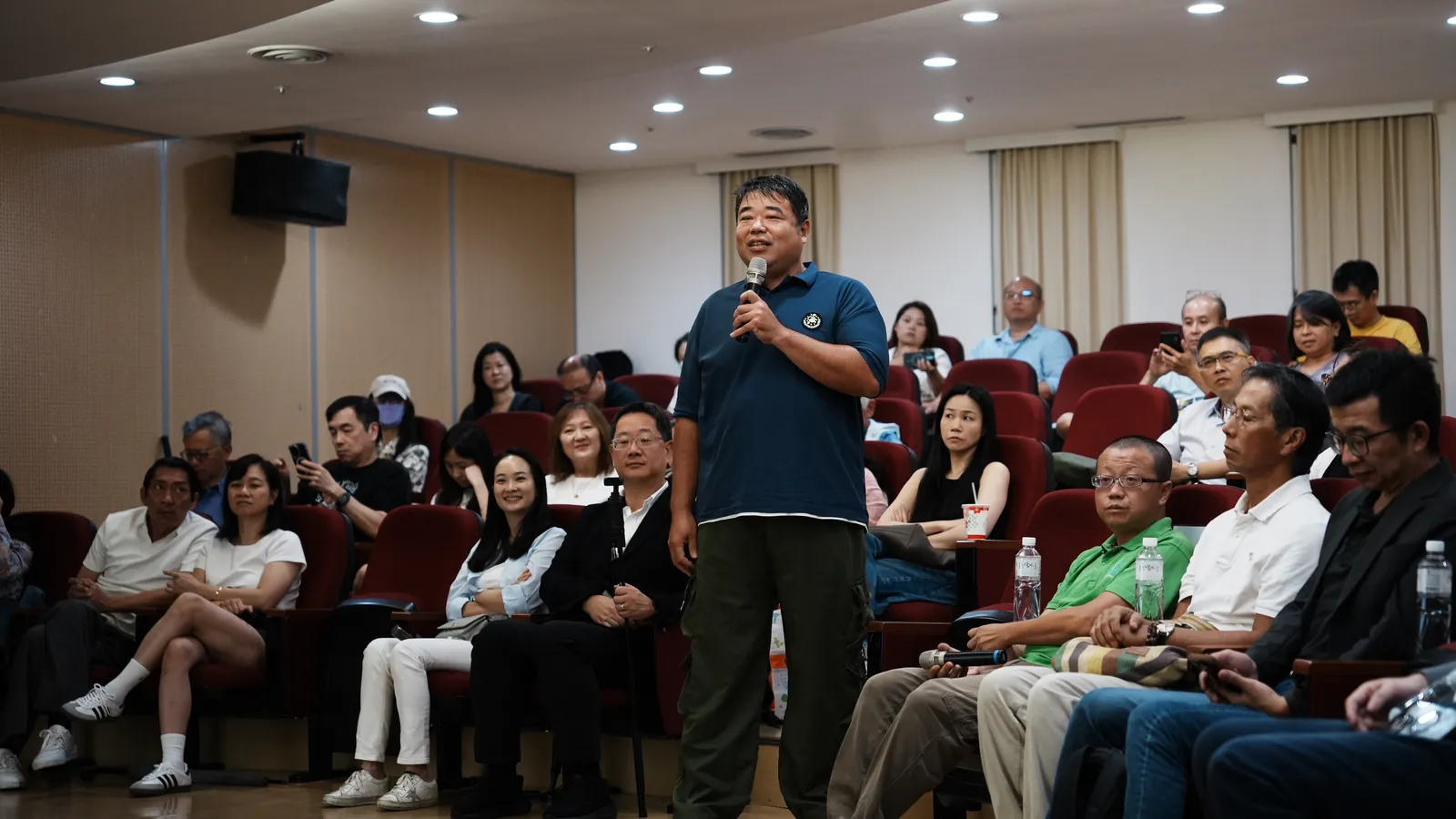
A farmer standing in the audience holding a microphone while others listen.
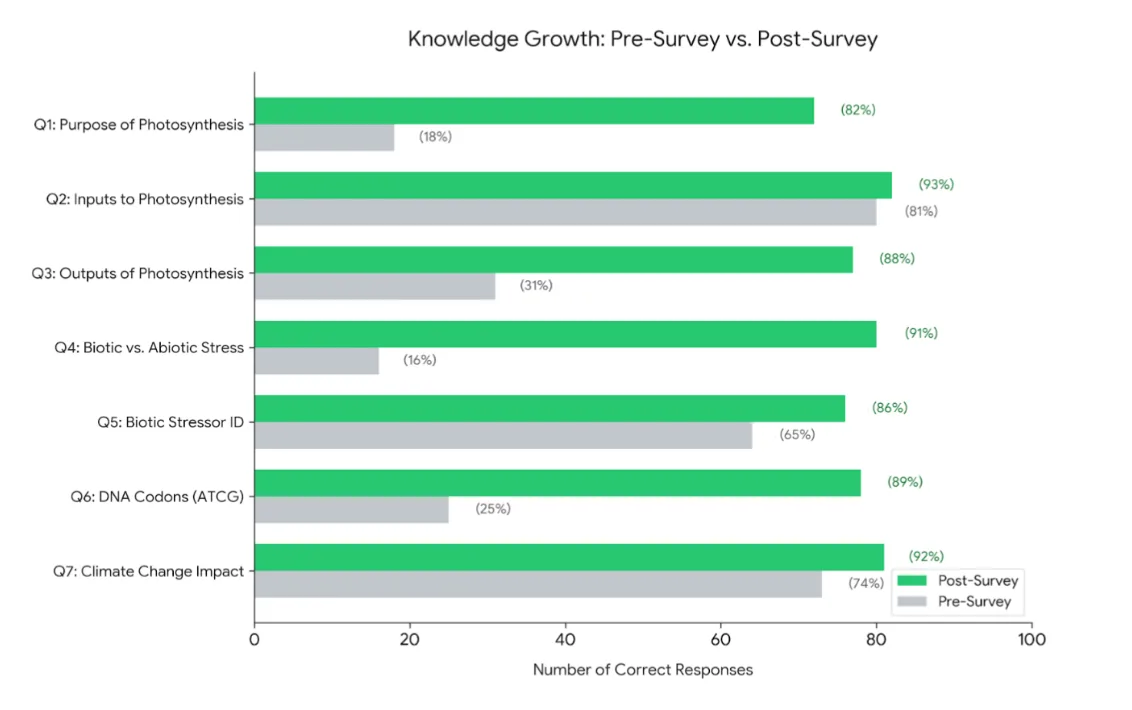
Horizontal bar chart titled Knowledge Growth: Pre-Survey vs. Post-Survey, with seven questions. Correct responses rose from 18 to 82 per cent for the purpose of photosynthesis, 81 to 93 for its inputs, 31 to 88 for its outputs, 16 to 91 for biotic versus abiotic stress, 65 to 86 for identifying a biotic stressor, 25 to 89 for DNA codons and 74 to 92 for climate change impact.
This graph shows elementary students’ knowledge before our lesson (pre-survey) and after our lesson (post-survey) from four different visits. As can be seen, there is a trend of increased knowledge post-lessons.

Solution

We have an education website where we compiled all of the education resources from this year and previous years, along with basic introductions to synthetic biology. Through this website, people can learn more about synthetic biology and teachers can sign up for us to teach lessons for their classes from the website. Additionally, we’ve done a public forum in collaboration with Green Media on 9/5/2026, where we introduce our project and explain about synthetic biology to the public. Through this, we hope to be able to reach out and tell people that synthetic biology is something that will be used to help and advance society, and encourage people to learn more about synthetic biology on their own.

An equals sign with an arrow on each of its four sides.

SDG 10

Reduced inequalities

Problem

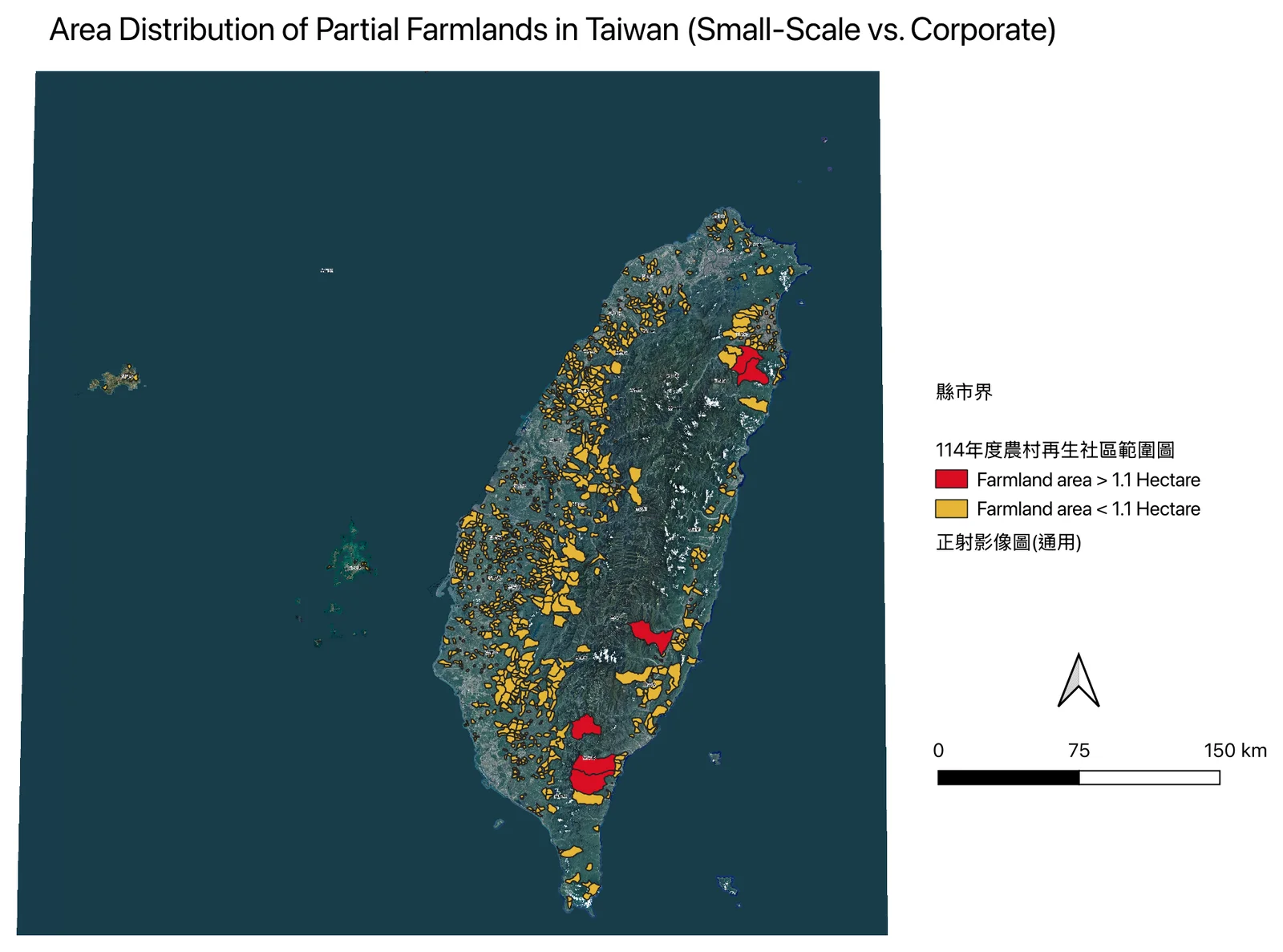
Despite agricultural production increasing since 1950, in-sector inequality between agricultural households and industrial farms has only increased (World Inequality Database 25). This makes it so that large farms can afford to constantly advance with technology, grow more crops, and create a loop that can easily generate profit, while small scale farmers must be more conservative and careful when choosing what technologies to use due to a lack of sufficient funds, which can prevent them from increasing their profit.

Satellite map of Taiwan with rural community boundaries filled yellow where recorded farmland is under 1.1 hectares and red where it is above; yellow polygons cover the whole western plain while only three red polygons appear.
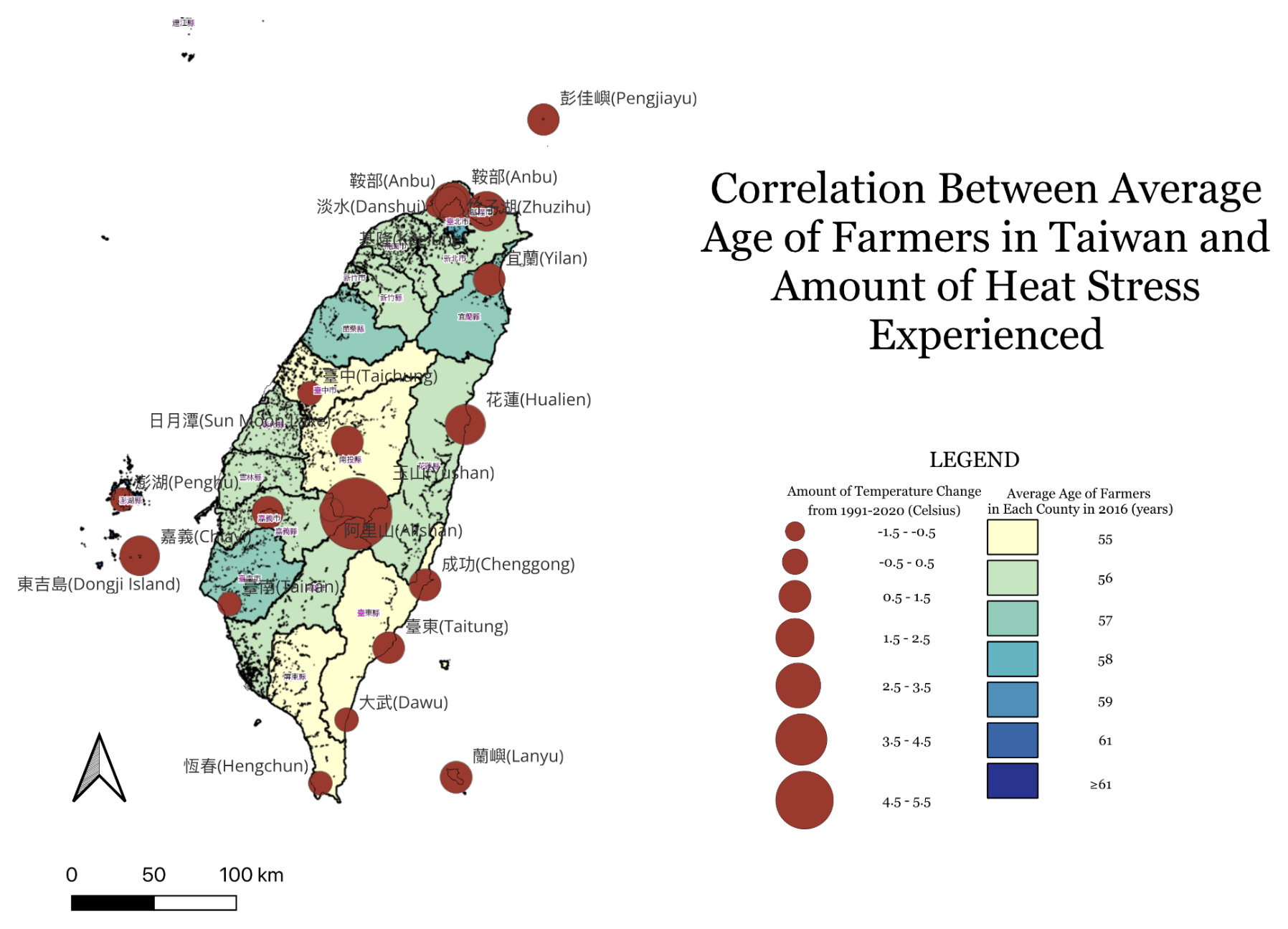
Map of Taiwan with counties shaded by average farmer age in 2016, from 55 years in pale yellow to 61 and over in dark blue, overlaid with dark red circles at weather stations sized by temperature change from 1991 to 2020.

Solution

We plan to use the profit we obtain from selling devices to industrial farmers or selling data to researchers to subsidise small farmers’ purchases or allow unions or similar organisations to rent bioreactors instead, making the price more manageable and friendly towards them. This way, both sides of the spectrum can use and enjoy the benefits of having more advanced regulation and protectant technology without breaking the bank.

An infinity loop ending in an arrow.

SDG 12

Responsible consumption and production

Problem

Using a lot of bacteria and lab-grade ingredients is not only expensive, but also unsustainable. Each purchase means more resources consumed and more money spent on both our and the farmer’s side, while perfectly good waste material from harvesting crops, or leftover cooking materials are left behind. 7.9 percent of all food harvested is thrown away as waste, which amounts to 3.6 million tonnes per year! (Food Waste in Primary Production in the UK 19)

Solution

Our culture medium turns agricultural and food-processing residues (hay, okara, papaya pulp and peels) into a growth medium for the bioreactor, instead of buying purified lab-grade ingredients. This means that farmers can actually create culture for the bacteria on their own, which can reduce the need to buy new culture mediums and help use part of the waste produced by farms.

A tree.

SDG 15

Life on land

Problem

Chemical fertilizers and protectants often cause runoff and environmental pollution, which can lead to the destruction of local ecosystems. Issues such as eutrophication, accumulation of nitrate, and heavy metal buildup are all things that arise from the usage of chemical fertilizers and protectants on farms (Savci 12). This is not only detrimental to the environment, but also causes farmland to later become harder to cultivate crops on and make the resulting crops to be unhealthy for the human body.

Solution

While our product cannot reverse the damage done to the environment and soil directly, it can prevent further deterioration of its surrounding ecosystem. The protectants produced already exist in plants prior to exposure to our bioreactor and the safety measures in the bioreactor itself ensure containment unless under extenuating circumstances. The bioreactor is designed to keep the engineered B. subtilis inside with a hollow-fibre membrane and a sealed housing. Usage of our bioreactor can allow for previous pollution to slowly go away on its own while maintaining and gradually increasing the quality of soil, or reduce pollution to allow for external intervention methods to take effect.

Negatives

We can say without hesitation that we want our project to do as much good to the world as possible, but it’s unavoidable that the usage of our product might indirectly have adverse effects on the environment and attitudes of the people that use them. Here, we want to acknowledge those negatives as a part of our product that we hope we can change, but also realize that no matter how good something can be there will always be inherent adverse effects to everything.

Though we want to promote sustainability, and while our project’s method of producing protectants is undeniably more sustainable than chemical protectants, as mentioned by Ms. Chen, there is still a possibility that our product will be unable to promote longevity. Though we have tried to remedy this by setting the thresholds as high as possible so that plants can still experience and overcome a certain level of stress on their own, we still acknowledge the fact that our bioreactor might still have detrimental effects. Additionally, during our meeting with Chen Ke-Wei, he mentioned that spraying our protectants might actually cause an adverse effect in that it will make weeds grow along with or in place of the actual crops. This can end up being detrimental to improving the farmer’s condition and negatively affect their harvest and incomes. In the future, if we manage to make it so that our bioreactor is completely automated and connected to a farm’s irrigation system, it means that we’ll have to place our bioreactor outdoors. That exposes our bioreactor to the risk of getting destroyed by natural disasters, wild animals, or other unpredictable weather conditions, leading to our bioreactor leaking out and causing a biosafety risk that may harm the environment even more.

Long-term impact

We want our work to last beyond this season, for future iGEM teams and for our community. We have already established part of this through our education website, which can provide resources for teachers that wish to inform their students of climate stress and shed light on synthetic biology and will remain permanently up. Additionally, through the business plan we have laid out development plans for up to 6 years, and what goals we want to achieve beyond iGEM. From our geospatial analysis, it can be seen where our project will have the largest impacts and where we are needed the most.

Conclusion

ReLEAF greatly values ensuring that our project and our product will benefit the world the best we can. Based on SDG 2 Zero Hunger, we increase crop yield so that small farmers can obtain increased food and economic security. In regards to SDG 12 Responsible Consumption and Production, we give some agricultural waste a new usage in a mixed bacteria culture made entirely of agricultural waste, which works just as well as LB medium. Another way we impact sustainability is through SDG 15 Life on Land, where our product can reduce chemical protectant usage, which allows the soil and environment to repair itself over time. Outside of physical impacts on sustainability, it’s also equally important to ensure the sustainability of our societal structure. That means equal opportunity to access necessary infrastructure and open access to knowledge. For SDG 4 Quality education, we do this through interacting and teaching about plant stress and synthetic biology at various schools across Taipei, along with a public website containing free teaching materials and educational games. Outside of that we affect SDG 10 Reduced Inequalities via our business model of subsidising small farmers and having different purchase models allows for all farmers to have the same level of access to our technology. Despite what our project tries to achieve, we still negatively affect crops in that they won’t build their own resilience to stress, because our protectants are always there to do the job for them. All in all, our project and product broadly impacts the mentioned SDGs, and will continue to strive to positively impact the world.

References