Abstract
This section is the dry lab work that chose ReLEAF’s three protectants, and decided what to change about each one before any DNA was ordered.
They are BoPEP4, a Brassica oleracea plant elicitor peptide, LEA14, a late embryogenesis abundant protein, and ACC (1-aminocyclopropane-1-carboxylate) deaminase. There was little to gain by redesigning their binding sites, which evolution had already brought close to as good as they get, so the engineering moved to the construct and the delivery. Those decisions came from the pipelines around us: how short a molecule can be made before the bioreactor struggles to produce it, what the hydroponics system delivers it into, what dose the model says has to arrive, and how a sequence becomes DNA a bacterium will read, where codon optimisation split off.
It is also a record of what we got wrong and caught in time. A purification tag every earlier check had approved turned out, once simulated, to disable the exact contact the peptide depends on: a molecule that purifies beautifully and cannot work. On the second we mapped one half of an interaction with confidence and showed the other half cannot be predicted from what is currently known, so it goes to the bench as one testable mutation. The largest gain available on the third, an enzyme, is a change to the medium it works in.
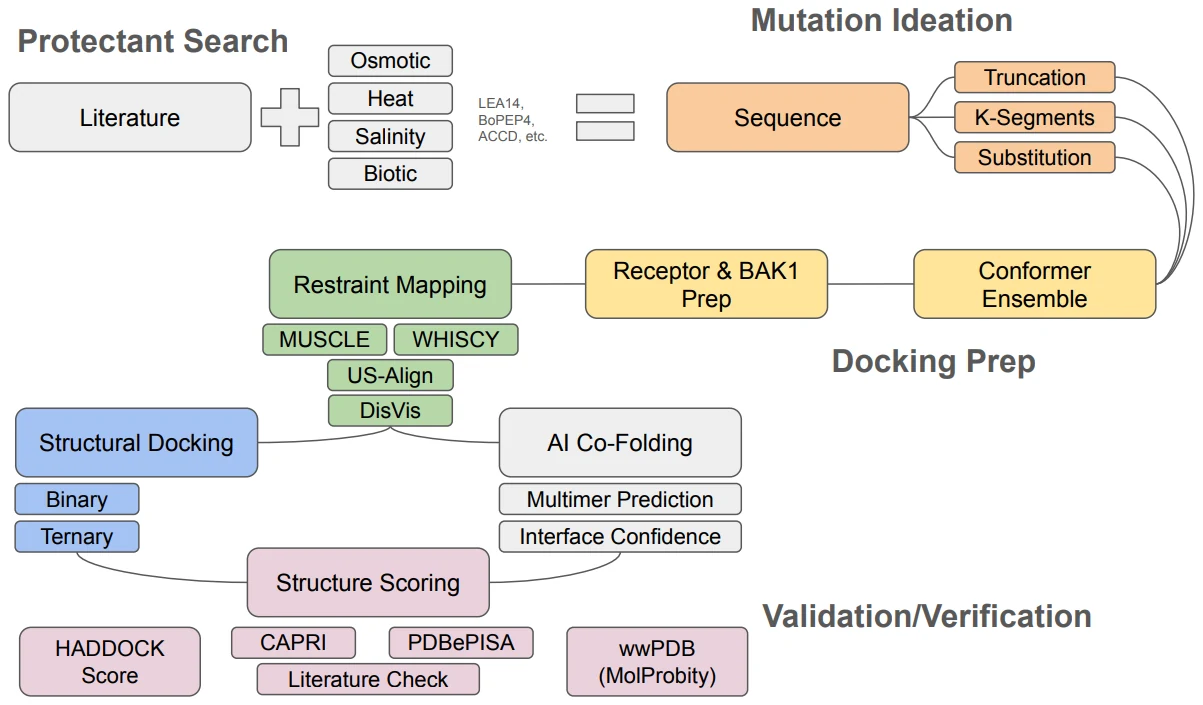 GRAFT Methodology
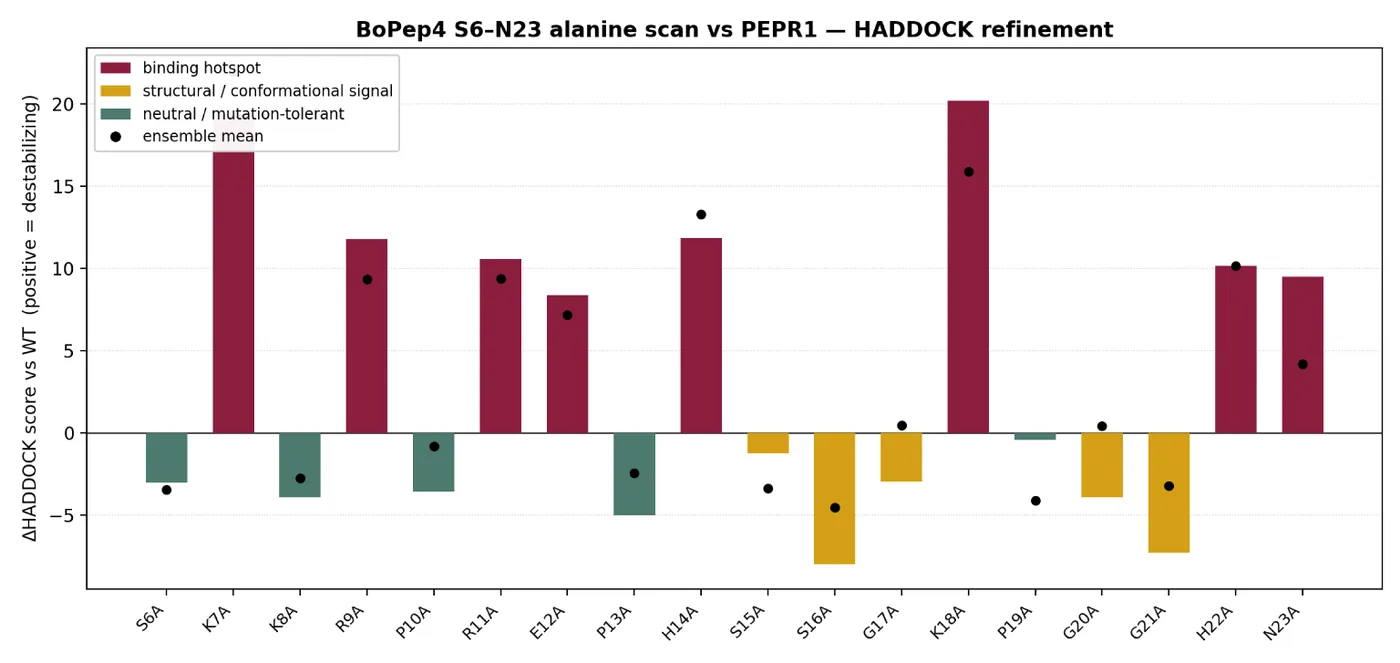 Sprints and Results
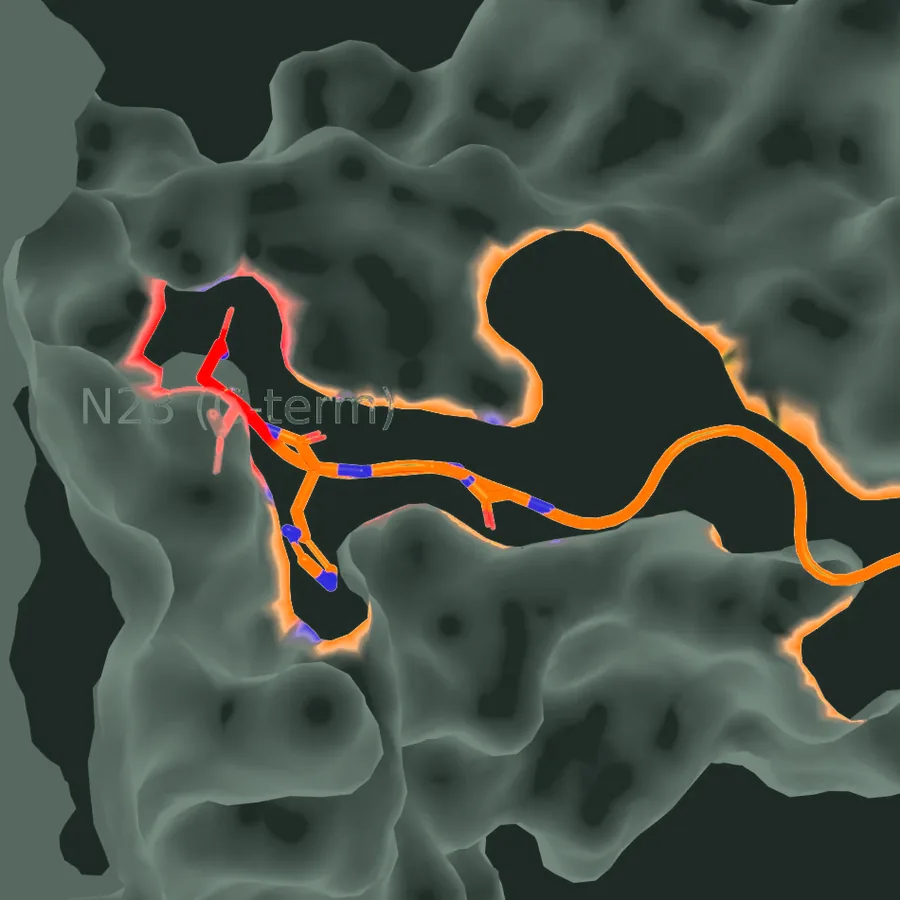 Molecular Dynamics